JLL’s CEO and President, Christian Ulbrich, explains why leadership and long-term partnerships must be at the core of the reinvention of our cities
09 January 2024
Guide
09 January 2024
Why cities have an opportunity to build back better
Categories:
Authors
Christian Ulbrich
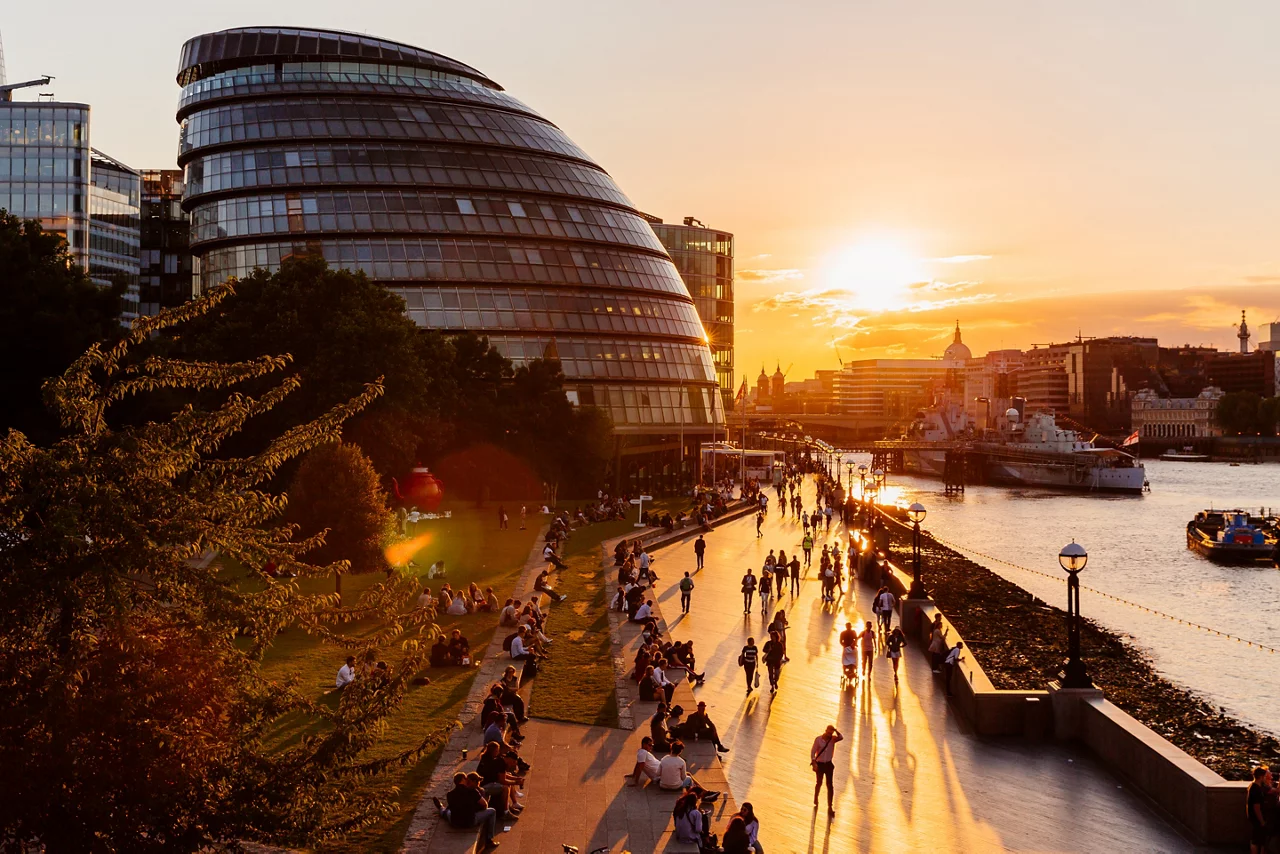
The world’s cities are in the midst of recovery and re-invention after the abrupt shock of the COVID-19 pandemic. While employees worked from home, not only were office desks sitting empty, but central business districts (CBDs) lost some of their vibrancy.
Alongside housing shortfalls and accelerating socioeconomic disparities, this continues to pose major challenges to governments, businesses and residents.
Since the beginning of 2020, office vacancy in the CBDs of the world’s largest commercial property markets has risen by over 15.4 million square meters. It has put pressure on municipal budgets, hit local businesses traditionally dependent on nearby workers and led to a correction in property values.
However, we’re now at a turning point. Office occupancy has stabilized as workers return to their offices. Leisure travel is back, and retail spending has improved in most cities of the world.
The bounce back opportunity for cities
This bounce back is enabling cities to quantify the scale of strategic planning needed. The immediate challenges may be daunting, but they also present an array of possibilities to correct policies that entrenched inequality, inhibited addressing climate change and led to substandard experiences for residents, workers and visitors alike.
The process of recalibrating cities will be iterative and take place over decades. Importantly, bold interventions from both the public and private sectors will be critical for cities to fulfill their potential as hubs of innovation and opportunity.
This process, at its core, requires strong leadership. Right now, decision-making structures for even the world’s biggest cities — often the anchors of national economies — are in many ways too local. Success for cities requires input at national level, and in some cases even regional levels, rather than just from the municipality.
Bespoke solutions for unique cities
One major challenge for leaders at this point: no single solution will suit all CBDs. Far from it, as the effects of the pandemic were not distributed evenly.
Of pandemic-induced office vacancy in the world’s largest commercial property markets, 74% has come from North America, compared to 15% in Europe and 11% in Asia-Pacific.
North American markets also are the most oversupplied in terms of space built between 1960 and 2010 relative to current demand levels, catalyzing 11.3 million square meters of occupancy growth in new supply across the US since early 2020. On the other hand, more than 15% of supply has been delivered recently or is under construction in every major Asia-Pacific market. In much of Europe, this figure ranges from 5% to 20%.
The immediate result of this divergence is that city leaders and large property owners in North America are more aggressively converting obsolete offices into other property types that can boost residential and visitor density.
To that end, making conversions faster and less expensive forms the basis of the White House’s affordable housing playbook released in late 2023. Federal agencies such as the Department of Housing and Urban Development are emphasizing the availability of grant programs worth $45 billion to turn obsolete properties into affordable housing, with the ability to take advantage of complementary tax credits for transit accessibility and low - or zero-carbon - retrofitting to accelerate the decarbonization of older buildings.
Decarbonization and quality of life
In contrast, much of Europe is leaning towards decarbonization-based retrofitting and mixed-use regeneration. Key to these plans are quality-of-life measures, including ensuring amenities such as playgrounds, parks, shopping and entertainment are within short reach of all residents.
Paris’ Bioclimactic Local Urbanism Plan, for instance, mandates the protection of green space on plots of more than 150 square meters, a 40% target for surfaces to be permeable or vegetated and dedicated protections for local businesses. Amsterdam’s Humane Metropolis aims for a similar goal of distributed employment hubs to reduce commute times along with designing new neighborhoods around green corridors to reduce the environmental impact of development.
In Asia Pacific, the thrust of many efforts is to accommodate urbanization. Thousands of kilometers of new rapid transit lines are guiding the creation of integrated, accessible communities, while also addressing some of the world’s worst congestion and air quality.
Bangkok, Delhi, Jakarta and Mumbai are just a few Asian cities doubling, or even tripling, the size of their metro systems to connect residents with employment and leisure opportunities. At ground level, residents and visitors are experiencing a step-change in amenities, while city and national governments are using these investments to implement infrastructure that mitigates the effects of climate change — particularly flooding and heat stress — that disproportionately affect this region.
To best take advantage of the opportunities ahead, public and private players at both the national and local levels need to be proactive in partnering to better understand the scale of the challenge. This means engaging in dialogue to understand where regulations are hindering investment, ensuring consistent policy communication and having a thorough, detailed and real-time pulse on market conditions.
In doing so, they can create distinctive places where everyone can thrive, be it the current residents, or its citizens in the future.
This article is a reposting of a blog that was written for the World Economic Forum. Learn more about JLL’s mission at the 2024 Annual Meeting in Davos.