How reshoring and nearshoring manufacturing facilities helps businesses foster economic resilience, mitigate disruption and more
Guide
17 July 2024
U.S. manufacturing revival: trends, challenges and opportunities
Categories:
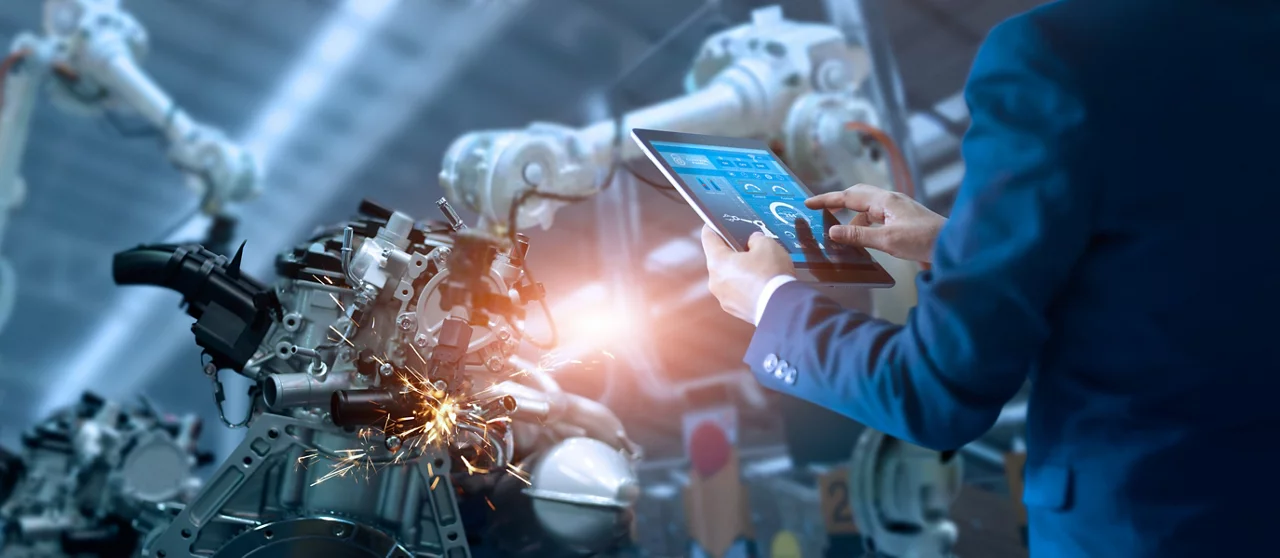
In recent years, global economic dynamics, changing geopolitical landscapes and disruptions such as the COVID-19 pandemic have led to a significant shift in manufacturing strategies. Companies that once solely focused on outsourcing production to low-cost regions abroad are now considering bringing manufacturing operations closer to or within U.S. markets. This is driven by several factors, including a desire to lessen supply chain risks, reduce lead times, enhance quality control, and tap into the growing consumer demand for locally made products.
JLL Industrial’s Executive Managing Director, Greg Matter, and Senior Vice President Ada Wong spoke with Americas researcher James Cook about the trends, benefits, challenges and other factors U.S. manufacturers should know as they consider bringing their own operations and facilities stateside. Check out highlights from the discussion below, or download a summary highlighting top insights from the conversation.
Watch the full video here, or access topical clips from the discussion by clicking or tapping on the plus signs below.
What is reshoring? (1:08)
Reshoring describes the effort to bring the production of goods back to the U.S. It’s part of a bigger trend of regionalization: opening manufacturing facilities in locations closer to the end consumer. People sometimes also refer to this trend as nearshoring or localization. Amid the reshoring push, foreign direct investment is also rising as international companies invest in new U.S. plants.
What’s causing reshoring? (4:32)
Since China entered the World Trade Organization in 2001, the U.S. has lost about six million manufacturing jobs and 71,000 manufacturing facilities. However, a series of natural disasters, the COVID-19 pandemic and geopolitical conflicts in recent years spotlighted the risks of sourcing goods from a single geography.
To protect supplies and profits, many companies began to rethink their global supply chains and bring back production sites closer to the end consumer. Government incentives have accelerated the trend, with programs such as the Inflation Reduction Act (IRA), Infrastructure Investment and Jobs Act (IIJA), and the Creating Helpful Incentives to Produce Semiconductors (CHIPS) and Science Act encouraging companies to build facilities and create jobs in the U.S.
Are companies focusing their reshoring efforts in the U.S., or in North America more broadly? (1:52)
Every company has different requirements, but many international companies look at North America as a whole when they begin their search for industrial real estate located closer to U.S. consumers. Mexico is growing rapidly as a manufacturing hub, but the U.S. is leading the way in clean energy production, an important factor for companies with ambitious sustainability goals.
Companies often have multiple North American countries as links in their supply chain. For example, they may manufacture some components in Mexico or Canada but perform final assembly in the U.S. Having these different nodes eliminates the risk of having a single point of failure, ultimately supporting resiliency.
What role do tariffs play in reshoring? (2:50)
Tariffs are one strategy governments use to help balance trade and attempt to level the playing field among geographies. Recent U.S. presidential administrations have implemented tariffs to encourage companies to localize production, but the outcomes don’t always end up as planned. Some new tariffs have created a surge in Chinese investment in Mexico as companies seek to avoid tariffs and get products closer to U.S. consumers.
Meanwhile, the IRA, IIJA and CHIPS Act have led to substantial investment in new U.S. facilities. As of mid-year 2024, companies have announced nearly 400 new or modernized facilities in the U.S., resulting in around 600,000 new jobs. The effort to deploy capital through these incentive programs has fueled the reshoring and regionalization phenomenon.
What are the challenges of reshoring? (2:26)
Reshoring brings substantial advantages, but companies may also encounter challenges around other issues. The U.S. dramatically shrank its manufacturing base over the last several decades, reducing the pipeline of skilled labor to work in new facilities. Additionally, U.S. labor costs are notably higher than wages in the various countries where companies have long held their manufacturing operations.
To be competitive, companies need to look at more than the unit cost of producing goods and instead consider the total cost of operations, including logistics, transportation, tariffs and incentives. Moreover, automation can help address the challenges of high labor costs and workforce shortages. Partnerships with local municipalities, community colleges and trade school programs will also be key to rebuilding the talent pool.
What makes a region attractive for reshoring? (6:09)
A region’s desirability generally comes down to three primary factors — people, power and property — as well as the availability of state and local incentives. Labor availability plays heavily into location decisions. It’s important to analyze the area’s growth potential in addition to today’s population and workforce. Factors such as housing starts and cost of living provide clues about a geography’s ability to attract future workers.
Power costs and availability matter greatly to manufacturers with power-intensive operations, such as electric vehicle (EV) and battery companies. They’ve also got to consider the power grid’s reliability and the availability of renewable power.
Finally, property inventory also factors into a region’s attractiveness. The current scarcity of U.S. facilities with adequate infrastructure for advanced manufacturing can limit options for companies looking to gain speed to market in a second-generation facility.
What sectors are poised to benefit from nearshoring and reshoring? (4:43)
Much of today’s reshoring activity involves industries that went overseas decades ago. However, we also see lots of activity around emerging technologies and clean tech, such as EVs, battery storage, mobility solutions and hydrogen production.
The aerospace industry is also very active, with substantial investments pouring into drone and defense projects. But the most capital is going to the semiconductor sector. The U.S. has granted billions of dollars in incentives to Intel, Micron Technology, Taiwan Semiconductor Manufacturing Company and other companies to grow or reestablish their production footprints in the U.S.