As office buildings evolve, the property management function has never been more important
28 June 2024
Guide
28 June 2024
Office buildings become live-work-play communities
Categories:
Authors
Tyler Kethcart
Sean McNamara
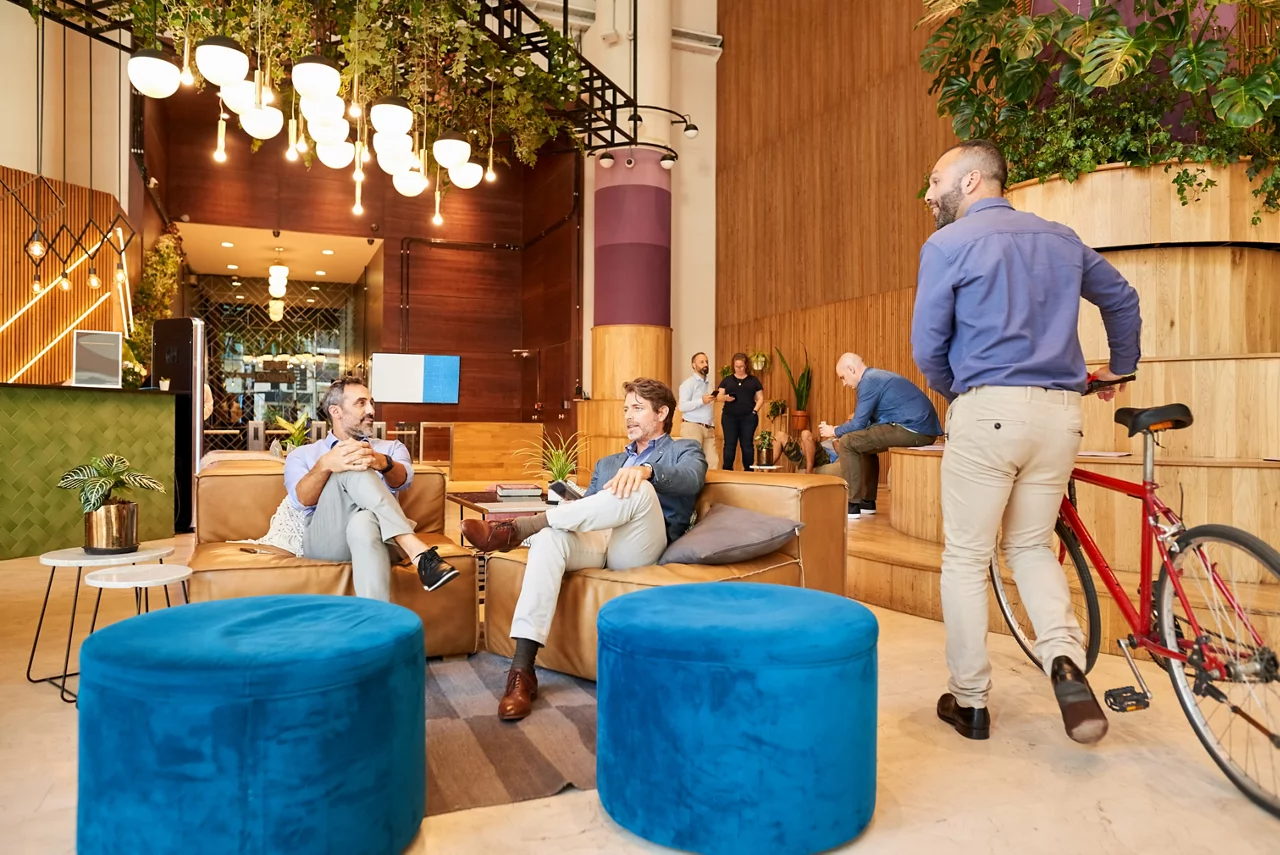
As the workday winds down, it’s common to see bustling downtown offices transform into veritable ghost towns as commuters exit en masse to catch their trains or head to smaller, more vibrant neighborhoods. But that dynamic is beginning to change.
Office buildings previously occupied exclusively by its tenants are beginning to buzz with activity as a community hub and holistic lifestyle spaces—people visiting healthcare clinics, attending fitness classes and enjoying rooftop gardens. This evolution underscores a new trend paving the way for the future of commercial real estate: the integration of live-work-play lifestyles within office buildings. With that evolution comes a whole new set of property management considerations that will help achieve and sustain a healthy net operating income.
Embracing holistic property management
Reconfiguring vacant office spaces into multipurpose areas like conference centers, lounges and bars not only enhances the tenant experience, but also draws in visitors from the surrounding community as an attractive, all-encompassing environment.
According to JLL research, areas with diverse mixed-use property types among commercial, residential and hospitality have experienced more resilient demand and vibrancy since the pandemic. The key to success lies in a holistic approach to property management across all property types, considering the broader needs of the community and range of amenities that attract both tenants and local residents.
“The gap nobody is thinking about in multi-use is single-service delivery, which breeds efficiencies, higher revenues and a superior experience,” said Sean McNamara, Director of National Accounts and Head of Mixed-use Property Management at JLL. “There are a lot of reasons why an investor client would look at this and want that instead of a clunky, bifurcated and siloed model. It just makes sense.”
The Plaza Coral Gables has become an aspirational vision of the potential of live-work-play spaces to reinvigorate communities. Sprawling across seven acres and 2.25 million square feet, the historic readaptation of the Coral Gables Crafts Section has revitalized a neglected neighborhood into the largest mixed-use development in Coral Gables, Florida. A thriving home for Class A office spaces, retail and luxury residential units, the mixed-use property includes a hotel and entertainment complex, complete with conscious LEED for Neighborhood Development (LEED ND) certification to enhance the health, natural environment, and quality of life of its residents.
Understanding and meeting community needs
Creating a high-quality point of differentiation in amenities that speak to the specific needs and demands of the local population can yield dividends. Buildings with a full-service fitness center inclusive of locker room and shower facilities command rents about 3% higher than buildings without fitness centers, according to JLL research. Food halls can also generate higher rental premiums of up to 1.4% against peers.
Enhanced outdoor rooftop terraces and courtyards are among the top revenue drivers, allowing an audience outside of building tenants to capitalize on the city's cultural vibrancy and create a central gathering space for interactive events. Sustainability and environmental impact matter, too. LEED-certified buildings achieve a 3% rent premium compared to properties in the same submarket that lack sustainability credentials.
Evening and weekend activities can also open new revenue opportunities beyond office tenants, keeping the property lively off-hours to attract a different set of users. This diversified approach not only mitigates the risk of vacancy, but also maximizes the property’s financial potential by creating a micro-city environment that supports urban growth and thriving centers of activity and commerce.
“For years, we've heard about the flight to quality. What's happening now is a shift to the flight to experience. The most sought-after assets are the ones providing that complete experience,” says Tyler Kethcart, Director of Business Development and Experience Management (XM) at JLL. “It's a matter of figuring out what fits where and how to customize that bespoke solution.”
Navigating the challenges of transformation
While the benefits are significant, this type of transformation comes with its own set of property management challenges. Determining the right mix of amenities requires reconfiguring spaces to accommodate these new functions, along with a versatile property management team capable of handling the varied demands of a mixed-use space. Adopting a hospitality-focused approach can help manage these complexities and elevate the overall customer experience.
Security is another critical concern. With extended operating hours and increased public access, tailored security programs are essential to ensure the safety of all users. Additionally, operational costs related to mechanical systems, energy, IT infrastructure and communications will need reassessment, and some expenses may be offset by renegotiating ancillary services.
Owners must also navigate external factors, such as liquor license availability, varying real estate tax rates and existing ownership agreements. By understanding these challenges and planning strategically, building owners can successfully reinvent their properties.
The future of live-work-play
The integration of live-work-play amenities within office buildings represents a forward-thinking approach to commercial real estate. By adopting a holistic asset management strategy, understanding and meeting community needs and unlocking new revenue streams, property owners can transform their buildings into vibrant community hubs.
Office owners looking to embrace this innovative model should start with a comprehensive cost analysis and demographic research to maximize the value of their properties while effectively serving the needs of their communities. This new era of commercial real estate not only enhances tenant and customer experiences but drives financial success and supports sustainable urban growth, creating a win-win scenario for all stakeholders involved.
"In reimagining office spaces, we're not just redesigning buildings; we're reshaping communities for generations to come," says Kethcart. “The live-work-play model doesn't just invite the public—it builds a loyalty that transcends traditional office boundaries, fostering a community that thrives together.”