Grocery Tracker 2026
26 February 2026
Insight
26 February 2026
Who's Winning Grocery? Value, Fresh Format & Location
Categories:
Authors
JamesD Cook
Heli Brecailo
Keisha Virtue
Monica Mason
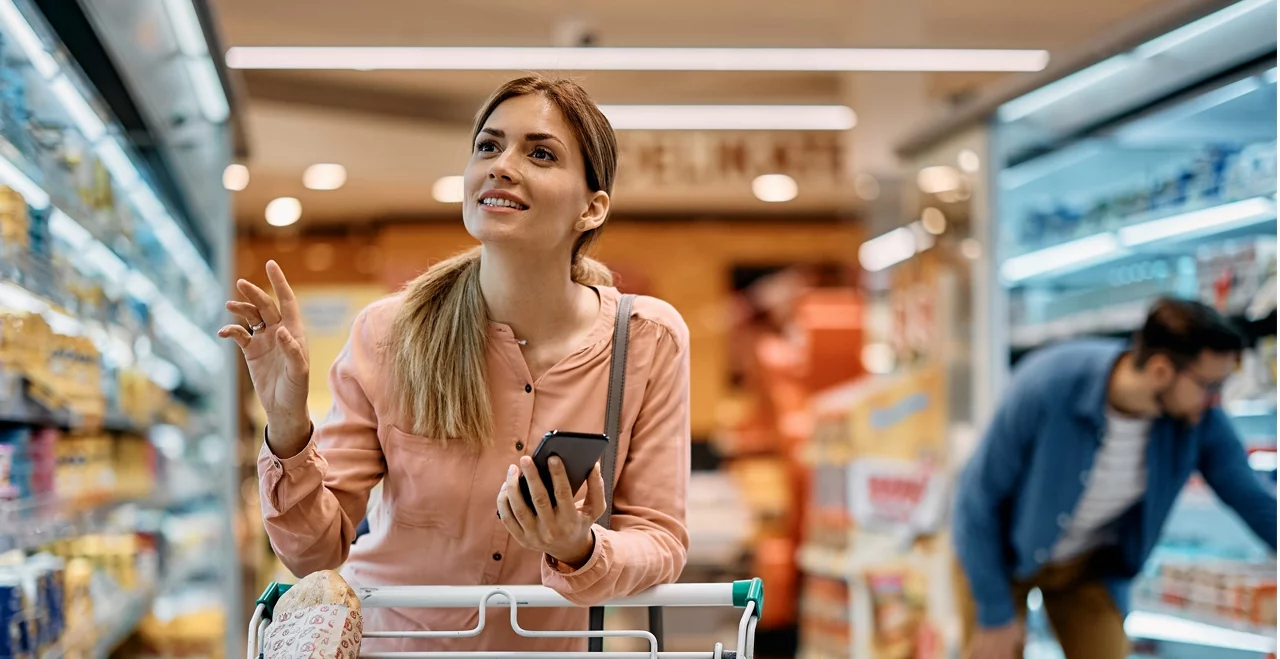
Grocery-anchored retail has long been one of the more dependable bets in retail real estate, and for good reason. People need food, grocers bring regular traffic, and that steady stream of shoppers supports the other tenants in the center. For years, having a recognizable grocery name on the anchor pad was often enough. The specific banner mattered, but not as much as simply having one.
That's starting to change. Ongoing food price inflation, financial pressure on middle-income families, and shifting shopper priorities are separating the grocery winners from the rest of the pack. Increasingly, the success of a grocery-anchored property depends not just on having an anchor, but on having the right kind of anchor for today's market.

The barbell shopper has arrived
Since early 2020, the cost of food at home has skyrocketed by over 30%. While headline inflation has cooled to around 2.7%, the cumulative damage to household budgets remains severe. Nearly 80% of shoppers still report noticing price increases at the supermarket, more than any other retail category.
This relentless price pressure has split American consumers into two distinct camps. On one end, high-income households are thriving, their wealth growing and fueling spending on premium, wellness-focused products. On the other, middle- and lower-income families are feeling the squeeze, with drained savings and rising credit card debt forcing them to prioritize value above all else.
The result is a "barbell shopper": a market where the middle is getting squeezed, and growth is concentrating at both extremes.
Private label is no longer a backup plan
One of the clearest signals of this shift is the explosive growth of private-label products. Store brands have surged 30% since 2021, now accounting for over 21% of all grocery spending, a record $282.8 billion. Nearly half of shoppers surveyed say they now actively choose store brands over name brands to save money.

But it's not just about switching products. Shoppers are fundamentally changing how they shop. The data shows a clear trend toward more frequent, shorter trips. Instead of filling a cart once a week and facing sticker shock at checkout, consumers are making smaller, targeted runs, often hitting multiple stores to cherry-pick deals.
Major operators like Kroger have publicly confirmed this behavior, noting that middle-income households in particular are using these "bite-sized trips" as a budget management strategy.
The great grocery divergence is underway
This split in consumer behavior is creating a parallel split in the grocery industry itself. Traditional supermarkets still command the overwhelming majority of store visits, but their share is eroding.
Since 2019, traditional grocers have seen their share of foot traffic drop from 75.1% to 73.2%. That might not sound dramatic, but in an industry this large, it represents billions of dollars in lost sales. The winners? Two distinct categories: value-focused operators and fresh-format specialty grocers.
Value players like Aldi and Grocery Outlet are capturing consumers who need to stretch every dollar. Aldi alone opened 180 new stores in 2025 and plans another 180 in 2026 as part of an aggressive multi-year expansion. Meanwhile, fresh-format chains like Trader Joe's, Whole Foods, and Sprouts are winning over shoppers who can afford to prioritize health, wellness, and the shopping experience itself.
The foot traffic data tells the story clearly. While Kroger's same-store visit growth was essentially flat at 0.3%, Trader Joe's posted a remarkable 10.4% gain, Whole Foods grew 9.8%, and Aldi expanded 8.3%.
Canada confirms the broader trend
The Canadian market is experiencing a strikingly similar shift. Major Canadian grocers continue to open new stores with discount formats driving remarkable growth. Loblaw has concentrated on its No Frills banner in Ontario and Alberta and Maxi in Québec, while Empire is expanding FreshCo operations in Western Canada and Metro is focusing on Super C expansion in Québec and Food Basics in Ontario. These moves respond directly to persistent consumer price sensitivity, as store food inflation tracks above the official Consumer Price Index. This parallel trend north of the border confirms that the barbell consumer dynamic is a broader North American phenomenon, not a U.S.-specific quirk.
Real estate fundamentals remain strong, but nuance matters
Here's the good news for property owners: grocery-anchored centers continue to significantly outperform. The vacancy rate for grocery-anchored properties sits at just 4.0%, compared to 6.3% for non-anchored centers. That advantage translates directly into pricing power, with grocery-anchored centers commanding an NNN rent premium of 4.4%.
The sector's resilience through economic shocks has been remarkable. During COVID, while net absorption turned negative for four consecutive quarters and new deliveries plummeted 68%, rents still grew 1.5%. During the Great Recession, availability surged from 6.2% to 8.2%, but during the pandemic, availability barely budged, increasing less than 1 percentage point before tightening again.
Today's challenge is almost the opposite. Availability has compressed to just 4.7%, and leasing velocity has slowed as quality space becomes scarce. Recent negative net absorption in 2025 reflects broader retail closures across all property types, not grocery-specific weakness.

Geography matters more than ever
Grocery expansion isn't happening everywhere; it's concentrating in specific hot spots. The Southeast is absolutely dominating, capturing 215 of the 400 tracked new store openings in 2025. Florida leads the charge, driven by population migration, business-friendly policies, and strong consumer spending.

But significant clusters are also emerging in the Mid-Atlantic, particularly around New Jersey, Maryland, and the Washington D.C./Baltimore corridor. These represent a different kind of opportunity: high-density, affluent markets where operators are filling gaps and upgrading existing locations rather than pure greenfield growth.
The physical store is evolving, not disappearing
Online grocery sales continue their steep upward trajectory, but the story isn't about stores versus e-commerce; it's about stores becoming e-commerce fulfillment engines. Total online grocery sales are projected to reach $228 billion by 2030, representing over 23% of total grocery spending.
Critically, consumer preferences within e-commerce have shifted. Home delivery has surged to 45% of online grocery orders, surpassing both pickup and shipping. This reversal has profound implications for site selection and design. Properties need to accommodate delivery driver staging areas, efficient traffic flow for multiple vehicles, and flexible layouts that can handle both customer shopping and order fulfillment simultaneously.
Investors love grocery stores, but asset acquisition is getting competitive
Investor appetite for grocery-anchored assets remains robust. Transaction volume surged 42% in 2025 to nearly $11 billion. Perhaps most significantly, institutional investors increased their share of acquisitions to 27%, the highest level in over a decade.
This influx of capital has compressed cap rates, which have fallen approximately 40 basis points from their cyclical peak in 2023 and averaged 6.7% nationally at the close of 2025.
The bottom line
The fundamental appeal of grocery-anchored real estate hasn't disappeared; it's evolved. These assets offer superior occupancy, steady foot traffic, and operational resilience compared to other retail formats. But the old assumption that any grocery anchor delivers these benefits is obsolete.
The future belongs to properties anchored by the grocers capturing visit growth: value players serving budget-conscious households and fresh-format operators serving wellness-focused consumers. For investors, developers, and landlords, the strategic imperative is clear: evaluate your assets and pipeline not just on whether they have a grocery anchor, but on whether they have the right one for today's bifurcated market.