Location-based entertainment is reshaping U.S. retail real estate. With 721 locations planned and 16.5 million square feet in the pipeline, here are the trends driving 2026.
19 May 2026
Insight
19 May 2026
Game on! Location-based entertainment's 16.5 million square-foot pipeline
Categories:
Authors
JamesD Cook
Keisha Virtue
Heli Brecailo
Smriti Pandey
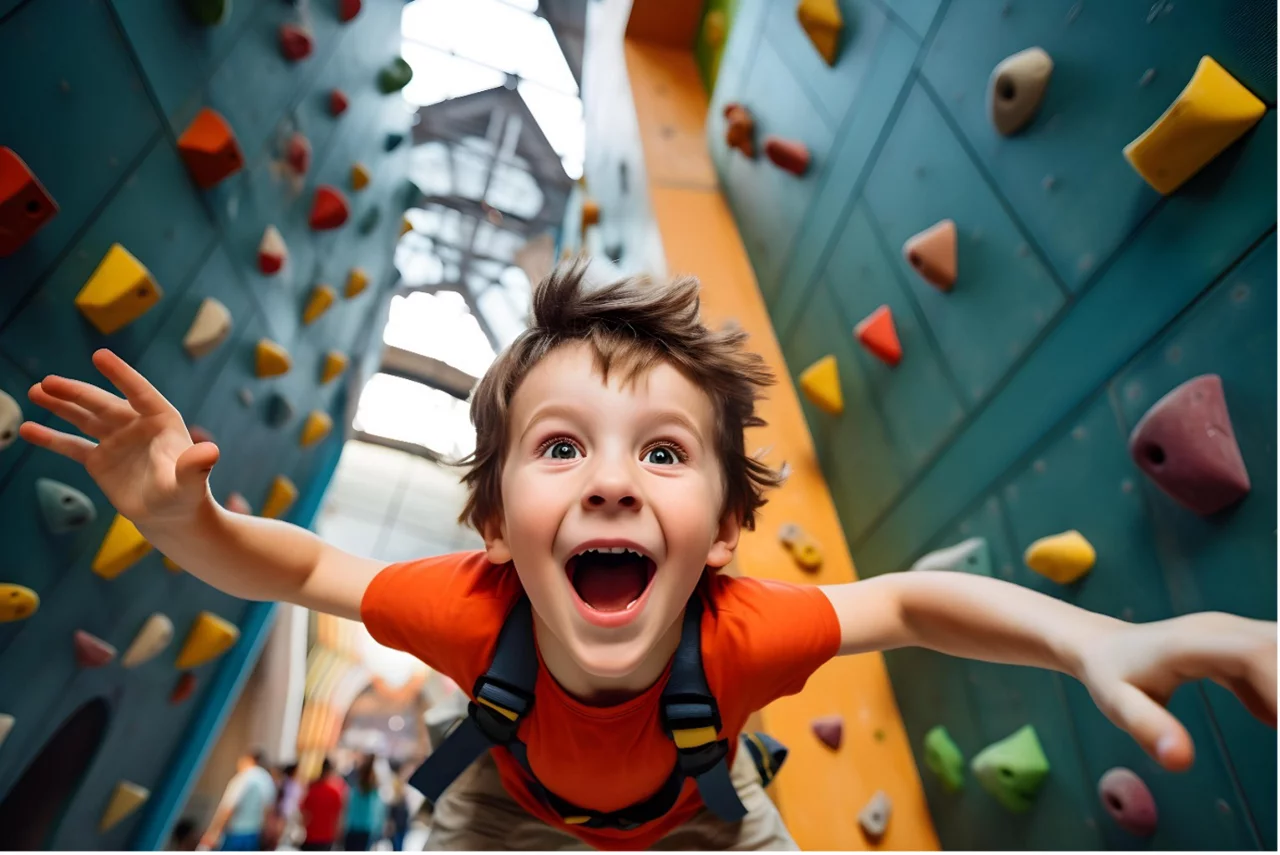
For a budget-conscious family of four, three days at Disney World now costs $2,783 before airfare or a rental car, according to an April 2026 NerdWallet analysis. For roughly $35 a person, the same family can spend an afternoon at Slick City Action Park, Sky Zone, or one of dozens of newer concepts opening at a local power center. They will not get Cinderella's castle, but they will get trampolines, climbing walls, rope courses, a birthday party room, and a story to tell at school on Monday.
That arithmetic explains what is happening to American retail real estate. Our 2026 entertainment tenant study tracks 207 concepts operating 4,746 locations across the U.S. and Canada. Another 721 locations are planned or announced, representing 16.5 million square feet of demand.
Two consumers, two strategies
American shoppers have split into two distinct groups, and entertainment operators are building for both. Higher-income households still travel, dine out and spend on premium experiences. Census Bureau data shows year-over-year growth in performing arts spending of 11.3 percent from 2024 to 2025, with food and beverage up 5.6 percent and spectator sports up 3.5 percent. These are the consumers behind the rise of competitive socializing concepts like Puttshack, Flight Club, and the U.S. debut of The Cube, the British game show experience opening in 25,000 square feet on Michigan Avenue this summer. They cluster in CBDs, Class A malls, and lifestyle centers.
The other group is trading down. Theme-park vacations have moved out of reach for a growing share of families, but the appetite for shared experience has not gone anywhere. Foot traffic across 20 tracked entertainment concepts reached 217 million visits in 2025, roughly 12 percent above 2019 levels. Average dwell time is 140 minutes per visit. People are not staying home. They are showing up at the shopping center.
The kid zone takeover
Nothing in the data captures this shift more clearly than the rise of trampoline parks and kid zones. The category accounts for 1,355 existing locations and 355 in the pipeline, representing 61 percent of all planned square footage and 10 million square feet of announced space. It is the largest category in the entertainment pipeline by a wide margin.
Birthday parties. Weekends. School breaks. Operators in this segment have built recurring revenue engines on the simplest possible foundation. Kids drag friends back for celebrations, and families treat the local kid zone as a regular weekend stop.
Urban Air Adventure leads with 215 open locations and 31 in the pipeline, targeting kids ages 2 to 14. The format started with trampolines and layered in dodgeball, indoor skydiving, ropes courses, climbing walls, go-karts, zip lines, and slides. Boxes run 25,000 to 60,000 square feet, sometimes replacing former Bed Bath & Beyond and Dollar Tree spaces.

Sky Zone, including former CircusTrix locations, is the largest operator at 258 sites with 32 announced, averaging 38,800 square feet. Slick City Action Park is the most aggressive grower, with 34 open and 41 in the pipeline, occupying 20,000 to 45,000 square feet of space. Kids Empire jumped from 43 to 111 locations.
Family entertainment centers, the established players in this space, still hold the largest absolute footprint. With 1,717 locations across 43 concepts, the category occupies roughly 40 million square feet. But growth has flattened to 10.6 percent since 2023, and the 91-location pipeline is comparatively slim. Increasingly, this is a story of consolidation among established operators. Chuck E. Cheese leads at 465 locations with an active remodeling program. Bowlero, operating Lucky Strike and AMF, follows at 351 locations. Dave & Buster's, which acquired Main Event in 2022, now spans roughly 240 locations averaging 35,000 to 45,000 square feet.
Come on down, the studio is at the mall
Game shows have emerged as one of the fastest-growing corners of the competitive socializing category, blending nostalgia with interactive group play. Game Show Battle Rooms, launched in Minneapolis in 2017, now operates 22 locations with six more planned across street retail, lifestyle centers, and open-air shopping centers. Game Show Studio runs 10 locations across malls, lifestyle centers, and street retail, with one more announced. Great Big Game Show, founded in 2023 by the team behind The Escape Game, already operates 22 locations with four more planned in Class A malls and tourist destinations. The biggest entrance of 2026 belongs to The Cube, the British game show experience hosted in its U.S. television run by NBA star Dwyane Wade. The first U.S. location opens in summer 2026 at 600 North Michigan Avenue in Chicago, occupying 25,000 square feet on the third floor above a new Uniqlo flagship and featuring 21 game cubes, three bars, and a lounge.
When the puzzle becomes a routine
Escape and challenge rooms posted the highest growth rate in the database, soaring 247 percent in existing locations since 2023 to reach 430 sites. The traditional escape room model, in which a group of friends solves themed puzzles in a single visit, has expanded into a new format called the challenge room. Where escape rooms are one-and-done, challenge rooms offer 25 or more short, scored games tracked by RFID wristbands, designed to bring players back to improve their scores.
Level99 is the most ambitious player in this format, operating 40,000 to 45,000 square foot locations with 50-plus challenges and a scratch-kitchen pub. Backed by a $50 million investment from Panera founder Ron Shaich's Act III Holdings, the concept has converted former department stores at Natick Mall (Sears), Providence Place (JCPenney), and The Corbin Collection in West Hartford (Sears) into a recognizable new asset class. Announced sites include Westfield Garden State Plaza (former Forever 21) and King of Prussia Mall (former JCPenney). The most anticipated location, opening in 2026, is a 45,000 square foot flagship at Disney Springs in Orlando in the former NBA Experience space.
Activate, BRKTHROUGH, Beat the Bomb, Hijinx Hotel, and Time Mission round out the challenge room field, each occupying 10,000 to 35,000 square feet across malls, lifestyle centers, and open-air centers.
The mall, reconsidered
The persistent "malls are dead" narrative does not survive contact with the entertainment data. Power centers and lifestyle centers roughly doubled their share of entertainment move-ins between 2019 and 2025. Total mall share, including lifestyle, regional, and super-regional combined, held essentially flat. Class A malls in particular have become a primary destination for the most ambitious concepts in the category.
Netflix House opened two locations in late 2025: 100,000 square feet of former Lord & Taylor at King of Prussia Mall, and 110,000 square feet of former Belk at Galleria Dallas. A third location is planned for 70,000 square feet at BLVD Las Vegas in 2027. The format pairs free-to-enter venues with paid immersive experiences tied to Stranger Things, Squid Game, VR games, mini golf, and rotating content designed for repeat visits.
Meow Wolf is moving into a former Cinemark multiplex at Howard Hughes L.A. (70,000 square feet) and Pier 17 at South Street Seaport (50,000 square feet). Arte Museum, the Korean walkthrough art concept featuring projection, sound, and scent, will open in 48,000 square feet at Santa Monica Place (former ArcLight Cinemas) and 30,000 square feet at Icon Park in Orlando in 2027.
The pattern is consistent. Former anchors and theaters become entertainment flagships. The boxes that landed at the bottom of the leasing pile five years ago are now driving the most distinctive deals in retail real estate.
The bottom line for retail
Location-based entertainment is a major player in retail real estate. Across 207 concepts, 721 locations are planned and 16.5 million square feet of demand is set to be taken. Trampoline parks, family entertainment centers, escape rooms, immersive art, and competitive socializing have all demonstrated multi-year growth. High-volume, accessible concepts will continue to favor open-air formats. Premium experiences will continue to favor productive malls and CBDs. Large vacant boxes will keep converting to entertainment uses as former theaters and department stores become viable targets for entertainment expansion.
Americans have not stopped looking for something to do together. They are doing it closer to home, at concepts priced for a Friday night or Saturday afternoon rather than a long weekend in Orlando. For retail real estate, that is not a marginal trend. It’s the new tenant base.

Americans have not stopped looking for something to do together. They are doing it closer to home, at concepts priced for a Friday night or Saturday afternoon rather than a long weekend in Orlando. For retail real estate, that is not a marginal trend. It’s the new tenant base.