With the rapid improvements in AI capabilities, are data centers doing enough to keep pace?
28 October 2026
Insight
28 October 2026
Getting data centers ready for the AI boom
Categories:
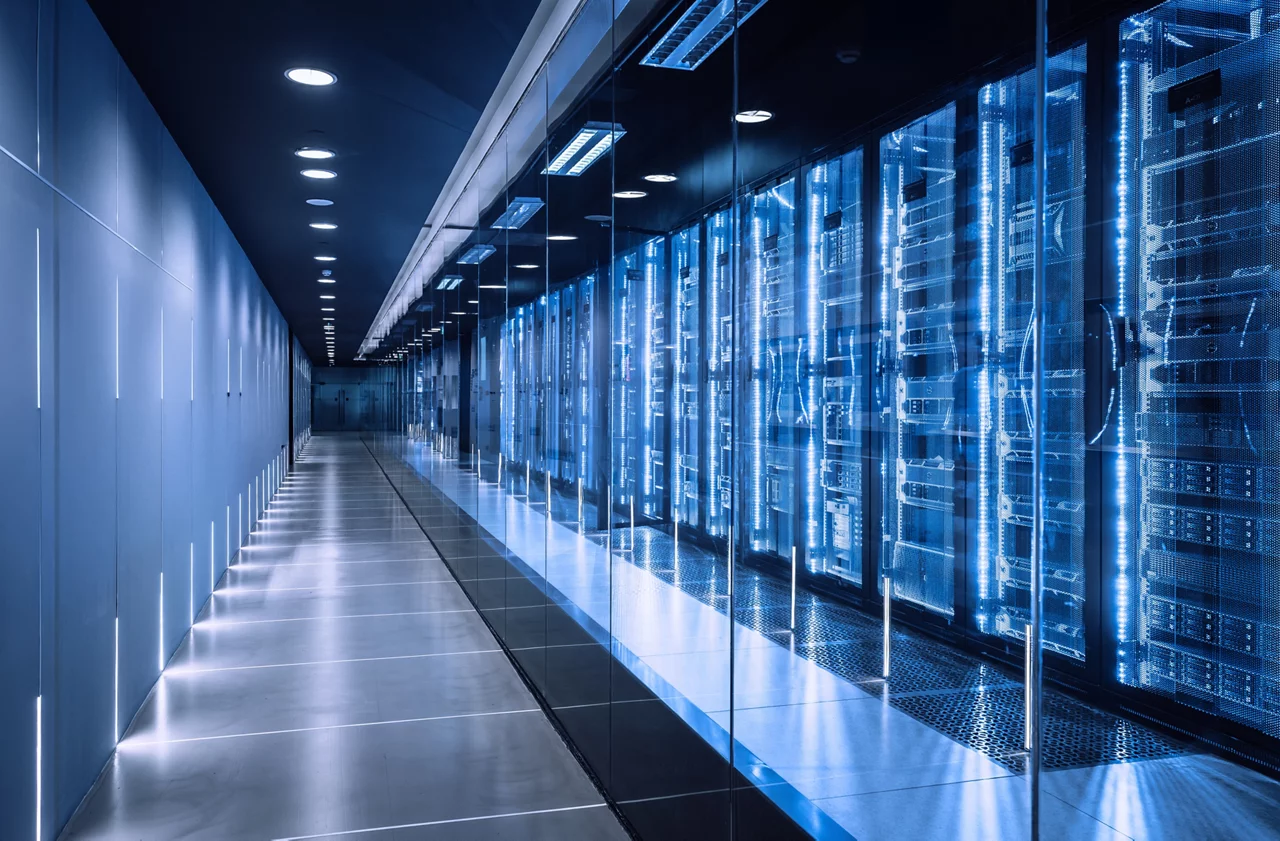
The rapid adoption of artificial intelligence (AI) has intensified focus on data centers across the commercial real estate industry: namely whether they could support the pace of AI’s quickening advance, from building design and rack densities to its environmental impact and compliance with evolving government regulations. The availability of AI to the masses drove the rapid and profound growth of data centers, raising concerns about their ability to handle the immense computational needs.
Why rack densities are struggling to keep pace with AI
The primary focus lies in the rack densities, or the amount of power the equipment within a server rack uses.
Companies that operate data centers have ramped up rack densities from 3 kilowatts (kW) a decade ago to the current average deployment of 10kW per rack. Still, that’s barely sufficient for AI and high-performance computing, which require rack densities of up to 100kW per rack.
Some operators are already leading the charge. Take data center giant Digital Realty, which launched a high-density colocation service for workloads of up to 70kW per rack.
“Data centers will have to undergo design and structural updates to accommodate AI workloads,” says Celina Chua, Data Center Client Solutions Director, Capital Markets, JLL. “These modifications must cater to the increased power consumption, floor loading, and heat generation associated with higher rack densities.”
Why liquid cooling is becoming essential for AI data centers
Effectively managing the degree of rack density involves tackling the critical issue of cooling, which directly influences the design of a data center.
Most high-density racks can only function with the help of liquid cooling technologies because conventional air-cooled methods in existing data centers often fall short in efficiently handling the heat generated by high-performance AI chips.
However, most existing data centers were designed around traditional air-cooling systems and lack the infrastructure required to support liquid cooling. Additional considerations around the handling and management of cooling liquids have also slowed adoption.
Why liquid cooling adoption is inevitable
Still relatively nascent, liquid cooling is widely considered a more energy-efficient alternative to air cooling. For instance, a liquid immersion cooling system, developed by Mitsubishi Heavy Industries, reduced the energy consumption for cooling by 92% in a data center operated by Japanese telecommunications giant NTT.
“Retrofitting existing data centers to integrate liquid cooling also may not be as straightforward, or as financially viable, compared to constructing purpose-built AI data centers from the ground up,” Chua says.
Another major barrier hindering adoption is the issue of maintenance. “In most cases, liquid cooling poses a challenge for the concurrent maintainability of the server racks as they must be powered off and removed during the process,” says Chua.
As rack densities grow further, however, the adoption of liquid cooling as the main solution over air cooling has become “inevitable”, Chua says. “It’s still the most energy-efficient and viable alternative to cool the servers effectively.”
How regulations are shaping data center standards
The regulatory landscape for data centers continues to evolve worldwide. Alongside increasing focus on energy efficiency, sustainability, grid reliability and community impact, operators must also navigate growing requirements related to data privacy, data sovereignty and compliance. As demand for digital infrastructure continues to grow, governments and regulators are taking a closer look at how data centers are developed, powered and operated.
In Australia, for instance, data center providers pursuing government contracts must have a five-star National Australian Built Environment Rating System (NABERS) rating, and a target power usage effectiveness (PUE) below 1.4.
The German government recently approved legislation requiring data centers opening from July 2026 to achieve a PUE of 1.2, and to implement measures to reuse at least 20% of their waste heat by 2028.
Similar trends are emerging in the U.S. California, for example, has regulations with a focus on energy sourcing, resource consumption and operational transparency for data center operators.
As digital infrastructure demand grows, compliance considerations are becoming an increasingly important part of data center planning, development and operations. Markets that currently have limited requirements in place are likely to introduce more comprehensive frameworks over time.
Why getting data centers AI-ready is becoming a business imperative
Higher rack densities, greater power requirements, more advanced cooling solutions and evolving regulatory expectations are changing what operators need from both new and existing facilities. What was considered future-ready just a few years ago may no longer be sufficient for the next generation of AI workloads.
For many operators, the challenge is not simply adding capacity. It is ensuring that facilities can adapt to rapidly changing technology requirements while maintaining reliability, efficiency and compliance.
The data center industry has consistently evolved to support new waves of digital transformation, and AI represents the next major shift. Those that plan ahead and invest in infrastructure capable of supporting future workloads will be best positioned to meet growing demand and remain competitive in an increasingly AI-driven economy.
As organizations evaluate how to prepare for the next generation of compute demand, success will depend on more than technology alone. Strategic planning across power availability, cooling infrastructure, facility design and operations will be critical to creating resilient, future-ready data centers.
Want to learn more about getting data centers AI-ready?
We help owners, operators and investors navigate these challenges, from site selection and development strategy to modernization and operational optimization, enabling facilities to support the evolving demands of AI. Contact us today.