How and why dynamic neighborhoods outperform across all property types
17 June 2026
Insight
17 June 2026
Lifestyle districts 2026
Categories:
Authors
Jacob Rowden
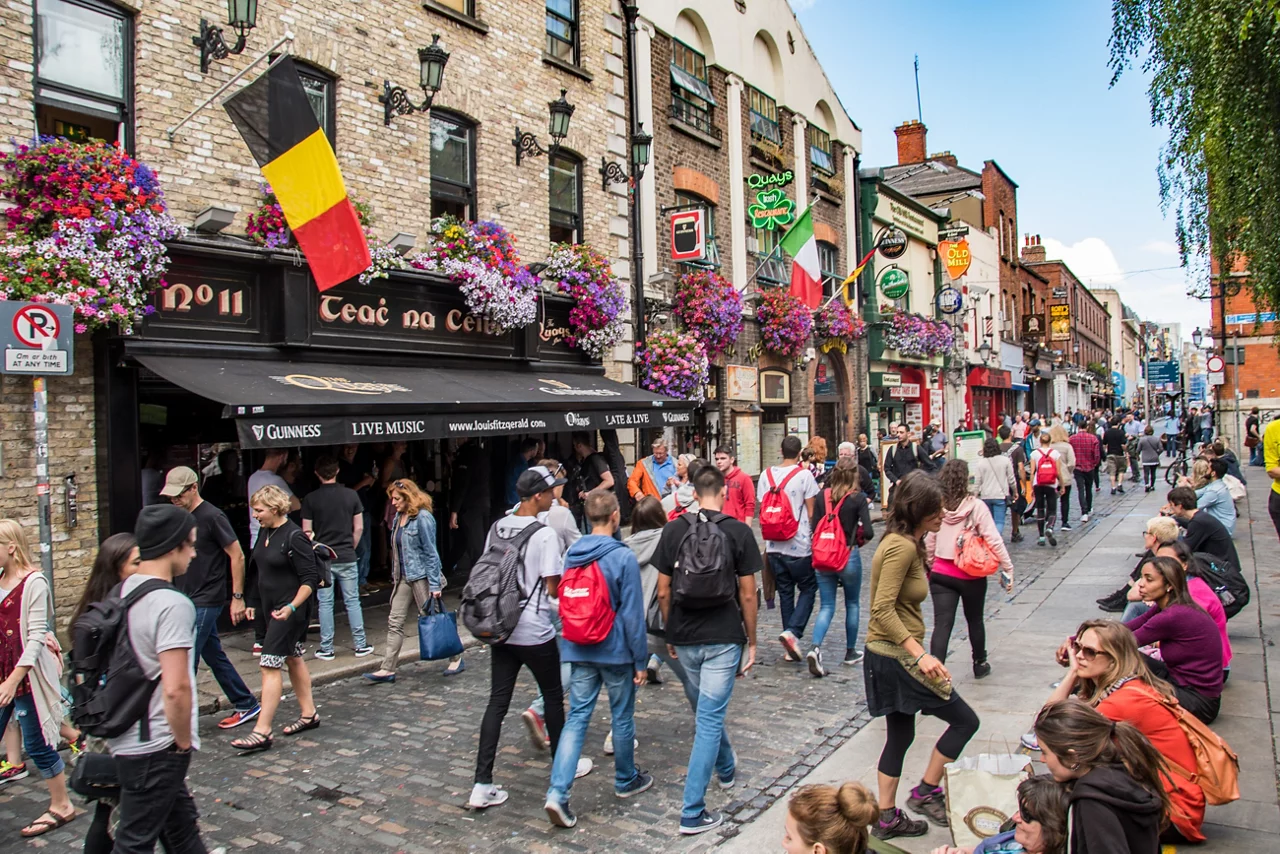
Many trends have come and gone in real estate in the last several cycles, but one enduring theme in recent decades has been the proliferation of mixed-use districts. As more examples come to market and reach maturation, it is evident that success is driven by more than just assembling different property types near one another or within the same building. Success has been most acute where market forces have produced a dynamic, self-sustaining ecosystem of different uses that form synergies with one another. Lifestyle Districts are vibrant mixed-use regions where the built environment aligns with users’ aspirational lifestyles, and today there is more than 1 billion square feet of Lifestyle real estate across all property types in the U.S.
Lifestyle Districts gained considerable attention in the last cycle as many prolific examples emerged, saw significant outperformance, and attracted considerable attention from the institutional investment community. Master-planned districts like Hudson Yards in Manhattan, or even organic neighborhoods like Chicago's Fulton Market, transformed from complete irrelevance in the eyes of institutional capital, to the most sought-after submarkets within the entire metro areas. One of the primary drivers of this increased attention was extremely strong leasing trends: Lifestyle Districts see rent premiums and occupancy premiums across every major property type.
Lifestyle assets do not see this consistent outperformance simply because they are newer buildings. The fact that the built environment more closely mirrors the lifestyles that workers, residents and visitors want to be living, there are innate psychological forces that support the economic outcomes that landlords are seeking:
The Closed Loop Economy: Lifestyle Districts have a high capture rate for workers' and residents' economic activity. Office workers spend additional time lingering or socializing in the district before and after the workday, supporting retail and entertainment product. Multifamily residents of Lifestyle Districts spend the vast majority of their leisure time within the same district, contrary to traditional residential nodes.
The Event Economy: Integrating entertainment anchors and curating robust destination retail and hospitality offerings creates an event-driven economy which creates more appeal for office and residential assets, but introduces large waves of out-of-market demand to drive economic spikes across the district.
The Practical Advantage: Administering an entire district as a single ownership entity allows ownership to more effectively deploy capital compared to discrete owner districts. Shared amenity offerings allow landlords to spend less developing amenity spaces and reclaim rentable building area in multifamily and office assets. Economies of scale and efficiencies with service providers allow single-owner districts to trim as much as 10% of operating costs relative to multi-owner districts.
The advantages of Lifestyle ecosystems are increasingly being recognized and prioritized by the commercial real estate industry as well as policymakers in major cities and metro areas. Despite an acute slowdown in new development across the U.S., Lifestyle Districts are some of the rare areas that continue to support development across all property types. Despite only comprising about 4-5% of national inventory, Lifestyle Districts are currently comprising two to five times as large of a share of active development pipelines among the various property types. Many cities possess the underlying fundamentals to support newly-developed Lifestyle Districts and expansion of existing nodes, and the improvement of capital market conditions will begin to support more large-scale and ambitious proposals being launched across many cities. Over 1 billion square feet of Lifestyle product exists today, but based on current planned development, that could easily grow by 50% or more by the end of the 2030s.