Singapore: where capital flows through global trade throes
06 October 2025
Insight
06 October 2025
Who’s making moves? Singapore’s investment sales 2025 (YTD)
Categories:
Authors
Zhi Qi Lee
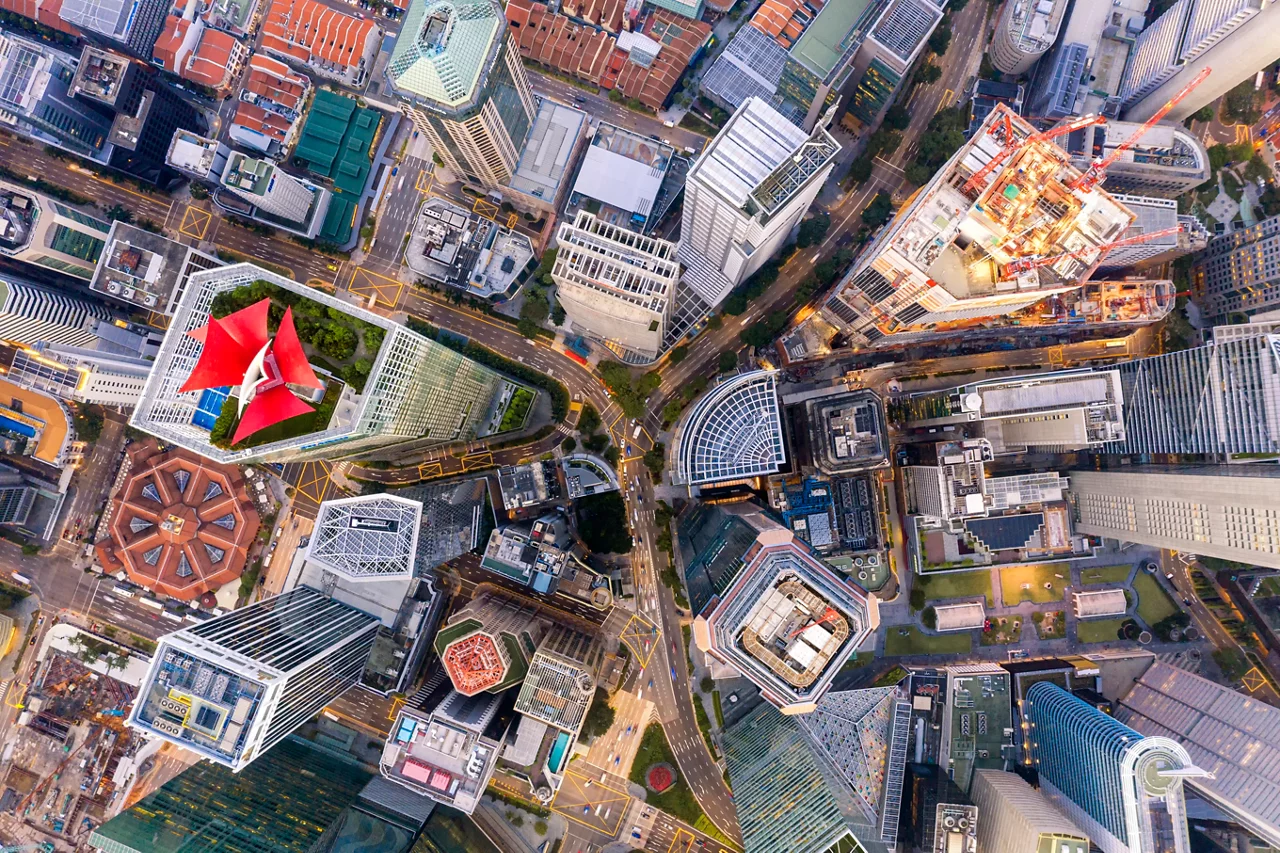
Even as global trade tensions mount in 2025, Singapore’s investment sales market holds its ground. While lead times have lengthened, investors ultimately continue to press ahead with deals. Capital flows from institutional heavyweights such as BlackRock, publicly listed real estate companies, and prominent developers and REITs underscore enduring confidence in the market. Other participants include family offices, high-net-worth individuals (HNWIs), fund managers, and companies beyond the traditional real estate sector. This broad investor participation sets the stage for examining Singapore's investment momentum, the push for full ownership in major deals, and where capital is flowing.
Bigger bets, stronger confidence
As of 31 August 2025, Singapore’s year-to-date transaction value stood at S$9.85 billion, marking a 12.5% increase from S$8.75 billion in the corresponding period of 2024. Investors’ decision to channel larger amounts of capital amid global uncertainties signals confidence in the market, reinforcing Singapore's reputation as a safe haven for investments.
Headline deals and active buyer groups
Driven by investors’ intent to acquire full ownership, 2025 has witnessed notable big-ticket transactions involving billion-dollar properties. The highest-value deal involved South Beach (S$1.38 billion), where IOI Properties Group acquired the remaining 50.1% stake from its joint venture partner, City Developments Limited. Similarly, Frasers Centrepoint Trust secured full ownership of Northpoint City South Wing (S$1.13 billion), consolidating its stake in the mall. In a similar move, CapitaLand Integrated Commercial Trust acquired the remaining 55% interest in CapitaSpring's office and retail components (S$1.05 billion). The concerted effort by the regional developer alongside institutional investors to consolidate ownership points to their shared conviction that Singapore's core investment assets, including high-yield properties, will deliver material returns despite global market volatility.
Sector in the spotlight: Where the money flows
From January to August 2025, industrial assets have been at the forefront of Singapore’s investment sales market, recording 87 deals worth a combined S$2.74 billion. The sector continues to benefit from strong demand for higher-yielding assets, including logistics facilities, warehouse spaces, and data centres. Following industrial, retail and commercial are the next largest drivers of investment activity. Retail saw 59 deals transacting S$2.03 billion, while commercial accounted for 31 deals totaling S$2.13 billion. Year-on-year, this represents a 5% increase in retail deal count and a 13% rise in transaction value, while commercial assets posted a 48% growth in deal count and a 35% increase in transaction value. Heightened investor activity indicates that capital remains directed towards Singapore’s most attractive segments, reflecting resilient market demand. Notably, while only one mixed-use development was transacted, it contributed S$1.38 billion to the market, demonstrating selective interest in high-value assets. Taken together, the breadth of activity across sectors and investors’ willingness to commit large sums reinforce Singapore’s standing as a stable and attractive core investment market in Asia amid escalating global trade complexities.
Further insights: From JLL’s Asia Pacific Capital Tracker
For a closer look at key sector trends and investor sentiment, alongside projected capital flows in Singapore and the wider Asia Pacific region, explore JLL's latest Asia Pacific Capital Tracker 2025 Mid-year Perspective.