Why grid constraints and storage are creating new value for investors
14 August 2026
Insight
14 August 2026
A generational shift in global power is here
Categories:
Authors
Steven Jack
Matt Eastwick
James Cameron
Something fundamental has changed in the world of energy. A long-term trend of stable or declining electricity demand has been completely overturned. “We've seen a generational shift in power demand as a result of data centers and AI,” says Steven Jack, Head of Energy & Infrastructure Advisory, EMEA.
The pace has caught many by surprise. Demand hasn’t crept up over time; it has surged, fueled by technologies that only recently entered mainstream planning assumptions. “This was not on the radar until very recently,” confirms Matt Eastwick, Senior Managing Director, Energy & Infrastructure Advisory in the U.S.
The insatiable appetite of artificial intelligence and the data centers (DCs) that house it are reshaping demand projections across the globe. Utilities that were forecasting modest growth are now grappling with figures nearly double their previous estimates. This surge presents a genuine challenge, but for investors positioned to act, it also signals a clear opportunity.
The grid is the new bottleneck
The constraint isn’t ambition around generation. The grid itself has become the limiting factor. Our transmission infrastructure, designed for large, centralized power stations, is struggling to cope with a decentralized flood of new, often intermittent, renewable energy sources.
This has created ‘gridlock’ in primary markets across the U.S., Europe and APAC, where interconnection queues for new projects are stretching to four years or more. Some regions have even been forced to pause new connections altogether. “For any energy developer – without a grid connection, you don't have a project,” Jack explains.
For investors, this grid congestion translates directly into risk. It means project delays, profound uncertainty and the potential for stranded assets or impacted profitability when grid capacity can't support full power output. A power generation project without a reliable customer or a path to (or through) the grid is just a liability. The implication for investors is the inverse: assets that provide or secure grid access carry a scarcity premium that is only growing.
“In liberalized markets in Asia Pacific (e.g. Australia, India, Japan and the Philippines), status and location of grid connection is the first question for investors and has the largest valuation impact for development assets,” says Jim Cameron, Head of JLL’s Energy and Infrastructure team in Asia Pacific.
New models for a new era
The market is responding with creativity. The conversation around renewables is shifting from a pure decarbonization tool to one of resilience and commercial sense. In a world of geopolitical uncertainty, generating your own power is about “energy sovereignty or energy autonomy” as Jack puts it. It's simply the cheapest way to produce power today.
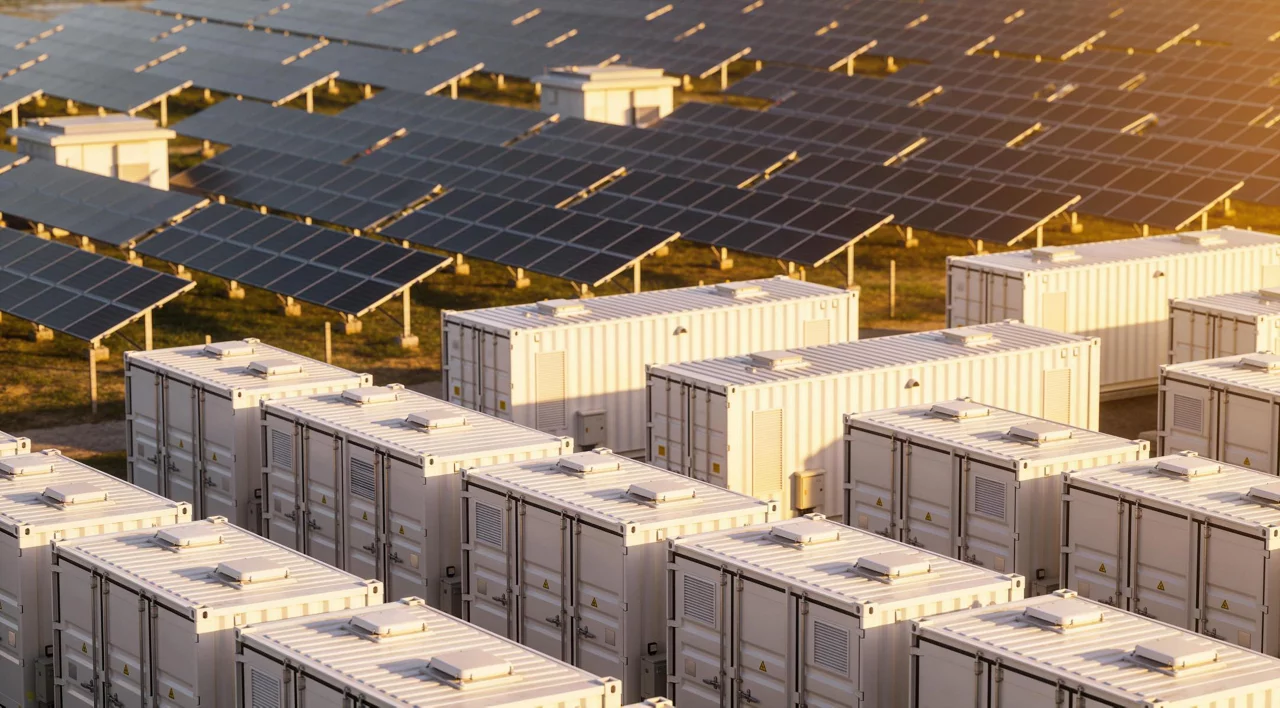
To manage the intermittency of wind and solar, battery storage has become essential. These assets act as “shock absorbers for constrained grids,” charging when power is cheap and abundant, then discharging when demand (and price) is high. As Eastwick notes, batteries are a “very important component and asset in that balancing act.”
This new dynamic is also forging unusual partnerships. We’re seeing major tech companies become direct participants in the energy market. In one recent example, a Bitcoin miner in Texas purchased an operating wind farm that JLL was marketing outright to secure its power supply. These users are willing to pay a premium for reliable power, with Eastwick noting a data center “might be willing to gladly pay well above market rate because they're still getting a lot of value.”
In Asia Pacific, energy and DC developers are increasingly partnering to address power and grid access constraints. For example, in Australia where legislation is expected to require that DC developers ensure that new power generation matches additional DC capacity, a range of models (outside traditional offtake arrangements) are being pursued, from JVs to inclusion of batteries in DC design to facilitate grid connection. “While the solution will differ depending on circumstances, it is clear we will see many more partnership opportunities and innovative solutions between DC and energy clients across the region,” says Cameron.
The opportunity for investors is no longer just in building new generation. It’s in owning assets that provide flexibility and certainty. Power access is now an investable differentiator.
Navigating the new power landscape
“I think we’re in a brave new world,” says Eastwick. “Power demand is rising faster than grids were built to handle. Capital is available, but certainty is harder to find.” In this environment, winners will be those who factor grid constraints and power availability into their investment decisions from day one.
Scale still matters, but selectivity now plays a bigger role. Diversifying across geographies and technologies helps absorb regulatory change, grid delays and pricing volatility. Rigorous due diligence carries more weight than pipeline size alone. Power access has shifted from an operational detail to a defining factor in asset viability, shaping value far earlier in the investment cycle.
These dynamics are playing out at different speeds across key markets. In the U.S., interconnection reform and merchant power exposure are actively reshaping deal structures. In Europe, regulatory frameworks are evolving quickly but unevenly across member states. In APAC, data center build-out is outpacing grid planning by a significant margin in several markets. For investors operating across borders, the ability to read those local conditions – and integrate them into capital strategy from the outset – has become a meaningful differentiator.
Want to discuss what the power shift means for your portfolio, pipeline or investment strategy? Visit our Energy & Infrastructure page to learn how our global specialists support investors, developers and operators as power constraints reshape real assets.