Discovered documents reveal Adelaide's pioneering role in the world's shopping centre story
04 May 2026
Insight
04 May 2026
Adelaide then and now: How JLL’s bold vision shaped modern retail
Categories:
Authors
Ben Parkinson

Oftentimes, revolutionary moments in the development of a modern city can pass unrecognised. They present as gentle pivots quietly changing the landscape and it is only when you pause to look back their true impact is realised.
For Adelaide, the discovery of historical notes from Pip Comport, the founding managing director of JLL’s Adelaide office (then Jones Lang Wootton), are providing that clarity of retrospect – especially in retail.
From the pioneering development of the Armada Arndale Shopping Centre, to drawing up retail’s first long-term leases with turnover-based rent structures, Comport reveals the birth of modern commercial property in South Australia, tracing the city’s journey from provincial town to today’s $1.5 billion investment market.
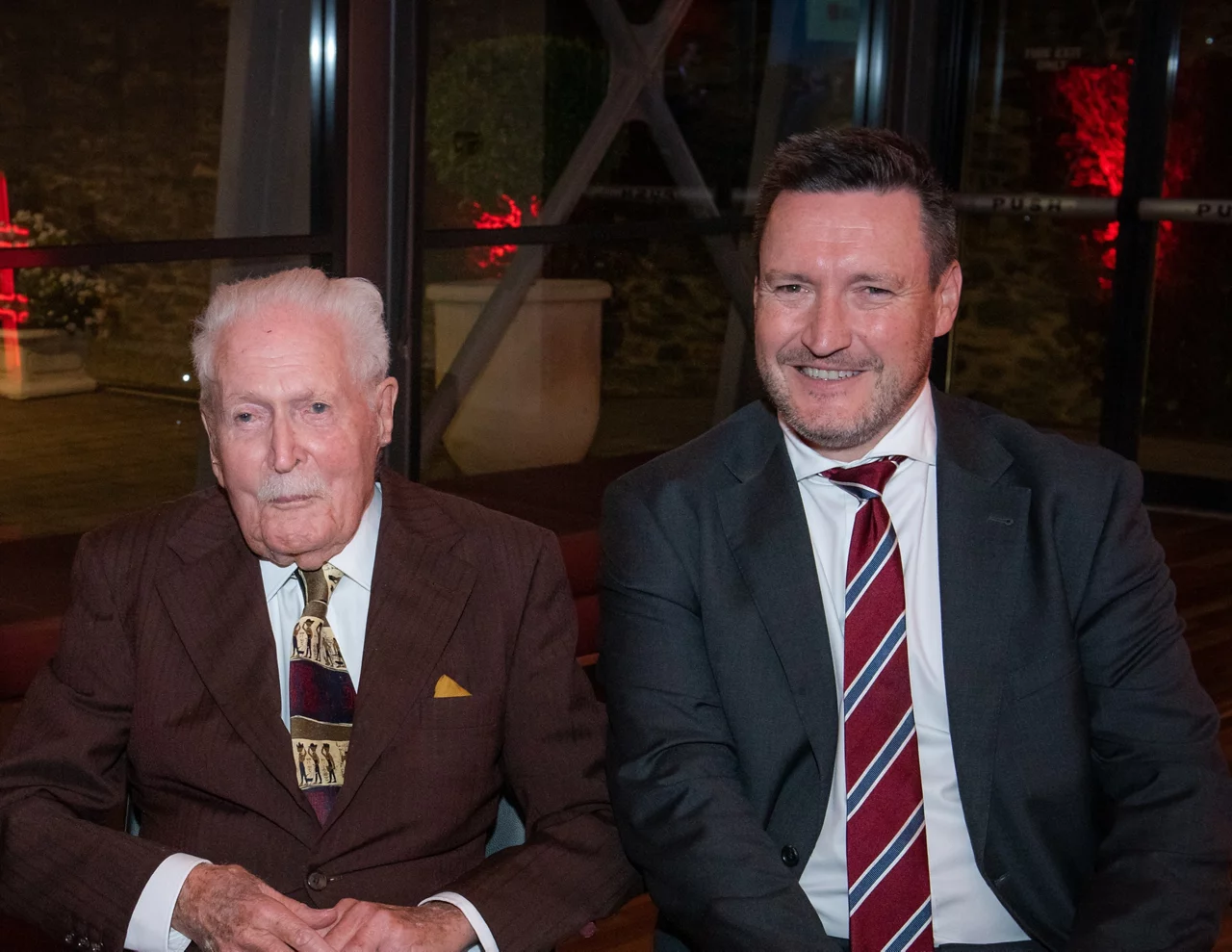
Pip Comport (left) with Ben Parkinson, JLL Adelaide Managing Director, in 2022 at the office's 60th anniversary
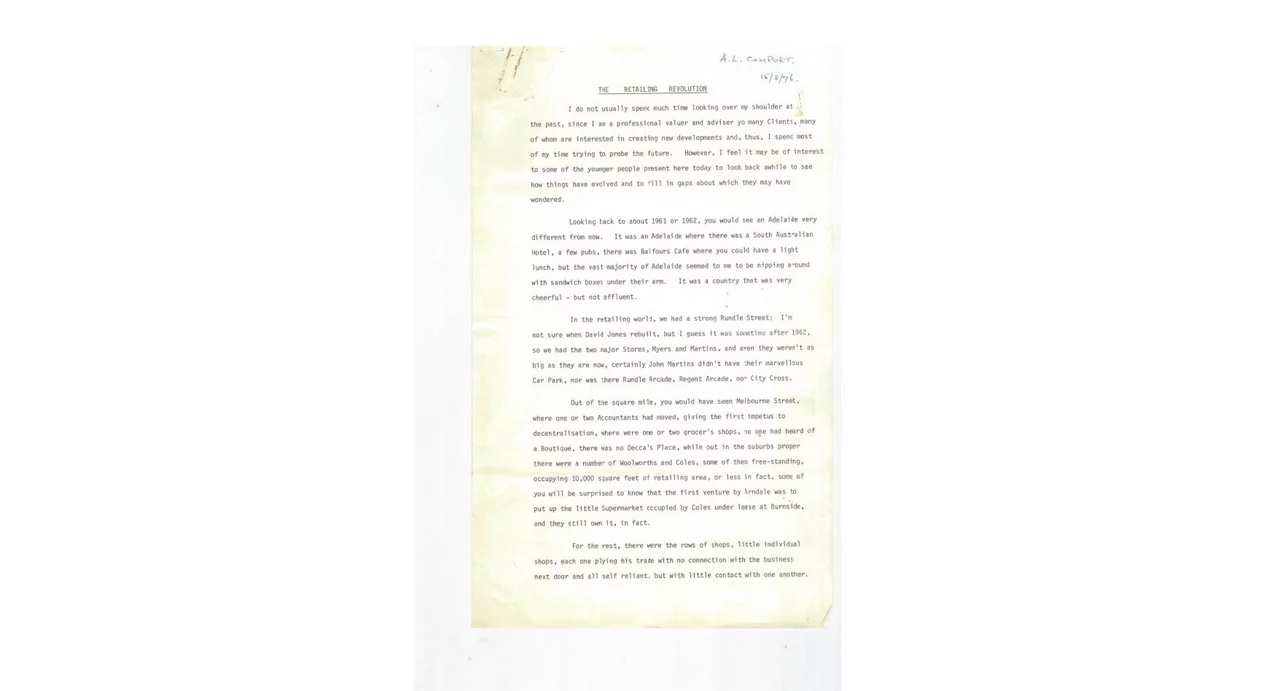
Comport's original 1976 speech
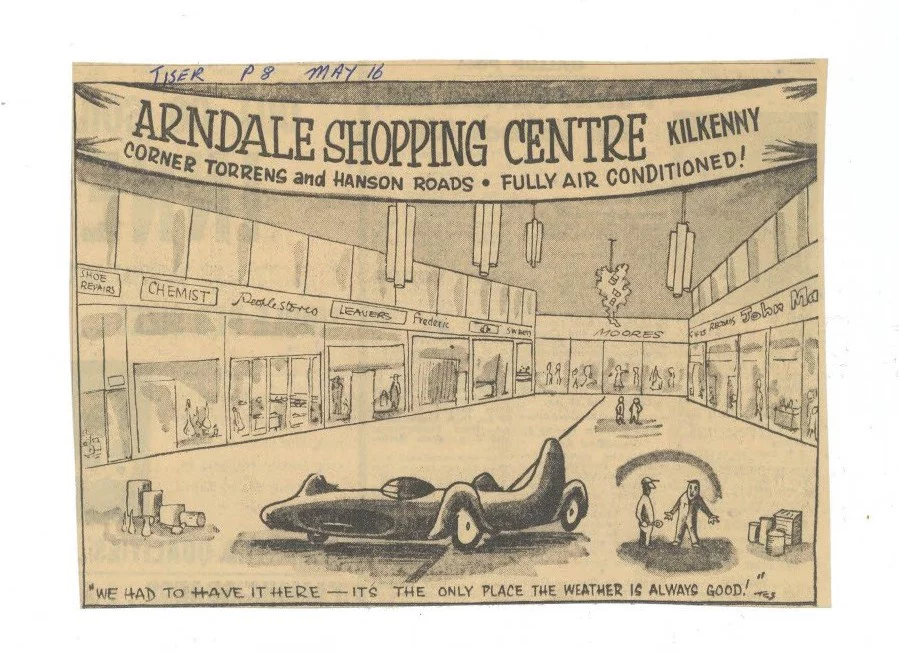
A newspaper cartoon covering the opening of Arndale
In the 1960s, Adelaide was a "large flat, uncomplicated plain and about 800,000 people living on it”. It was the perfect spot for a drive-in American style shopping centre, Comport said, describing the characterisation of the city given by the British developers that came to build Arndale. The development sparked the foundations of modern retail in Adelaide.
Small shops to shopping behemoth
In notes for a speech titled ‘The Retailing Revolution’, dated 15 March 1976, Comport describes Adelaide’s retail scene of the 1960s with its “small sandwich and food shops and a handful of pubs” as "very cheerful, but not affluent." Leases were short, often monthly and rents were quoted weekly, he said. The idea of Adelaide retailers working together was unthinkable.

Crowds flock on opening day
When the British-based Arndale Property Trust arrived, that all changed. The developer envisioned an American-style drive-in shopping centre for Adelaide’s underdeveloped commercial scene and the stage was set for a retail revolution. JLL, which had established its Adelaide office in 1961 as Jones Lang Wootton, with Comport at the helm, had an integral role in shaping this transformation.
Leases with transparency
Arndale Shopping Centre at Kilkenny, built in 1961 and opened in 1963, was Adelaide’s first commercial shopping centre and one of only sixteen enclosed air-conditioned malls in the world. Adelaide retail, often dismissed by Sydney and Melbourne, was pioneering a format that would define suburban commerce globally.
As part of the development, JLL introduced innovations including parking ratios of seven cars per 1,000 square feet (93 square metres). The metric was so forward-thinking it wouldn't be adopted into Adelaide planning regulations for another 14 years.
To justify tenants' capital expenditure on modern shopfronts and air-conditioning units, long-term leases of six to 20 years with automatic biennial rent increases replaced Adelaide's precarious monthly arrangements. For anchor tenants, JLL “implemented some of the earliest leases comprising a base rent plus a percentage of turnover – a practice that required a level of transparency previously unheard of", Comport said.
Comport, who served as managing director of JLL Adelaide for more than a decade, described the city’s first Merchants' Association, established by JLL, as transforming “deadly retail rivals from Rundle Street” into collaborative partners. This was an initiative recognised by many as the birth of institutional-grade retail property management in the city.
Armada Arndale Shopping Centre, which has also gone by the names Centro Arndale and Arndale Central, before taking the Armada name in 2014 after being acquired by Armada Funds Management, was Australia’s first fully enclosed air-conditioned shopping centre. It is now a popular retail hub with more than 100 stores covering 100,000 sqm.
Westfield Marion shopping centre, opened a little later in 1968 and just as transformative, delivered fresh challenges. JLL had to broker peace between retail giants John Martins and Myer, whose rivalry Comport compared to "admitting a cat and a dog into the same room."
Experiential retail endures
Comport’s notes touched on concerns that Adelaide’s shopping centres would simply serve as "enormous warehouses", storing goods that customers could already view on television. But he concluded that "human nature does not really change at all. A lot of people like dressing up, going somewhere, feeling the quality, meeting someone and having a yarn."
It’s an observation that drives Adelaide’s retail success today. The TV shopping imagined in 1976 has evolved into sophisticated omnichannel retail ecosystems. But the physical retail experience in Adelaide remains paramount, now enhanced by world-class dining and entertainment.
The transformation continues
Adelaide's retail and commercial property market is experiencing another revolution in 2026. Adelaide has become a globally significant destination for retail investment and innovation. Defence, space, technology, and advanced manufacturing drive Adelaide's economy.
Total property investment reached $1.5 bn in 2025, reflecting a 45.7% increase year-on-year. International capital flows into Adelaide's retail and commercial property market with confidence. The foundations JLL laid in Adelaide during the 1960s have enabled the city to grow into a primary investment market.

Westfield Marion opened in 1968
Those original Adelaide shopping centres have evolved. Marion has expanded into a super-regional retail powerhouse. In his 1976 speech, Comport forecast a retail expansion in Adelaide’s southern suburbs. Three years later, Colonnades Shopping Centre was built by the South Australian Housing Trust and AMP.
JLL as a driver of Adelaide's legacy
Comport died in 2023 aged 101. His historical notes are not just a nostalgic reminder of Adelaide’s retail history, but also of JLL's pioneering involvement. JLL’s courage and innovations set the foundations for Adelaide’s commercial success today. Not bad for a city that was once just “cheerful”.