Consulting services

Meeting your needs
A 430 + strong multi-discipline practice of experts
We blend strategic expertise with a focus on people and places. Our solutions combine advanced analytics, real-time data, market intelligence, behavioral insights, and emerging trends through innovative research models to tackle your unique challenges head-on, delivering cost savings that boost your bottom line, sustainable practices that protect our planet and exceptional experiences that inspire your employees.
- Develop and execute cost reduction programs across rent, capex, FM and utilities.

- Reshape their individual, metro, national and global footprints.
- Develop, test and scale engaging workplaces.
- Deploy technologies to monitor and enhance experience.
- Manage complex business change programs using a variety of tools and technologies to measure outcomes.
- Build and deploy the capabilities, partnerships, technologies, insights and governance models needed.
See how we do it

Client story
Innovation meets history: transforming Big Tech HQ

Client story
Leading MedTech company reinvigorates the workplace
Client story
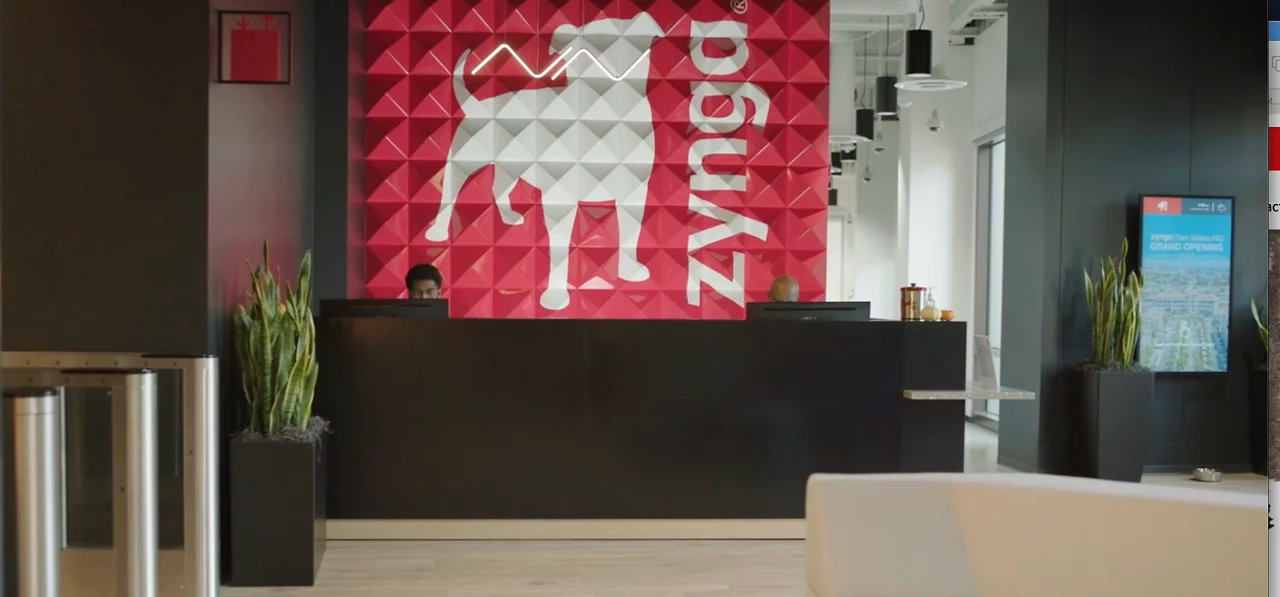
Zynga levels up its global workplace strategy

Client story
Future Lab accelerates post-merger integration in record time
FAQs about consulting services
Real estate development consulting is more than a cost to manage. It can be used to:
- Optimise development returns and capital allocation: by identifying the highest-value opportunities. For example, JLL helped a global developer increase projected returns by 15% through data-driven site selection and product positioning analysis.
- Mitigate development risk: by conducting rigorous feasibility studies, market analysis, and financial modelling before committing capital. This includes assessing demand drivers, competitive supply, and exit strategies across many development scenarios.
- Enhance project marketability and speed-to-market: through strategic product formulation, pricing analysis, and go-to-market planning. Creating differentiated development concepts gives projects a competitive advantage in attracting tenants, buyers, or investors.
- Support sustainability goals: by integrating ESG considerations into development strategy, which helps meet regulatory requirements, attract impact investors, and command premium pricing from environmentally-conscious occupiers.
Data analytics and technology are critical because they help consultants make development decisions based on solid evidence instead of assumptions.
- We use platforms that integrate market data, demographic trends, competitive supply pipelines, absorption rates, and pricing analytics into one system.
- We model multiple development scenarios to evaluate how changes in product type, unit mix, pricing, phasing, or amenities would affect feasibility, returns, and risk.
- AI is used to quickly analyse market trends, comparable transactions, tenant/buyer demand patterns, and construction cost benchmarks, reducing analysis time from weeks to hours.
- Technology enables real-time tracking of development pipeline, leasing/sales velocity, and market absorption, allowing immediate response to market shifts rather than waiting for periodic reports.
JLL supports development consulting with tools like JLL Falcon (an AI platform) and JLL Azara (an AI data analysis app), used by over 47,000 professionals to deliver faster, data-driven development strategies.
When comparing development consulting firms, consider these five factors:
- Methodology transparency: Ask them to explain their approach to market analysis, financial modelling, product positioning, and strategic recommendations.
- Data and technology capabilities: Understand what proprietary market data, establshed databeses, AI tools, and financial modelling platforms they use for feasibility and strategy work.
- Team expertise: Ensure you know exactly who will lead your engagement—their development experience, asset class specialisation, and local market knowledge.
- Integration with execution services: Determine if they can move beyond strategy into execution support—leasing/sales advisory, project management, construction oversight, and asset management.
- Demonstrated results: Request case studies showing successful project outcomes, including achieved returns, absorption rates, pricing premiums, and client testimonials.
Using one integrated firm is usually best because development decisions are interconnected, and multiple advisors can result in fragmented strategy.
- One firm provides the advantage of unified data, consistent methodology, and coordinated recommendations across market analysis, financial feasibility, and go-to-market strategy.
- They can seamlessly transition from strategy to execution, eliminating gaps between planning and implementation.
- Accountability for project success is clear with one advisor managing the full development lifecycle.
- Specialists may be valuable for narrow technical needs (such as specific tax strategies, geotechnical studies, deep consumer trends analysis or niche market segments), but overall development strategy should remain with your primary advisor to ensure cohesion.
An integrated approach ensures all strategic elements are aligned:
- JLL begins by consolidating market data (supply/demand dynamics, absorption trends, pricing, demographics, public policies, employment growth, and competitive analysis).
- We analyse target market segments and buyer/tenant preferences before defining optimal product specifications, unit mix, amenities, and design features.
- Develop scenario models that integrate market positioning, development costs, phasing strategies, and financial returns to ensure alignment across all dimensions.
- Execution is coordinated with leasing, sales, project management, and construction teams to maintain strategic integrity through delivery.
- For example, this approach helped a mixed-use developer refine their product mix and pricing strategy, resulting in 20% faster absorption and $15 million in additional project value.
To build the case for consulting, present a clear value proposition demonstrating risk mitigation and return enhancement.
- Benchmark against industry standards: Show how consulting can improve feasibility outcomes, typically increasing projected returns by 10–20% through optimised product positioning and pricing.
- Cost-benefit analysis: Consulting fees typically represent 0.5–1% of total development costs but often deliver ROI of 5:1 or higher through improved market positioning and faster absorption.
- Risk mitigation value: Demonstrate the cost of proceeding without proper analysis - including market timing errors, product misalignment, pricing mistakes, or extended lease-up/sell-out periods.
- Strategic benefits beyond returns: Include improvements in project differentiation, ESG performance, community approval processes, and long-term asset value.
Development consulting provides forward-looking market intelligence that enhances investment decision-making:
- You gain understanding of emerging occupier preferences (flexible layouts, sustainability features, wellness amenities, technology infrastructure) that drive demand.
- Market analysis identifies undersupplied product segments and optimal timing for market entry, reducing development risk.
- Location analytics provide predictive insights into market attractiveness based on demographic shifts, employment trends, and infrastructure investment—not just historical transaction data.
- Strategic positioning recommendations help direct development investment toward features and locations that will maximise tenant/buyer appeal and achieve premium pricing.
Consultants use structured analysis frameworks to determine optimal strategies:
- Highest and best use analysis: Evaluating whether current entitlements represent optimal value, based on market demand, zoning potential, competitive positioning, and financial feasibility.
- Build vs. hold decision framework: Analysing development timing by assessing market cycle position, construction cost trends, capital availability, and absorption projections.
- Redevelopment vs. new development: Comparing renovation economics, market repositioning potential, required capital investment, and expected returns against ground-up development alternatives.
JLL integrates market demand analysis with financial modelling and entitlement assessment to provide comprehensive strategic recommendations for each development opportunity.
Pricing is fee-based and independent of project sales or leasing commissions. Four common models are:
- Fixed fee per engagement (for defined scopes like feasibility studies, market analysis, business plan development, or go-to-market strategy)
- Monthly retainer (for ongoing strategic advisory throughout the development lifecycle)
- Blended fee structures (combining fixed and time-based components for complex, multi-phase development projects)
- Typically, development consulting fees represent 0.5–1% of total development costs. JLL structures fees to align with project goals and provides detailed proposals outlining scope, timeline, team composition, and deliverables.
JLL's development consulting process follows three phases:
- Phase 1 (Weeks 1–2): Discovery & data assembly
Interview stakeholders from development, finance, leasing/sales, and operations teams
Gather site data, entitlements, market studies, financial assumptions, and competitive intelligence
Establish analytical framework and success metrics - Phase 2 (Weeks 2–5): Analysis & strategy development
Conduct comprehensive market analysis and demand forecasting
Develop financial feasibility models with multiple scenarios
Create product positioning strategy and preliminary business plan
Benchmark against comparable projects and identify competitive advantages - Phase 3 (Weeks 5–8): Recommendations & roadmap
Present findings with 2–3 strategic options, including financial analysis, risk assessment, and implementation timeline
Facilitate client discussion and refinement of preferred strategy
Deliver final business plan, marketing strategy, and execution roadmap
Complex development projects may require extended timelines, but a detailed work plan and schedule are established in the first week of engagement.
Explore similar offerings
Smart solutions enhance portfolios for owners through efficiency, asset value and sustainability which improve performance and occupant satisfaction.
Portfolio management
From strategy to execution and ongoing management, we empower clients with comprehensive real estate portfolio services. Our approach enhances flexibility, boosts agility, elevates people and digital experiences, and reduces operating costs—driving efficiency and sustainable cities, portfolios, and offices.
Location strategy
Gain a competitive advantage through data-powered location intelligence. Our analysis integrates business incentives, labor analytics, site metrics, and market dynamics to position your operations where they'll thrive.
Workplace strategy
The nature of work is changing fast. Smart organizations are using JLL strategies to align their physical space, people and technology to deliver on efficiency, experience and sustainability goals.
Future Labs
We leverage design thinking and behavioral science to solve business challenges through collaborative innovation that help leaders uncover challenges, initiate meaningful dialogues, and accelerate problem-solving.
Contact us about consulting services
Unlock the power of our local expertise to transform your real estate challenges into strategic advantages, optimising your portfolio for enhanced value and performance.