From land scarcity to systematic urban renewal - JLL NAREDCO report
01 September 2026
Insight
01 September 2026
Redevelopment in Mumbai: The inflection point
Categories:
Authors
Srija Banerjee
Rohan Sharma
Ashwin Mahajan
Anuja Wankhade
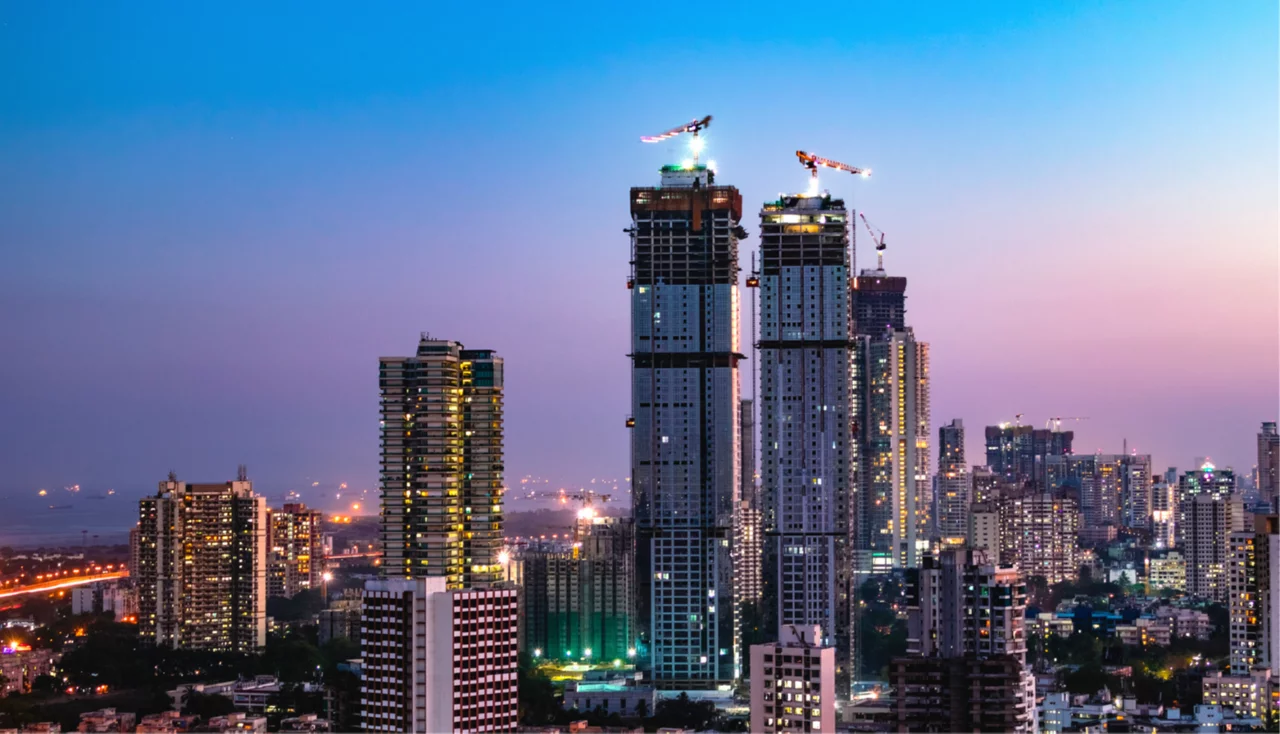
Mumbai's redevelopment market has matured into a systematic, policy-backed model reshaping India's densest urban landscape. With 1,000+ projects launched since 2020 and redevelopment now comprising 15% of all housing sales, the sector has moved decisively beyond fragmented reconstruction into neighbourhood-scale urban renewal. DCPR 2034's unified framework, over Rs 1 trillion in metro infrastructure investments, and the rise of cooperative-led self-redevelopment are converting the city's ageing building stock into structured investment opportunities across premium and emerging corridors.
Market evolution: from niche to mainstream supply
Redevelopment has achieved sustained market equilibrium. Sales consistently exceed launches across 2025-H1 2026, with the segment maintaining a stable 10.3% share of Mumbai's total housing launches—up from 6% over 2016-2021. This isn't policy-driven oversupply. Absorption patterns confirm genuine buyer preference for redevelopment stock, marking a permanent shift in how Mumbai adds residential supply.
Key market indicators
- 1,000+ projects launched since 2020, representing approximately 13% of overall Mumbai residential launches
- 15% sales share in H1 2026, demonstrating demand-led equilibrium rather than speculative construction
- 36% launch concentration in just five locations: Borivali, Malad, Andheri, Vikhroli, and Goregaon
- 1,600+ active self-redevelopment proposals as of 2026, shifting decision-making power from developers to housing societies
The policy-driven launch boom of 2022-2024 (when redevelopment briefly reached 19% of overall launches) has stabilised into a sustainable segment driven by actual homebuyer demand across multiple price points and micro-markets.
SRA redevelopment reaches historic scale
Slum Rehabilitation Authority projects have achieved unprecedented execution momentum. 1,202 active projects now cover 2,156 acres and 321,858 tenements—nearly 4x all completions since SRA's 1995 formation. November 2025 policy changes removed individual consent requirements for large slum clusters (50+ acres), accelerating project timelines and de-risking developer participation.
Major SRA schemes driving this expansion include Parel-Sewri corridor developments, the massive Dharavi redevelopment (259 hectares), and integrated transit-oriented projects in Wadala and Kurla. Unlike earlier fragmented rehabilitation, current schemes integrate metro connectivity, commercial FSI, and structured financial models that attract institutional capital.
The shift from 556 acres completed over 30 years to 2,156 acres currently active represents systematic scaling rather than incremental growth. This trajectory aligns directly with the Mumbai 2035 Development Plan's urban renewal objectives, converting informal settlements into planned, infrastructure-linked neighbourhoods.
Three strategic lenses: renew, reconfigure, re-rate
Renew: legacy stock monetisation
Mumbai's ageing building stock presents the most immediate opportunity. Structures built before 1996 comprise the majority of residential inventory, with thousands reaching end-of-lifecycle. Cessed buildings—pre-1969 rent-controlled structures under MHADA's repair cess—represent particularly acute distressed assets.
The renew opportunity isn't speculative—it's physically mandated. Buildings officially classified as dilapidated cannot be legally occupied, forcing resident action regardless of market conditions.
Reconfigure: cluster-scale transformation
Cluster redevelopment fundamentally differs from single-building reconstruction. Projects consolidating 3+ buildings on contiguous plots access up to 4.0 FSI, create genuine public open spaces (5-10% mandated), and integrate social infrastructure that isolated towers cannot provide.
The shift to structured cluster models marks redevelopment's evolution into systematic city-making rather than opportunistic plot-level reconstruction.
Re-rate: infrastructure as value catalyst
Over Rs 1 trillion in transit infrastructure is actively redefining which corridors command premium pricing and where volume opportunities emerge.
The infrastructure impact isn't uniform. Premium corridors (South Mumbai, Bandra-Khar) show 25-30% appreciation. Mid-market Western Suburbs locations demonstrate 15-20% growth. Eastern Suburbs, gaining first-time metro access, exhibit 12-15% appreciation with significant upside as lines become operational.
Infrastructure doesn't just improve connectivity—it fundamentally re-rates land value hierarchies across the city.
Submarket economics: capital values and configurations
Redevelopment capital values span a wide Rs 25,000-Rs 1,15,000 per sq.ft range, reflecting Mumbai's extreme micro-market differentiation:
The capital value hierarchy reflects both current infrastructure access and anticipated connectivity improvements.
Self-redevelopment: societies take control
Over 1,600 housing societies have initiated self-redevelopment as of 2026, fundamentally shifting power from developers to resident communities. The model eliminates developer intermediaries—societies directly engage architects, obtain approvals, hire contractors, and manage construction.
Economic rationale: Traditional Joint Development Agreements (JDA) typically allocate 60-70% of built-up area to developers as consideration for funding construction. Self-redevelopment allows societies to retain 85-90% of FSI for members, with only 10-15% sold as free-sale to fund construction costs.
Financial structuring: Societies raise capital through member contributions (transit rent periods), institutional construction finance, or pre-selling the limited free-sale component. Banks and NBFCs now offer dedicated self-redevelopment loan products, recognising the model's viability.
Practical challenges: Requires higher resident coordination, financial literacy, and risk tolerance. Societies must manage contractor relationships, cost overruns, and multi-year construction timelines without developer buffers. Success rates correlate strongly with society size (smaller societies execute more efficiently) and professional project management engagement.
DCPR 2034 facilitation: Streamlined approvals, clear FSI entitlements, and single-window clearances reduce bureaucratic friction that previously made self-redevelopment impractical. Municipal ward offices now provide dedicated self-redevelopment cells for application processing.
Download our report for detailed submarket maps, developer pipeline intelligence, policy framework technical analysis and comprehensive infrastructure impact modelling through 2035.