Towards a future-ready ecosystem
29 September 2026
Insight
29 September 2026
Indian retail 2031
Categories:
Authors
Divya Agarwal
Devajay Kapur
Sourajit Biswas
India’s retail sector is at the cusp of an interesting trajectory. Supported by favorable demographics, rising discretionary consumption, improving asset quality, and institutional capital inflows, the sector is entering a mature and future-ready phase.
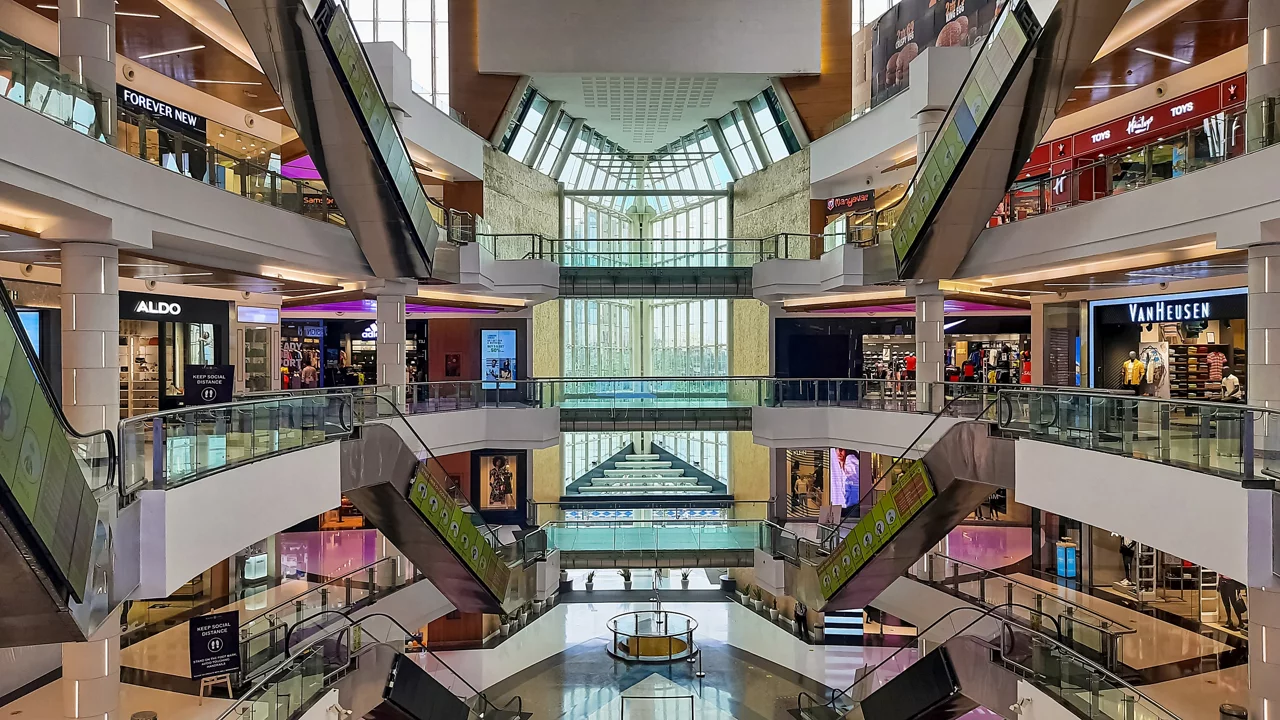
Demand continues to outpace supply as evidenced by market trends in recent years. The country's young population profile and growing propensity for spending continues to provide a strong foundation for the growth of the retail sector. Two dominant population cohorts - Millennials and Gen Z together account for 52% of our population and are driving a sustained consumption boom. India’s Gen Z population is larger than the total population of the United States and its spending is more than set to double by 2035.
Sustained expansion in retail sector
India’s retail sector has demonstrated remarkable resilience despite the disruptions caused by the pandemic and subsequent geopolitical uncertainties, including conflicts in West Asia. This resilience has been underpinned by a recovery in consumer spending and continued retailer expansion, driving healthy growth in leasing volumes in recent years. Gross leasing across the top seven cities totaled 35.5 million sq ft between 2023 and H1 2026. Gross leasing reached a three-year high of 12.5 million sq ft in 2025, marking a 54% year-on-year (y-o-y) growth over 2024.
The strong demand momentum continued in H1 2026, with gross leasing recorded at 6.3 million sq ft, exceeding the total transaction volume of H1 2025. The second half of the year is expected to perform better and 2026 annual gross leasing may be at par with 2025 as new supply infusion will support retailers in expanding the store footprint. Bengaluru and Delhi NCR led gross leasing volume, followed by Mumbai and Hyderabad. In terms of retailer categories, fashion & apparel, food & beverage, and entertainment remained at the top driving demand for new store openings.Sustained expansion in retail sector.
Emerging trends shaping the next growth phase
Direct-to-Consumer (D2C) brands have continued to gain traction in recent years as digitally native brands strengthen their presence through physical stores. D2C brands leased nearly 2.4 million sq ft across the top seven cities between 2023 and H1 2026, with their share in gross leasing rising from 3.5% in 2023 to 8.1% in 2025. Similar momentum continued in the first half of 2026 too. Fashion & Apparel remained the largest category in D2C leasing, accounting for 58% share in H1 2026. Large store format requirements by this category contributed to its higher share of space take-up amongst D2C brands. Jewellery emerged as the second-largest D2C category, accounting for a strong double-digit share of space take-up by D2C brands between 2023 and H1 2026. While fine jewellery continued to dominate the category, emerging segments such as lab-grown diamonds witnessed growing traction, with their share in leasing by jewellery category comprising 8% in H1 2026. Another notable trend is the growing prominence of Family Entertainment Centers (FECs) within the entertainment segment. FECs accounted for more than 50% share in entertainment leasing in H1 2026. Entertainment formats such as VR gaming, bowling and competitive socializing in shopping malls are transforming them into social hubs and help in generating higher footfalls, longer dwell times and aid spending across other retail categories.
India’s retail sector entering a stage of maturity
India's retail sector is at the cusp of maturity, driven by the growing dominance of superior malls, which now account for more than half of the country's operational retail stock of 92.1 million sq ft. These assets continue to outperform the broader market, with vacancy levels of 4.4% in H1 2026 compared with the Pan-India average of 11.2%, while commanding rental premiums of approximately 35-40% due to their prime locations and strong tenant mix.
The sector's growing maturity is further reflected in rising institutional participation. Institutional investments into retail assets increased from USD 298 million in 2023 to USD 450 million in 2025. H1 2026 inflows have already reached 69% of 2025 levels. Institutional investors are increasingly expanding beyond Tier I cities into emerging markets such as Coimbatore, Chhatrapati Sambhajinagar, Ludhiana, and Jodhpur, seeking value creation opportunities through the acquisition and repositioning of underutilized retail assets.
Moving towards a future-ready ecosystem
By 2031, nearly 51.1 million sq ft of new shopping mall supply is expected to come on the block, leading to a possible expansion of the total operational retail stock across the top seven cities to 143.2 million sq ft. Approximately 56% of this upcoming mall supply is being developed by the top 10 developers, reflecting a strong pipeline of retail assets that are expected to elevate the quality of India’s retail stock.
Mall ownership structures are evolving in tandem, with a gradual, yet noticeable shift towards lease-based retail formats. The share of strata-model assets in Pan-India retail stock moderated from 21% in H1 2025 to 19% in H1 2026, indicating a growing preference for single-ownership of assets.
As India's retail sector enters the next phase, its growth will be shaped by how real estate developers and retailers respond to evolving consumer preferences and market dynamics. Backed by India’s strong consumption fundamentals, the continued expansion of organized retail, improving asset quality, and increasing institutional participation, the sector is steadily advancing towards a resilient ecosystem where the asset will take the centre stage and play a key role in the real estate strategy adopted by retailers over the long term for store expansion and location identification.