Lower costs and mitigate risk with the total cost of ownership approach
15 May 2022
Guide
15 May 2022
Top five data center facilities management best practices
Categories:
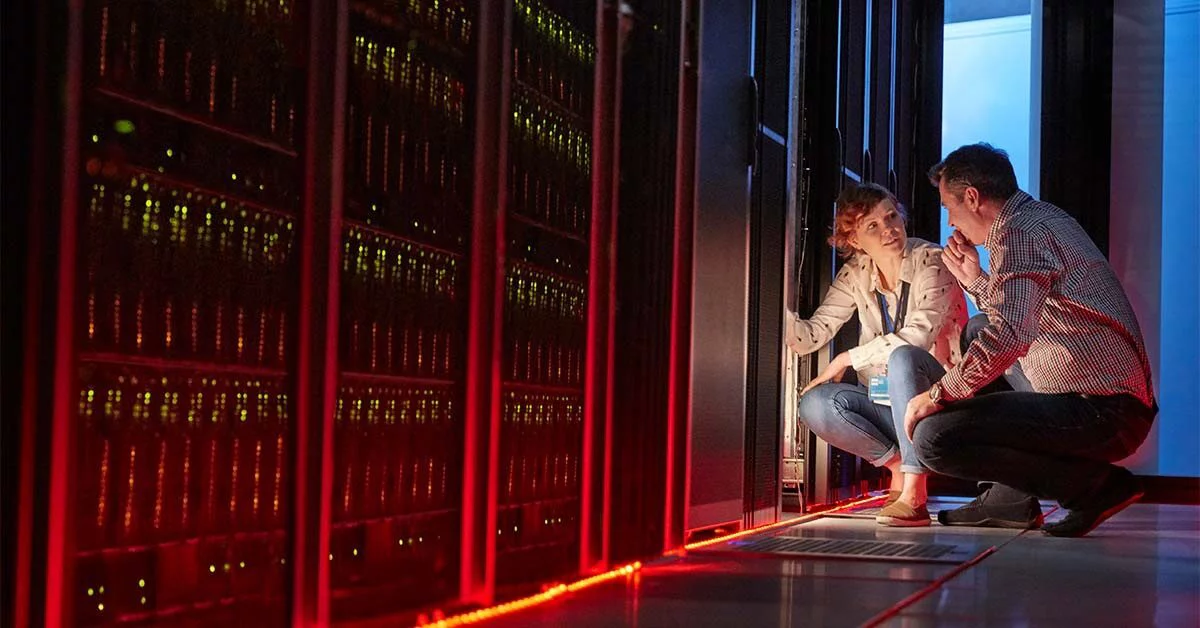
In the high-intensity environment of a data center, facility management (FM) teams often make decisions based on today’s urgency rather than on the bigger, long-term picture. Now, leading data centers are adopting the total cost of ownership (TCO) approach to FM. As a result, they’re benefiting from reduced costs and risks.
TCO refers to the total cost of acquiring, designing, constructing, operating and maintaining an asset—whether a piece of equipment or an entire building—over its useful lifespan. When you have the TCO mindset, your FM team is more likely to make decisions based on the big picture rather than focusing solely on solving an immediate problem.
Focusing on TCO can make data centers more competitive in the marketplace. The TCO approach ultimately boosts reliability and uptime, increases productivity, and creates skills-development opportunities that help attract and retain FM talent. Combined with cost savings, these outcomes lead to a more productive and profitable data center supported by well-trained staff.
The following are five FM best practices that will ultimately help reduce TCO.
1. Adopt preventive, instead of reactive, maintenance
You’re probably familiar with the traditional FM maintenance approach, in which equipment servicing, upgrades and replacement schedules are dictated by equipment manufacturers or corporate standards. However, the calendar-based approach ultimately adds to capital expenses without necessarily supporting reliability.
Equipment performance deteriorates according to the level of usage and environmental conditions, not according to a calendar. For example, the manufacturer may recommend replacing your new HVAC unit at 15 years. However, your facility is in an area with temperature extremes that stress the HVAC system and it fails in year 12. Your data center begins to overheat and operations must be temporarily shut down while your FM scrambles to replace the HVAC quickly. Installation takes place over the weekend, incurring overtime charges, with little consideration for the lifecycle costs of the new unit.
A better approach is to use sophisticated facility technologies that combine sensor data with predictive modeling, analytics and artificial intelligence (AI)-driven machine learning to analyze building equipment performance. These tools enable building engineers to detect performance anomalies not visible by human perception alone.
With these data-driven early indicators, your FM team would recognize that the HVAC required maintenance long before indicated by the manufacturer’s schedule. As a result, your building engineers would be able to remediate the performance issues early, avoiding premature equipment replacement and—most important—costly downtime that could damage your data center’s reputation.
Also important, intrusive contact with building equipment itself creates risk. Any human interaction with a piece of equipment introduces the possibility of an error, such as an incorrect procedure or a misplaced tool.
2. Invest in FM technology
In critical environment maintenance, even a simple mistake can lead to costly downtime—and most errors are human-made. That’s why forward-looking data centers are investing in FM tools that help remove the human element. Today’s advanced FM software minimizes human error by automating data center operations and centralizing and standardizing information.
For example, a data center FM operations platform like MCIM—a leading solution for mission-critical FM operations—consolidates data and documentation into a single system. Corrigo, another popular platform, is a robust computerized maintenance management system (CMMS) that helps the FM team maximize personnel productivity while improving accuracy and reliability, and generating savings.
For example, the data might indicate that one of your data centers uses far more energy than others. Using data and analytics, your engineers can explore the issue and take targeted action to reduce energy waste rather than reactionary steps that could create additional problems.
3. Create an asset management program for capital planning and investment
In a busy data center, where today’s emergency is more important than tomorrow’s, lifecycle management of your assets—your building equipment and the building itself—can be an afterthought. However, creating a comprehensive asset management program is more than worth the effort because it makes your data center more cost-efficient and resilient.
The first step is to inventory your building equipment and capture accurate data about age, condition, performance and other issues. With robust data, you can determine replace-or-repair priorities and create an objective capital plan that optimizes facility performance and improves your data center TCO.
For example, your predictive analytics data indicates that your data center will need a new chiller within the next year. Rather than buying a chiller with the lowest upfront cost, you will save more by comparing chillers based on upfront cost, energy efficiency, reliability and projected lifespan. The cheapest chiller today may actually have the highest lifetime cost if it is less energy-efficient or has a poor repair record compared to a higher-priced product. Through this analysis, you can create a more accurate capital plan.
4. Align your team around standard policies and procedures
Imagine driving down a city street with no traffic laws. You might reach your destination, but the journey will be chaotic—and that’s why rules of the road are helpful. Apply that concept to data center FM, and you’ll see why standards—for everything from operations, compliance and maintenance to staffing and training—matter. An FM team that follows strong FM standards helps safeguard against environmental changes, maintenance or other risks that could cause outages.
For instance, different building engineers often have their own approaches to maintaining a particular piece of equipment. Perhaps one engineer can complete the maintenance within an hour, but the process involves an electrical hazard. Another’s procedure takes longer, but avoids the electrical risk. If time spent is the only consideration, the high risk of electrical shock is overlooked—even though the risk may be high and potentially life-threatening.
Using a strong compliance tool empowers data center facilities teams to verify that all standards are consistently being met and monitored at any given site. Clear and effective standards also ensure that staffing levels are optimal and that personnel are trained properly, with safety front and center. A compliance-centric approach can be a major differentiator for colocation data center operators looking to attract tenants.
5. Train staff annually with a standard operating procedures (SOP) playbook
A well-managed data center has the right processes in place, with periodic staff training to keep the FM team’s skills up to date. Your FM teams must understand the ripple effect of different actions and the best practices that ultimately improve uptime and TCO.
A related best practice is to have a written playbook of standard operating procedures (SOPs) and best practices, encompassing risk management, operations, training, role assignments and chain of command for your data center(s). Proper training by the playbook ensures that everyone knows the rules of the road and is equipped to help prevent catastrophic errors that can lead to millions in lost revenue.
Consider the building engineers above, with two different ways of making a particular repair. With training based on a playbook, both engineers would follow a safe and efficient SOP for the repair.
In critical data center environments, resilient, 100% uptime is a necessity. By incorporating FM best practices, you can boost the reliability of your digital infrastructure while lowering TCO—making your data center more competitive in the market.
To learn more about JLL’s data center facilities management, click here.