How indoor air quality transforms workforce performance.
10 February 2026
Insight
10 February 2026
The invisible metric redefining workforce health and productivity
Categories:
Authors
Vimal Rathod
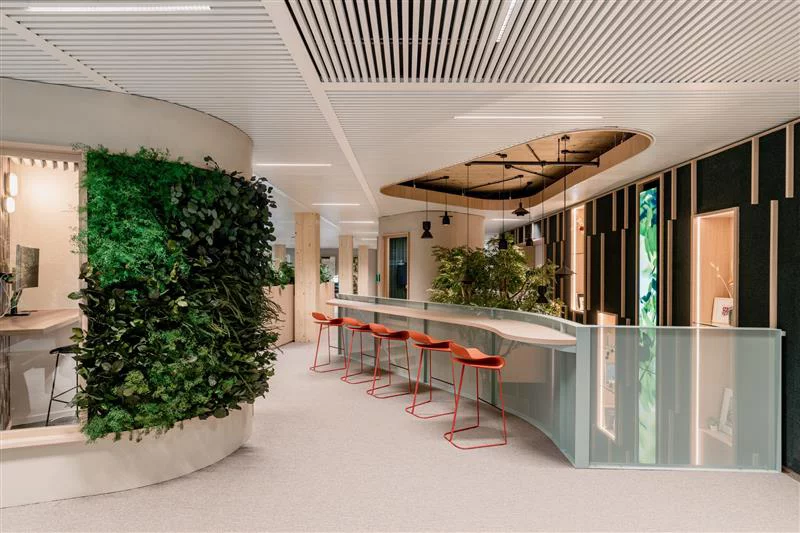
As global leaders, we have spent years refining the physical workplace—ergonomic chairs, collaborative areas, and natural light. But what if the single most important factor for employee cognitive performance and well-being is completely invisible? It’s Indoor Air Quality (IAQ).
The air we breathe indoors can be up to five times more polluted than outside air. It directly impacts everything from an employee's ability to focus to their long-term health. In today's competitive talent market, creating a truly healthy and productive office is no longer an incentive; it is a non-negotiable business imperative.
Researchi from Harvard's T.H. Chan School of Public Health shows that employees working in buildings with higher outdoor air ventilation rates experience dramatic improvements in cognitive function. When ventilation doubled from standard levels, participants achieved 62-70% higher cognitive performance scores. This translates to measurable productivity gains worth approximately $6,500 per employee annually, while the energy costs of enhanced ventilation were less than $40 per person annually. Without real-time IAQ monitoring, we're operating blind to these invisible factors that directly impact our most valuable asset—our people's cognitive capacity and well-being.
At JLL CRE, we are moving beyond reactive measures. Simply having sensors isn’t enough. The real innovation lies in transforming raw data-points into proactive, intelligent workplace management.
From simple alerts to intelligent insights
With our JLL Serve platform, there has been a fundamental shift in how we manage our corporate offices. Here’s how we’re thinking differently:
Beyond single readings: A temporary spike in CO2 from an open window is normal but a consistent pattern of rising VOCs (Volatile Organic Compounds) in a specific area is a signal. Our system understands this difference, analyzing the frequency and duration of alerts, not just single events. This allows us to distinguish between anomalies and systemic issues needing intervention.
Seamless BMS integration: The Serve platform features real-time integration with Building Management Systems, converting raw data streams into actionable insights. We distinguish between normal fluctuations and genuine problems requiring attention.
Intelligent response system: When issues arise, our system automatically sorts them by urgency – critical problems get immediate response while routine maintenance follows standard workflows. This ensures we always focus resources where they matter most for employee health and productivity.
Digital asset visualization: Through JLL Serve’s Digital Twin feature, we provide an enhanced representation of sensors and their performance parameters. This isn't just another building dashboard – it provides a user-friendly view that gives facility teams better visibility into asset health and operational patterns.
Connecting data to action: An alert is useless if it doesn't trigger a response. Our IAQ dashboard is integrated directly into our Work Order Management system. When a space shows a persistent issue, the platform automatically generates a work order for our engineering teams to investigate, creating a seamless loop from detection to resolution.
A global view for local action: For the first time, our global and regional leadership can view IAQ performance across our key offices through a "single pane of glass." We can analyze data by region, country, and property to benchmark performance, identify trends, and make strategic decisions about where to invest in HVAC upgrades or operational changes.
The future is a “sentient” workplace
We believe the workplace of the future will care for its occupants more actively. By managing indoor air quality, we are not just building smarter buildings; we are cultivating healthier, more focused, and productive teams.
This commitment to employee well-being is more than just a CRE initiative. It represents a core business strategy that empowers our people and reinforces the office as a place for peak performance and collaboration.