Tenant relocations and shifting demand patterns, fueled by cost-driven upgrades, are actively reshaping Shanghai Grade A office submarkets.
29 April 2025
Guide
29 April 2025
Tenant dynamics reshape Shanghai’s office market landscape
Categories:
Authors
Susan Zhang
Leo Zhou
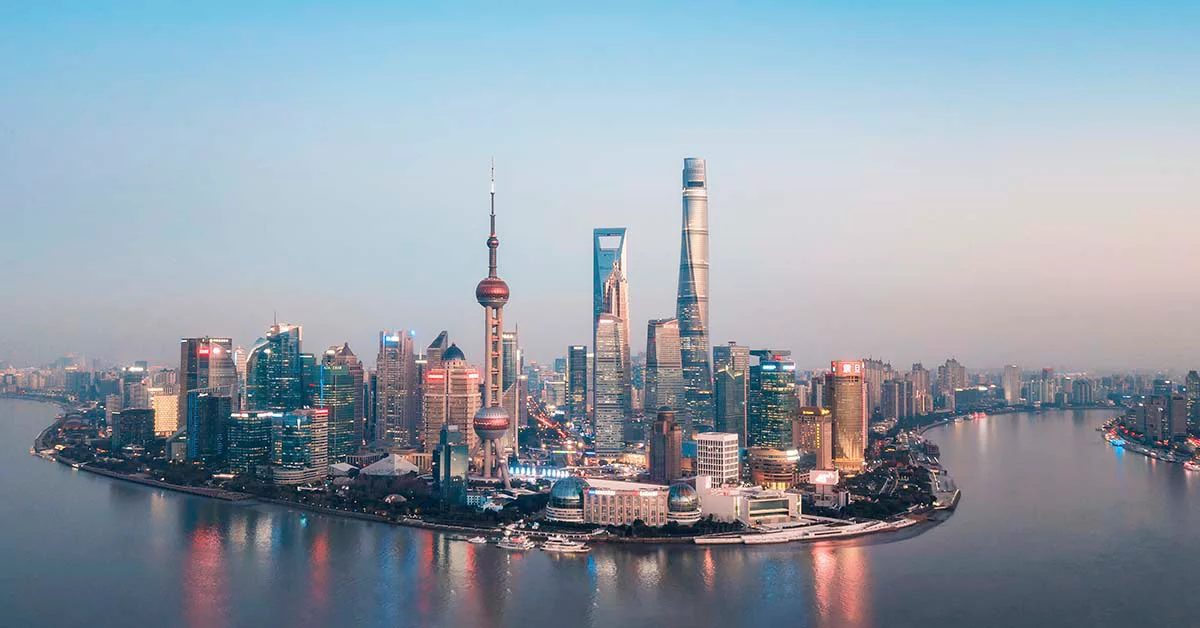
Shanghai’s Grade A office market has experienced a widening demand-supply gap since 2019. Annual new supply has averaged over 1 million sqm, significantly outpacing net absorption of 660,000 sqm. This oversupply caused rent declines, with more than 80% of submarkets experiencing quarterly drops exceeding 0.75% in 2024. JLL Research analysed nearly 1,000 relocation leases since 2019 and approximately 1,200 new leases between 2022 and 2024. This analysis aimed to gain deeper insight into these dynamics and their impact on Shanghai’s submarket landscape.
On the demand side, falling rents and abundant supply have expanded tenants’ options, enabling more cost-driven upgrades. Notably, 74% of relocation leases (2022–2024) aligned with this trend. Six core industries—financial services, professional services, TMT (technology, media, and telecom), manufacturing and trading, retail, and life sciences— continue to anchor demand, collectively accounting for over 85% of leasing activity. Meanwhile, emerging "new engines", driven by technological innovations and changing consumer behaviours, are gaining momentum. These new sectors accounted for 30% of 2024 demand, converging with traditional industries to unlock new opportunities.
Figure1: Diffusion of new engines in Shanghai office market (2024)

*Leasing transactions excluding renewals; based on the number of leasing deals
Source: JLL Research
The tenant movement continues to reshape Shanghai’s office market while evolving submarket dynamics reciprocally influence tenants’ location decisions. The matrix below illustrates tenants' flow between submarkets from 2022 to 2024. Along the horizontal axis, core CBD areas have maintained their appeal, while certain emerging submarkets have successfully drawn occupants from farther distances. On the vertical axis, submarkets with ageing Grade A office stock have experienced more pronounced tenant outflows. Meanwhile, tenants previously occupying business parks or suburban areas relocated to emerging business districts or traditional CBDs. The prominent diagonal line in the matrix indicates that intra-submarket relocations remain prevalent.
Figure 2: Relocation matrix among Shanghai office submarkets (2022-2024)

*Based on leasing areas
Source: JLL Research
Moreover, our analysis assessed submarket vitality by combining two critical dimensions: industry clustering and diversity. Submarkets shaded in darker red indicate strong industry clusters, while those in darker blue signify greater industry diversity; purple highlights submarkets excelling in both. Standout submarkets such as West Nanjing Road, Xintiandi, Qiantan, and Xuhui Bund demonstrate strong resilience and growth potential, characterised by vibrant industry clusters and dynamic business ecosystems. This dual advantage enhances their ability to attract more firms and supports the expansion of their industry networks.
Figure 3: Industry agglomeration and diversity by submarket (2022-2024)

Source: JLL Research
Looking ahead, future supply pressure poses a significant challenge for office submarkets. However, new completions can also upgrade area profiles by enriching adjacent commercial amenities. Therefore, in addition to the current occupied stock, we consider both the leasing activeness over the past three years and the projected supply volume. This approach allows us to explore the future opportunities in Shanghai’s office landscape from a dynamic perspective. Notably, emerging submarkets represented by Xuhui Bund, Qiantan, North Bund, and Suhe Creek ranked at the forefront in terms of leasing activeness, demonstrating strong growth momentum. With more high-quality projects entering the market afterwards, these are expected to improve further. Conversely, for submarkets with limited future supply, the main challenge will be upgrading office quality and retaining existing tenants. This is especially true for submarkets with a high proportion of ageing office projects.
For more details, please download “Navigating the Tides: A dynamic view of Shanghai office market”.