The city-state anticipates demand for high-spec industrial spaces amidst nearshoring trend
Insight
Singapore’s pursuit of advanced manufacturing companies
Categories:
Authors
Pamela Siow
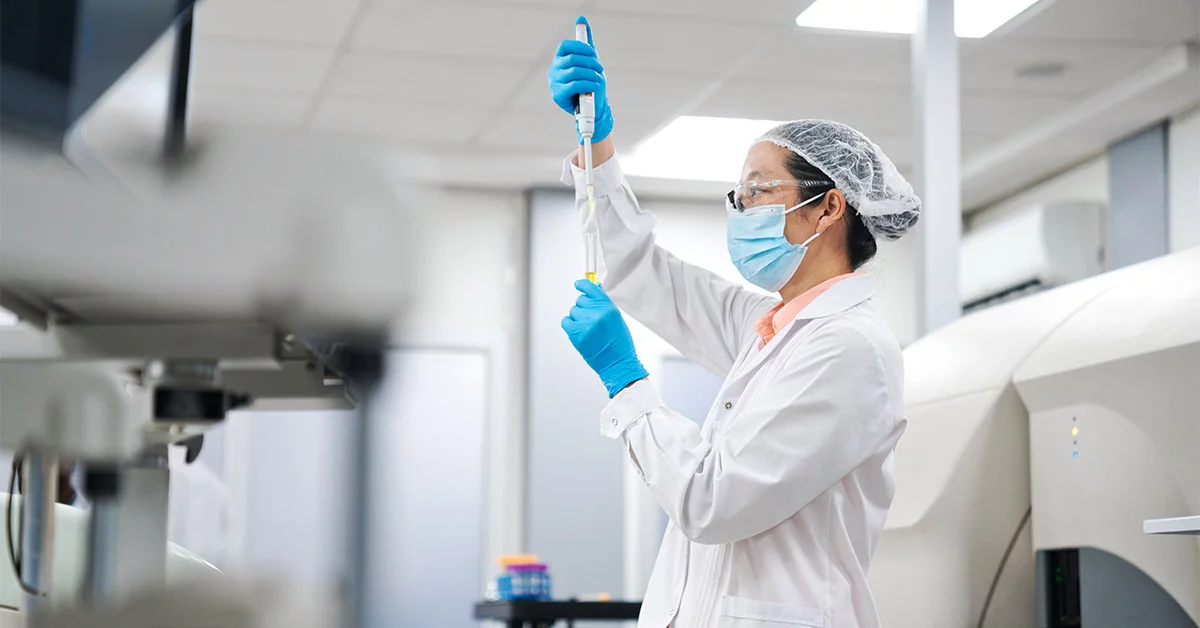
Manufacturing companies are increasingly looking to diversify outside of China, and moving their production facilities closer to home, according to JLL research.
This China+1 strategy seeks to minimise supply chains disruptions by reducing reliance on any one country amidst a volatile global geopolitical environment.
As a result, Southeast Asia and India are seeing the rise of the manufacturing sector.
Among these destination markets, Singapore stands out as a magnet for advanced manufacturing companies who require high-spec industrial spaces.
A hub for advanced manufacturing
While Singapore cannot compete on cost and sheer production volume, it has become a hub for high-value, knowledge-intensive manufacturing industries such as semiconductors, biomedical, consumer electronics, and precision engineering.
With an ambitious target to boost Singapore’s manufacturing sector’s value-add by 50% by 2030, the government takes an active approach in strengthening manpower pipeline, improving established infrastructure, and offering tax incentives and grants.
Industry 4.0 initiatives, for instance, encourage manufacturers to integrate digital technologies like Industrial Internet of Things (IIoT) to streamline processes, reduce costs, and address labour shortages. Programmes like the Productivity Solutions Grant and the Industry 4.0 Human Capital Initiative offer companies resources to adopt new technologies and upskill their workforce.
These efforts increase support for promising local enterprises, which in turn help the city-state draw notable investments from manufacturers who wish to tap on its political stability, vibrant ecosystem, established air and seaports, and highly skilled workforce.
For instance, biopharmaceutical multinational AstraZeneca announced a $1.5 billion manufacturing facility in Singapore for antibody drug conjugates in May, tapping onto Singapore’s reputation in complex manufacturing. Expected to be operationally ready by 2029, the company’s first end-to-end facility will be supported by the Singapore Economic Development Board.
In the wafer fab industry, silicon-wafer producer Siltronic doubled its manufacturing capacity with the launch of its S$2.9 billion wafer plant at Tampines Wafer Fab Park. With a total floor area of 150,000 sq m, it will be able to churn out 100,000 wafers a month by end-2024. The firm has set its sights on its new modern and cost-efficient facility being among the world’s most advanced wafer fabs.
Sustainable, high-spec industrial spaces
As manufacturing companies re-evaluate their operations to meet fast-approaching ESG deadlines, Singapore’s commitment to achieving net zero emissions by 2050 further strengthens its appeal as a destination market.
By 2030, 80% of new buildings in Singapore, including industrial buildings, are expected to be rated Super Low Energy.
Up-and-coming industrial estates are leveraging sustainability features to help manufacturers move the needle on their ESG targets, while meeting the need for uninterrupted power.

Map of key existing and upcoming industrial areas in Singapore
Download our Singapore snapshot for more details
These new parks are increasingly being designed with district-level sustainability features. District cooling systems, car-lite end-of-trip facilities, renewable energy sources, and integration of green spaces are just a handful of examples that help advanced manufacturers reduce their environmental impact.
JTC’s CleanTech Park, for example, is the first such development in Singapore to be certified Platinum Green Mark for Districts. Its district-level energy monitoring and automatic control system allows for effective management of energy consumption throughout the park. The park also is home to a network of streams and ponds that will contribute 25% of the park’s potable water usage.
Another example is the Platinum Green Mark certified Tai Seng Exchange (TSX). The high-tech industrial campus is designed with sustainability in mind, from end-of-trip facilities to charging stations for electric vehicles. Additionally, the building is fitted out with smart technologies such as facial recognition security access, laboratory spaces compliant to industry standards, and sensors to measure carbon dioxide levels and indoor air quality appeal to biotech, life sciences, and health tech companies.
These ready-built industrial buildings with state-of-the-art facilities are ideal for advanced manufacturers who wish to fast-track the setup of their production facilities in Singapore.
A gateway to Southeast Asia
While available land may be limited, Singapore’s location means manufacturers stand to gain access to other key manufacturing markets in the region.
For instance, AstraZeneca’s facility in Singapore will support its plans to expand its market presence in Asia Pacific markets like Indonesia, China and Japan.
The Southeast Asia Manufacturing Alliance is a partnership between Singapore’s public and private sector players to develop a strong network of industrial parks across Southeast Asia.
Participating companies will be able to leverage Singapore’s strengths in global connectivity and innovation ecosystems, while expanding their production bases across Southeast Asia through the manufacturing strengths of Indonesia, Malaysia, and Vietnam.