A roadmap for robot-ready facilities management to self-improving assets
29 September 2026
Insight
29 September 2026
Real estate’s next shift is physical AI
Categories:
Authors
Christine Langston
Yuehan Wang
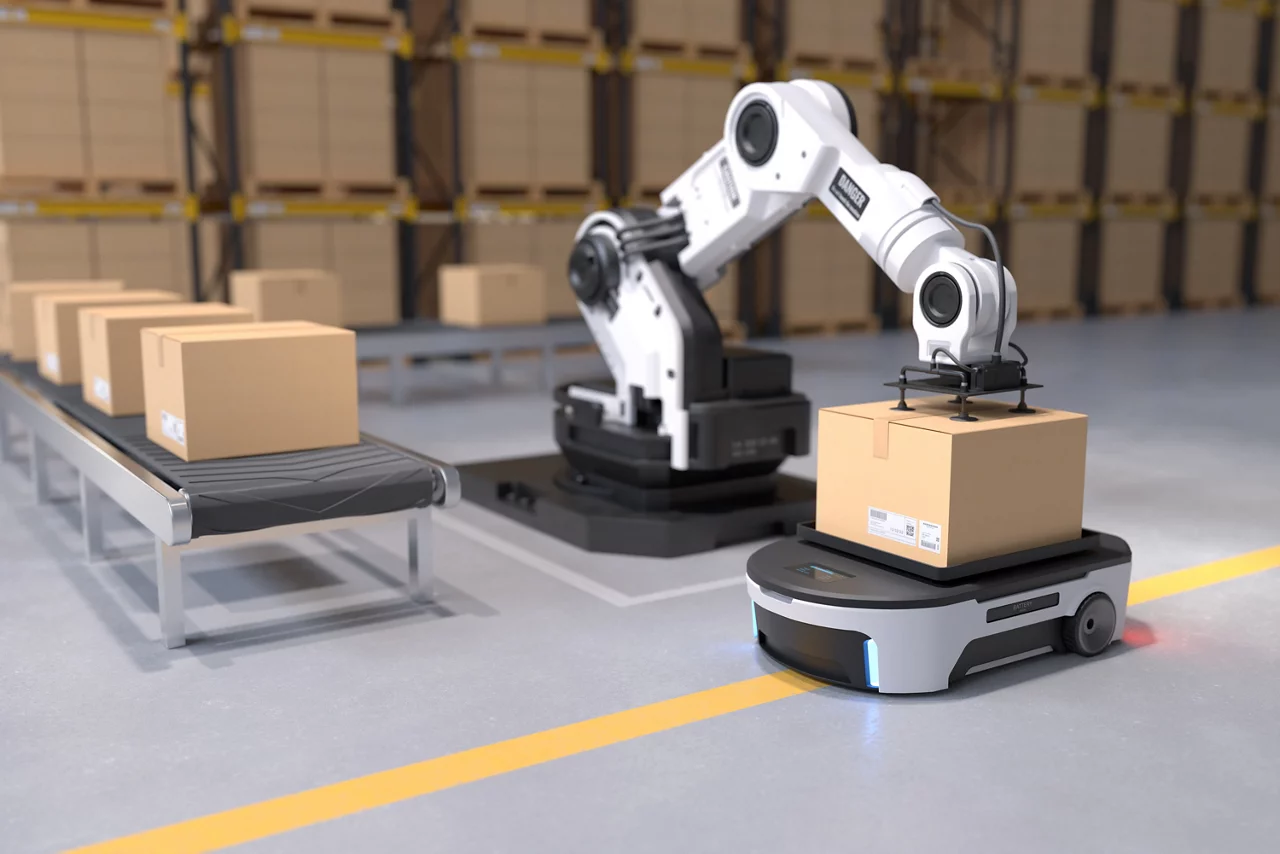
JLL's latest research illustrates how Physical AI and Robotics are moving from the factory floor into commercial real estate and lays out a roadmap for the transformation unfolding over the next 15 years.
Key highlights
- Physical AI is moving from the factory floor into commercial real estate, and CRE's long lifecycles mean the industry needs to plan now. With projects taking 5 to 10 years from inception to operation, decisions made today will determine a building's readiness for robotics roughly a decade out.
- Facilities management is the proving ground for this transformation, unfolding in three waves over the next 15 years: 1) testing and task automation today 2) fleet orchestration and new service models 3) self-improving assets.
- Readiness will separate market leaders from laggards: Tech-enabled buildings already command a premium, and assets without robotics integration capacity face material competitive disadvantage. Piloting early gives compounding competitive advantages in operational knowledge, vendor relationships and site-specific data.
Robotics are finding their way into the real world
For a long time, robotics were bound to future scenarios or limited applications in manufacturing lines and fulfillment centres, not yet making a meaningful impact in Commercial Real Estate (CRE). However, this is changing quickly, driven by advances in AI and hardware.
AI enables robots to shift from executing pre-determined repetitive tasks to understanding their environment, learning new tasks, and responding in real time. The concept of physical AI – the integration of sensors, cameras, and machine learning in systems that perceive, decide and act to perform physical work in the real world – is quickly entering the mainstream.
Different forms of physical AI, including autonomous mobile robots (AMRs), humanoids and autonomous vehicles, are being piloted across the world. According to Forbes, over 13,000 humanoids were shipped in 2025, with automakers, such as Hyundai and Tesla, leading early investment in development and factory adoption.
This momentum is reflected in both employer sentiment and market forecasts. The World Economic Forum Future of Jobs 2025 survey found that 58% of employers expect robotics and autonomous systems to drive business transformation in 2025-2030. The overall physical AI market is anticipated to reach about $900 billion by 2035 (Barclays, 2026). Global investment into robotics and physical AI companies grew from $670 million in 2015 to a record of $28 billion raised last year according to PitchBook. This investment signals that the best tech is in development and better performing products are expected in the near future, including robotics better suited to CRE use cases.
This pace of change has implications for real estate. Real estate development can take up to 10 years from inception to operation, which means that decisions made today will determine how ready a building is for robots roughly a decade out. That readiness spans design specifications (corridor widths, floor loads, robot pathways), energy supply (power capacity, charging infrastructure), and operational integration with building management.
By 2030, robotics could already restructure facilities management, with wider impacts to follow.
FM as the frontier of physical AI in real estate
Facilities management (FM) is where physical AI meets CRE first. Cleaning, security, and maintenance tasks are repetitive, physical, and site-based, exactly the conditions robots are best suited to handle today. That makes FM the proving ground for a broader transformation of the industry, unfolding in three waves over the next 15 years.
Choosing to pilot robotics early will build operational knowledge, vendor relationships, and site-specific data that are needed for successful adoption as physical AI products mature. This accumulated knowledge not only benefits FM, but also broader investors and occupier operations.
Roadmap for robotics and physical AI transformation in FM
Robotics will transform Facilities Management in three stages. Each stage is defined by a functional outcome. Below is the breakdown of the three stages and how to prepare or plan for each.
Short-term: Testing, task automation, and orchestration
Today and the near future is characterized by robot innovation and tentative adoption in FM. Robots for cleaning, security and maintenance are already being tested, piloted, and used for single task automation across occupier industries.
Recent technology advancements that drive pilots in FM
The newest innovations have made the robots for FM use cases easier to operate, more autonomous, and more proficient at their tasks (for example cleaning quality and coverage). In CRE, one of the most impactful technology advancements is the orchestration of robot fleets to work together and integrate with workplace management systems to execute work orders.
- Advanced AI and training methods: New AI models are pushing the perception and reaction abilities of robots. Developers train robots in virtual 'World Model' simulations before real-life environments.
- Dexterity: With improvements in hardware, small scale accuracy and movement mimicking fingers and exoskeletons. Next frontier is developing touch sensors.
- Battery cost and size: Prices for lithium-ion batteries have dropped dramatically, driving the overall cost of robots down. They are now lighter, smaller and last longer, all crucial for mobile robots.
- Safety: After high-profile failures of robots falling over, companies are working on stability and automatic 'off' switches that are integrated down to the chip level.
- Orchestration: Software platform to effectively delegate tasks and work orders to AI agents, robots or humans. Selects the best execution based on the issue and allows fleets of different robot types to work together.
While the potential CRE applications are numerous, the first proven pilot ROIs on real sites come from janitorial and landscaping robots. This is due to the maturity of the technology, the scalability and size of the work, and therefore the cost savings potential. In addition to longer battery life , the newest machines have better mobility and flexibility, so they no longer need perfect conditions (flat floors, simple floor plans) that previously posed adoption challenges.
FM use cases
Case studies of robotics deployment on JLL-managed sites
Challenges to overcome for CRE deployment
Drawing from client intelligence and JLL-led robotic pilots, there are two categories of installation challenges:
Mid-term: Fleet management and service model change
Once physical AI improves in reliability and the technology matures to overcome the above challenges, robotic fleets will become more commercially viable for deployment.
This will fundamentally change the service model of FM. Large scale deployment of robotics will require management from FM and also complement the current workforce. Human teams are crucial to FM, but availability of talent and skills gaps will remain key challenges. According to the JLL Research Facilities Management 2025 Report, hiring costs and insufficient talent pools plague over half of surveyed organizations. AI and automation are the preferred solutions for addressing labor shortages.
Physical AI provides the potential to supplement the workforce through two main forces:
1. Expand capabilities of FM teams, including automating dangerous work
- Sensors and cameras, either on robots or as a part of the building and systems, can assist and allow technicians to avoid unsafe or hazardous situations, such as narrow spaces, heights, or hot conditions
- Virtual reality and 3D digital twins can provide humans with real-time simulations without needing to physically check the infrastructure
2. Bridge future labor shortages
- Labor may be difficult to hire with aging workforces, changing skillsets, or remote locations
- In markets where there may be difficulty in hiring specific roles, robots provide a way to augment the workforce and reduce the human hours needed
A new service model will evolve, shifting from facilities management to fleet management, requiring the new role of fleet facilitator. At this stage, teams will be work alongside robotic fleets, and this requires planning for change management and skillset shift in FM as the responsibilities change.
Five major mid-term robotics-driven changes in FM
- Service model evolution: From facilities management to robot fleet orchestration, the service operations shift
- New role: Fleet facilitator: Change of service will require new skills in maintenance and monitoring of orchestration programs and robotic bodies
- Robot repair and maintenance: Emergence of new industry focused on servicing robots and maintaining service-level agreements
- Required power upgrade: Rolling out a fleet of robots requires more power and space for charging docks and repair
- FM service disintermediation: The opportunity to directly manage services, such as cleaning and security
Long term: Self-improving assets
Buildings, especially industrial and manufacturing spaces, already have the first wave of smart technologies, IoT platforms, sensors and cameras, dispersed through them. By 2040, robotics, physical AI and orchestration will unlock another level of smart operations, fundamentally changing them into assets that can monitor themselves. This will reduce operating costs, save resources and make the building more efficient than when it was built.
The anatomy of a self-improving asset
- Pervasive sensing: Buildings first sense their environment through interspersed sensors. Physical AI leverages computer vision, as well as drones and LiDAR (Light Detection and Ranging), to feed data into digital twin models for progress tracking and quality control.
- Automated operations: Small autonomous mobile robots rove the site to conduct tasks across cleaning, landscaping and security.
- Inspections and maintenance applications: Robots can keep humans safe by executing checks and collecting data in uncomfortable and dangerous situations (ie. extreme heat or precarious edges). Artificial Reality (AR) provides remote insight and reduces risk.
- Construction and finishing: Robotics are also transforming the development process with drones surveying sites and robotic arms performing the heavy lifting of materials.
Value creation for CRE assets through robotics
As facilities management and buildings evolve with robotics, CRE organizations can plan for physical AI from day one of the development cycle to drive operational efficiency gains and increase the value of the property over the asset lifetime.
Occupiers will expect workplaces (labs, manufacturing, or office) compatible with automation, and assets equipped with this technology will be in higher demand.

Following this trajectory, investors will need to prioritize building design for robotics-ready infrastructure, because assets without integration capacity will face material competitive disadvantages.
How to become ‘robotics-ready’: What actions can be taken now?
According to the JLL Future of Work Survey 2026, 28% of CRE leaders see robotics as transformative, but 18.5% feel unprepared. This reveals an execution gap that separates market leaders from laggards.
Early robotics pilots are generating the intel and insights to provide solutions to facilities management and workplace transition. By understanding the short-, mid-, and long- term changes explained above, challenges can be anticipated and addressed before competitors establish operational advantages.
Investors
- Consider occupier industries within the portfolio and their robotics exposure/adoption likelihood
- Assess interior compatibility with power and space needs in owned assets
- Build robotics-ready design specs into capital and design plans now
- Factor robotics-readiness into underwriting and valuation
Occupiers
- Scope technology requirements for specific use cases across asset types
- Plan for fitouts, power, and space demand
- Create plans for human oversight and fleet management
- Set out service agreement expectations and ROI framework
Both investors and occupiers also need to address network connectivity and cybersecurity risk as robotic systems connect into building infrastructure.
The convergence of AI, robotics and commercial real estate has arrived. For investors and occupiers, the question is how quickly robotics reshape asset competitiveness and operational efficiency, and who's ready when it does. Buildings designed or retrofitted today must accommodate autonomous systems, or risk obsolescence in a market where tech-enabled space already commands a premium.
Glossary
Autonomous systems - Machines that act independently, integrating sensors and mechanics to act unsupervised. Often rely on AI for decision-making
Embodied AI - AI model built into physical machines or a ‘body’ it controls and senses and acts through
Orchestration - The coordination logic that governs how multiple autonomous systems, robots, or sensors work together toward one outcome
Physical AI - Integration of sensors, cameras, and machine learning in systems that perceive, decide, and act to perform physical work in the real world
Robotics - The engineering discipline of creating machines with hardware and software to perform tasks
World Model - Simulation of the 3D environment, which combines real-world data and programmed rules of physics
Want to learn more?
Get in touch with our research team to find out how we can support your real estate strategy with market insights and strategic advice.


Peter Miscovich
Executive Managing Director, Global Future of Work Leader