There are five immediate challenges facing the central business district. Our Future of the CBD report uncovers how cities are reinventing themselves to find growth opportunities.
Insight
24 May 2023
The Future of the Central Business District
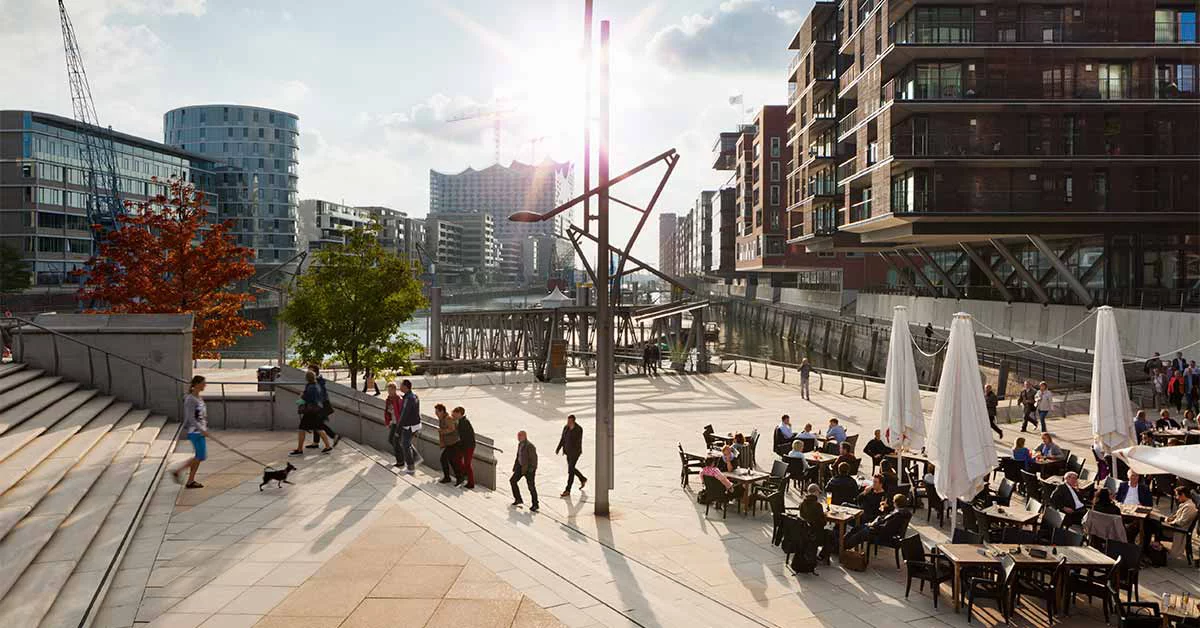
Creating dynamic urban centers
Key findings
- A shift to hybrid working, fluctuating visitor numbers, aging real estate and competition from emerging submarkets continue to weigh on the short-term outlook for many Central Business Districts (CBDs)
- Despite short-term challenges, CBDs are in a strong position to capitalize on their strengths moving away from overreliance on offices to become multi-purpose destinations attracting residents, visitors, businesses, and investment
- Partnerships between the public and the private sector will be critical to the success of CBD transformation, maximizing growth opportunities and creating dynamic city cores that work for all
Central Business Districts will have to reinvent themselves to remain competitive
Across the world’s largest cities, Central Business Districts dominated by commercial real estate and heavily reliant on office workers and business travelers were hit particularly hard during the pandemic.
Three years on, cities are at an inflection point. Structural changes to how people live and work and the urgent need to address broader urban issues mean that significant change is about to take place. CBDs need to reinvent themselves to remain attractive and competitive in an environment of subdued demand for office space, fluctuating commuting and travel patterns and growing competition from emerging submarkets which offer access to a wide range of amenities, quality office space and rapidly growing populations.
Immediate challenges facing CBDs are five-fold
New hybrid and remote work arrangements, aging real estate across multiple asset classes, competition with emerging and non-traditional submarkets, long commutes and a lack of consistent footfall due to limited residential populations continue to weigh on the short-term outlook for many CBDs.
1. Adjusting to hybrid working patterns
According to our Workforce Preferences Barometer, around 60% of office workers expect flexible working arrangements, with employees now working an average of 2.3 days per week remotely. CBDs will need to adjust to this new pattern of office use and accept that the hybrid work model is here to stay.
2. Long and costly commutes make CBDs less appealing
In the new world of work where employees continue to reassess their work-life balance, priorities have shifted and quality of life is now the number one consideration. Office workers are looking to cut their commute times with long and expensive trips to Central Business Districts now much less appealing.
Although a return to pre-pandemic levels of transit usage and footfall will eventually take place over the longer term given population and employment growth, this will take significantly longer than in previous cycles.
3. Addressing property obsolescence and accelerating real estate decarbonization efforts
Aging buildings in CBDs continue to raise concerns over obsolescence which presents a challenge for both occupancy and capital value preservation. Although a global issue, greater levels of construction in the post-war period have led to a higher level of structural oversupply in North American markets, pushing U.S. office vacancy to 20.2% compared to 7.6% in Europe and 14.7% in Asia Pacific.
Sustainability requirements present an additional challenge for older properties, as buildings will need to meet ever-more-stringent energy efficiency regulations. On a global level, more than 1 billion square meters of office space will need to be retrofitted by 2050. Retrofitting rates need to triple from barely 1% today to at least 3%-3.5% of stock per year if the global net-zero targets are to be met.
4. Competition from new districts is heating up
New, vibrant mixed-use neighborhoods are emerging across the world’s largest cities attracting a growing share of businesses, residents and investment. These districts home to rapidly expanding creative, tech and R&D clusters are diverting investor focus from more established submarkets and spurring new development of office, multifamily, boutique hotel and retail properties.
Emerging districts such as Fulton Market in Chicago, Shoreditch and King’s Cross in London, MediaSpree in Berlin and Roppongi in Tokyo are putting pressure on traditional CBDs to reinvent themselves. Some Central Business Districts are already beginning to embrace change by emulating the more mixed-use, human-scale and amenity-rich environment found in these rapidly growing submarkets.
5. Factoring in unstable demand
Office re-entry only represents part of the footfall equation for urban cores. After the office sector, hospitality and retail are the most exposed to changes in demand, with revenues in these sectors highly volatile and dependent on both routine and spontaneous trips. Even with pent-up travel demand being realized, the 2023 predictions for leisure travel are estimated to remain below pre-pandemic levels.
What does a successful CBD look like in the 2030s?
CBDs will shift away from being primarily places of work towards becoming mixed-use destinations that capitalize on being at the heart of transport networks with access to a wide range of amenities, as well as educational and cultural institutions. Public and private stakeholders will work together to adapt best practices, adjust planning policies, improve infrastructure and increase investment in sustainability.
An ecosystem of partnerships will form between the private sector, governments and academic institutions and will be essential to maximizing growth opportunities and creating urban cores that work for all. Cities will need to embrace change to revitalize CBDs, improve quality of life and address economic, environmental and demographic issues for a sustainable and inclusive future.
Actions to consider for the real estate sector
Get in touch

Phil Ryan
Director, City Futures, Global Insight

Steven Lewis
Global Head of Insight and REMS Research

Sean Coghlan
Head of Investor Relations