Insights into cost drivers for fitting out offices globally
Guide
25 March 2025
Global Office Fit-Out Cost Guide 2025
Categories:
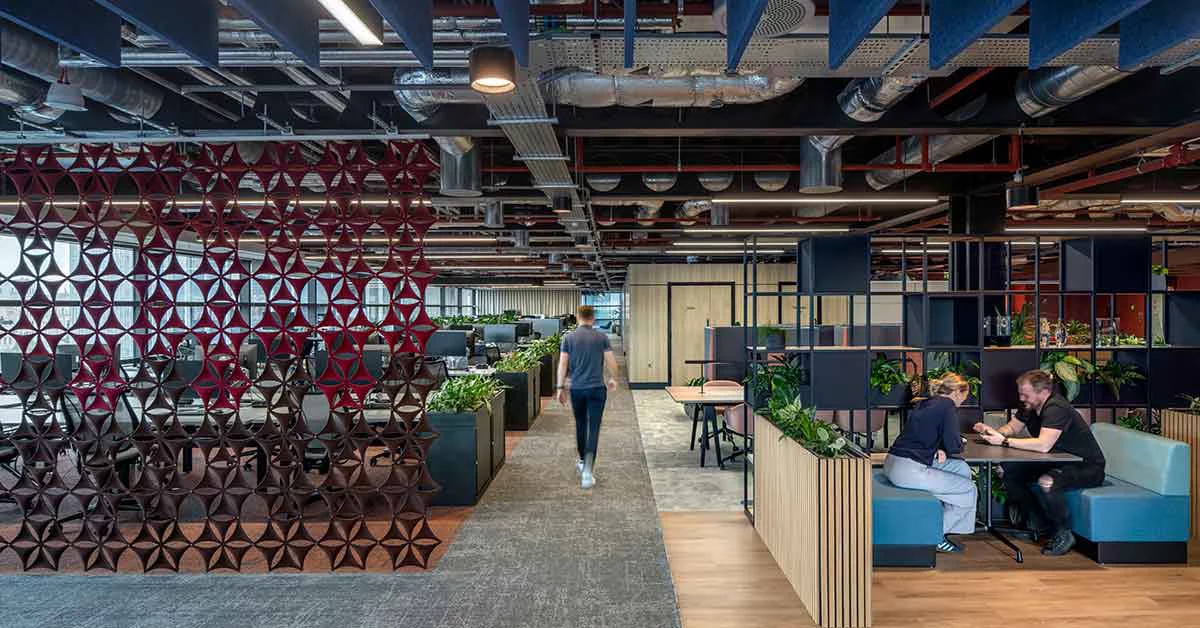
The outlook for office fit-outs is broadly positive in 2025, as JLL Research shows optimism in corporate occupier sentiment for business growth, with associated increases in headcount, portfolio footprint and utilization. As organizations look to develop capital plans and portfolio strategies, benchmarking costs across countries and typologies can inform efficient and innovative projects focused on long-term value. While the current economic environment may prompt cautious decision-making, corporates focused on growth and expansion will continue to target investment in office fit-outs to support strategic goals, with long-term benefits from decisiveness over the next twelve months. Our Global Office Fit-Out Costs Guide 2025 provides insights into the average costs for fitting out offices in 68 cities and 40 countries globally.
Key highlights
- Targeted investment in office fit-outs across global portfolios: Corporate Real Estate (CRE) leaders are looking to global benchmarks to understand cost drivers across geographies and prioritize capital planning across portfolio locations. The average fit-out cost globally for an office is $1,950/sqm and ranging from $770/sqm to $3,790/sqm across geographies and typologies.
- Increasing costs constraining decision-making: Rising costs and economic uncertainty are contributing to hesitancy in CRE investment decisions with potential long-term impacts on portfolio and workplace strategy realization. Fit-out costs have increased across all regions in the last 12 months, with three-quarters of markets reporting increases in raw material prices and half of markets report labor shortages are increasing construction costs.
- ‘Flight to quality’ influencing project cost profiles: Increased focus on in-office attendance, employee experience and sustainability performance is leading focus on investing in high quality workspaces, with increased spend on materials and finishes and shifting cost profiles on many projects.
- Increasing demand for sustainable fit-outs: Corporates are seeking to demonstrate long term ROI through investment in sustainable offices and demand for sustainable office fit-outs is on the rise. 60% of markets assessed reporting increases in the number of fit-out projects with high sustainable criteria in the past twelve months.
Explore the report
Global to local
As organizations look to develop capital plans and portfolio strategies, benchmarking costs across countries and typologies can inform efficient and innovative projects focused on long term value. Average costs of fitting out an office vary across geographies, with average costs in each region influenced by the variance of costs found within region.
While cost drivers will vary across geographies and local markets, there are common factors influencing costs across many regions. Rising costs of material and labor remain key drivers, and although inflation has stabilized across most countries, it remains higher than in the years leading up to the pandemic.
City Cost Index
Understanding costs in key cities can be critical to the global portfolio CAPEX planning, and the implementation of global design guides across global locations. To understand the relative difference in costs between cities, comparable costs of office fit-outs in each city are assessed against a baseline to London.
The top 20 cities are dominated by US cities alongside other major global cities with including Vancouver, Tokyo, London and Dubai. These cities remain comparable in costs, with continued competition for Grade A and highly buoyant local economies.
Cities featuring on the lower end of the index include global cities across India, South Africa, Vietnam and China. Although costs in these locations are relatively lower, they are also experiencing high construction growth and an evolving cost landscape.
Cost drivers
The global construction and fit-out industry is grappling with a complex array of cost pressures in 2025. With increased focus on the office, many organizations are seeking to invest in their workspaces to create high quality offices that will encourage employees back to the office and improve their utilization, experience and performance. Understanding the relative cost factors and potential associated outcomes can inform the design and delivery of office fit outs.
While cost profiles vary regionally, Builders Works (from partitions and flooring, to finishes and joinery) accounts for the largest component of fit-out costs in all regions except LATAM.
The second largest cost is M&E services, which is also where there is most variation between regions. M&E can account for between 20% to 45% of costs, due to in combination to climatic demands and local tenant obligations with a building, which vary extensively between countries.
Furniture costs range across regions from 13%-16% of total costs, comparing like for like specification from locally available products. Furniture costs can vary significantly depending on the availability of project specification products, with many organizations increasingly seeking to balance global design standards with greater focus on local sourcing and reducing embodied carbon footprints.
AV & Technology form a larger component in APAC compared to other regions, reflecting the growing emphasis on technology to support greater efficiencies and hybrid working practices in the region.
Planning sustainable fit-outs
Demand for sustainable fit-outs are on the rise, with where 60% of the markets surveyed reported that they had seen an increase in client enquiries for a more sustainable fit-out in the last 12 months. JLL’s Future of Work Survey also highlights investment in sustainability performance is lively to increase in the next five years globally.
Continued demand for Grade A office space, coupled with lack of supply, is also heightening focus on the opportunities of existing office buildings and the value that investing in fit-outs can have for landlords and building owners.
Upgrading M&E services can be an extensive part of a fit-out costs, while furniture costs for re-use and upcycling vary extensively by region, related to how accessible these approaches are.
However, one area that has had less attention, is the opportunities to consider whole-life sustainability and the impact of reinstatement on embodied carbon. With increasing costs for materials, furniture and finishes, forward looking organizations will be considering how alternative reinstatement models could create both cost and carbon savings. Central to the success of these will be collaborative partnerships between landlords and tenants, to identify opportunities for re-use and enhancement of existing fixtures and fittings.
Outlook for next 12 months
- Greater focus on leases renewals & existing office buildings in next 12 months. As trends in office leasing and expansion activity are seeing upturns in many countries, increased demand and limited supply for Grade A office space in prime locations is anticipated to continue throughout 2025 and in the long-term. However, with office development and new construction at historic lows, there will be greater focus on lease renewals and upgrading existing buildings as an alternative.
- Decisive planning needed for capital planning & ROI. Delays in decision-making and hesitancy around investment in the past few years have led to tighter timeframes for leasing and capital projects, with implications on material supply and labor channels. Early planning for lease ends and decisive investment in existing buildings will benefit landlords and occupiers and help to plan for and manage associated costs.
- Continued uncertainty of U.S. trade policies impacting global economies. U.S. policy shifts on trade, immigration and defense spending have broad implications for commercial real estate globally. Beyond direct cost impacts on core materials and U.S. construction labor availability, new trade and manufacturing patterns will have long-term effects on global demand for industrial, warehousing and the service sector and infrastructure to support changing economies. The final scope tariffs cover, immigration policy enforcement, and changes in federal spending will dictate how the next cycle proceeds in the U.S. and how acutely the impacts are felt internationally.
Methodology
Our Global Fit-Out Cost guide provides insights into costs associated with fitting out office space across 40 countries. Our methodology uses a standardized office layout and JLL design standards, which is costed by local experts in each market, to assess comparable costs across regions using a like-for-like project comparison.
The project uses a typical open office layout designed to accommodate hybrid working, with a range of individual and collaborative work settings. The specifications priced draw on JLL’s best-in-class offices around the globe and assume cost for a Central Business District location.
The report captures market-specific costs for a modern corporate standard of Fit-Out, in accordance with the respective suppliers in their markets. The figures within this report are reflective of analysis conducted in Q1 2025.
Get in touch
Get in touch with our experts to find out how we can support your real estate capital planning and project delivery with strategic advice and market insights.

Nick Winter
Head of Project and Development Services (PDS), EMEA

Louis Molinini
Americas PDS Variable Lead

Martin Hinge
Executive Managing Director, Projects & Development Services, APAC