The article provides an overview of developments in the Swiss residential market (including population growth, housing stock and vacancy rates).
17 September 2026
Insight
17 September 2026
Facts about the housing market in Switzerland
Categories:
Authors
Daniel Stocker
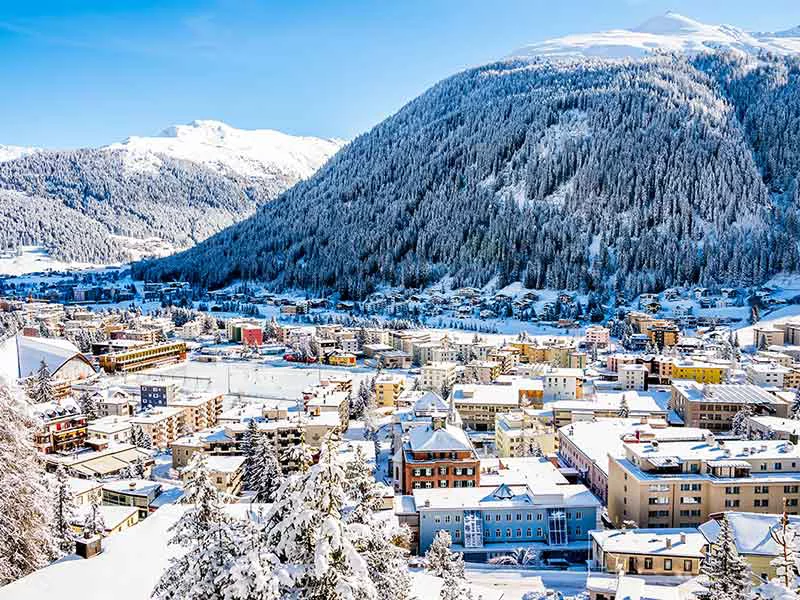
On 31 December 2025, Switzerland’s permanent resident population stood at 9,127,100 people (+76,100 people, +0.8%). Although population growth continued, it slowed as fewer people immigrated and more emigrated. Between 2024 and 2025, the canton of Schaffhausen recorded the strongest population growth (+1.6%).
Between 2024 and 2025, the number of older people (aged 65 or over) rose by 2.3% to 1.8 million. This increase, which has been ongoing for several years, meant that in 2025 the number of older people exceeded the number of those under 20 for the first time.
Switzerland's population continues to growth
According to the reference scenario calculated by the Federal Statistical Office (FSO), Switzerland's permanent resident population is expected to rise from the current 9.1 million to 10.5 million in 2055. This growth will be primarily attributable to migration. Its extent will depend on socio-economic and political developments in Switzerland. In addition, the population will continue to age in the coming decades.
In addition to the reference scenario, two further scenarios have been calculated. The ‘high’ scenario assumes higher net migration, a slight increase in the birth rate and a faster rise in life expectancy. This scenario leads to a permanent resident population of 11.7 million in 2055. The ‘low’ scenario anticipates lower net migration, a slight decline in the birth rate and hardly any increase in life expectancy. If this scenario materialises, the population is expected to reach 9.3 million in 2055.
Vacancy rate falls for the sixth time in a row
The vacancy rate fell by 0.07% points over the course of the year, from 1.00% to 0.93%. It has thus been falling for the sixth consecutive year and has decreased by 0.79 percentage points over this period.
In a comparison of cantons, the lowest vacancy rate was recorded in the canton of Zug (0.20%), followed by the cantons of Geneva (0.31%) and Obwalden (0.38%). Overall, it remained below the 1% mark in 15 cantons. The cantons of Jura (3.35%) and Solothurn (1.91%) recorded the highest vacancy rates in Switzerland. In 20 cantons, the rate fell compared with the previous year; in five, it rose; and in the canton of Appenzell Ausserrhoden, it remained unchanged.
On the reference date of 1 June 2026, a total of 34,690 unoccupied flats were available for rent across Switzerland. This represents a year-on-year decrease of 2,504 rental flats, or a fall of 7%. The supply of vacant rental flats has been declining steadily over the past six years. The number of unoccupied flats offered for sale also fell by 4% (-458 units) over the course of the year to a total of 10,803 units. On 1 June 2026, 3,910 vacant new-build flats (not older than two years) were advertised for long-term rent or sale in Switzerland. This was 49 units or 1% fewer than a year earlier. Most vacant dwellings have three (13,691 units) or four rooms (11,929 units).
Building stock and heating systems
Switzerland had 1.8 million residential buildings and 4.88 million dwellings in 2025. Half of all buildings are heated using fossil fuels (oil and gas). Oil remains the main source of energy for heating, being used in 33% of all buildings. However, this proportion has fallen steadily over the last 40 years. Gas heating is installed in 17% of the buildings. The proportion of buildings with a heat pump (25%) has increased sixfold since 2000. Three-quarters of the buildings constructed in the last ten years were fitted with a heat pump.
Rental prices and ownership structure
The average household size is 2.18 people. Around 36% of all permanently occupied dwellings are owner-occupied. This is the lowest proportion of any European country. The home ownership rate rose steadily between 1970 and 2015, mainly due to the rapid growth in condominium ownership. Since then, a slight decline has been recorded due to the level of prices reached and the resulting difficulty in meeting affordability guidelines.
In 2024, 2.5 million households were renting. The urban cantons of Basel-Stadt (85%) and Geneva (78%) have the highest proportion of rented dwellings, whilst the cantons of Valais (43%) and Jura (48%) have the lowest.
The two increases in the reference mortgage rate in 2023 led to rent adjustments for some tenants. The average net rent for a four-room apartment stood at CHF 1,708 at the end of 2024, which is CHF 38 more than at the end of 2023. However, rents vary significantly depending on the length of tenancy. Furthermore, new flats are significantly more expensive than older flats of the same size. Households that had been living in a four-room apartment for more than twenty years paid on average almost CHF 1,000 less than those who had recently signed a tenancy agreement for a new apartment of the same size (CHF 1,355 net rent compared with CHF 2,304). The highest rents were found in the cantons of Zug, Zurich and Schwyz. The cheapest cantons are Jura, Neuchâtel and Uri.
In 2025, 45% of rented flats were privately owned. Two-thirds (67%) of flats built before 1946 were privately owned, whereas for those built after 2000 the figure was just under a third (33%).
More information about the housing market in Switzerland can be found here:
https://www.jll.com/en-ch/insights/market-perspectives/switzerland-living
Sources: Federal Statistical Office (FSO), Federal Office for Housing (FOH)