How integrated services and conveniences make the difference in today's competitive tenant market.
19 August 2025
Insight
19 August 2025
Amenities as a Success Factor in Office Buildings
Categories:
Authors
Virginie Bonin
Tiziana Guatieri
Read the German version of this insight here
As hybrid work reshapes demand and ESG requirements intensify, the office market is undergoing a shift. Developers and landlords are confronted with a critical question:
What makes a workspace stand out in a competitive market?
While factors like location, flexibility, and ESG credentials matter, it’s often the amenity experience that tips the scale – for tenants, their teams, and long-term asset performance.
Once seen as optional extras, amenities now play a central role in how buildings are perceived, marketed, and ultimately valued. They help fill space – and more importantly, help keep it filled.
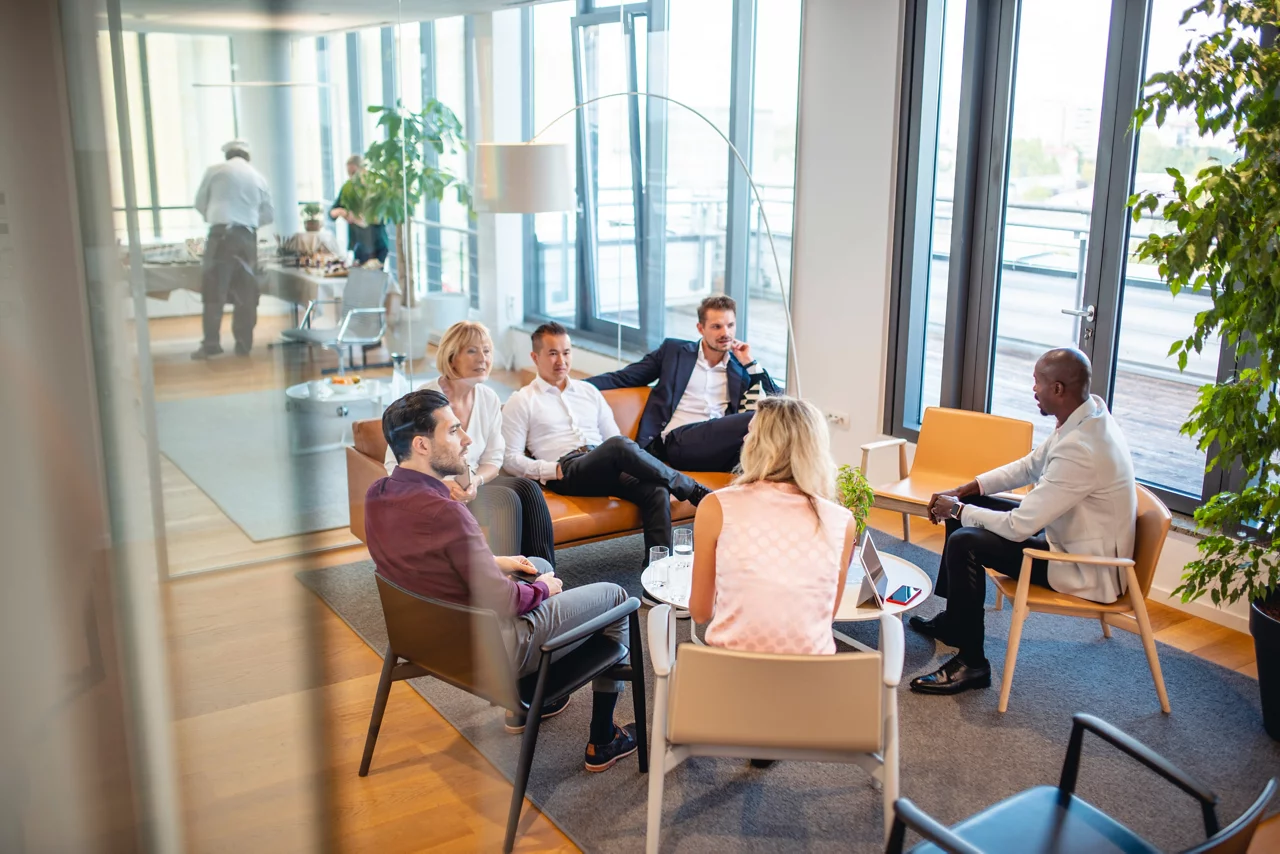
Today, amenities extend far beyond the traditional framework of retail arcades at the base of buildings. They are now integrated within and around the entire building, creating a complete ecosystem of services throughout. In our society where time is precious and comfort essential, a building offering multiple integrated services becomes particularly attractive. The objective is threefold: satisfy employees, impress clients, and ultimately contribute to the performance of the companies.
The Rise of Integrated Amenities in Modern Workspaces
These services encompass a wide range of offerings: fitness spaces, community lounges, mobility solutions, wellness areas, childcare facilities, supermarkets, dry cleaning, and postal services, Bank/ATM’s – all accessible without leaving the building.
From the landlord's perspective, different business models coexist. Some services generate direct revenue through the integration of tenants which are offering these amenities as their business itself, particularly on the ground floor (pharmacies, dry cleaners, cafés, banks, restaurants, supermarkets). Other high value-added amenities such as fitness centers, daycare facilities, or coworking spaces can be located on the ground floor or upper floors. An integrated restaurant offers the additional advantage of providing catering services to tenant companies.
Another current trend shows increasing demand for amenities included in the rent: access to private outdoor spaces (rooftops, landscaped patios), locker rooms with showers, prestigious reception areas, informal meeting spaces between tenants, and specialized rooms (nursing, prayer). Despite their often-modest size, these facilities have a considerable impact on employee wellbeing and company image, which is increasingly challenged socially to satisfy different human needs related to religion, gender, or wellbeing.

Example of a luminous reception area with lobby and coffee bar "LEONARDO" , Zurich north
From Perks to Essentials
The optimal mix of amenities varies according to location and characteristics of the local market. It must be defined from the project's conception as a central element of the positioning and marketing concept of the building. Our experience at JLL shows that the presence of amenities has become increasingly important whether the building is located in the city center or on the outskirts.
In Swiss cities, we observe that many tenants now prefer to sign leases in buildings offering a wide range of amenities, even when rents are higher than alternative options (examples: "Le Rhône" building in Geneva as well as “LEONARDO” and “Lindbergh” in the north of Zurich).
The Evolution of Expectations
Today's employees expect far more than just a workplace. They aspire to flexibility, a sense of purpose, and belonging. Employers, aware of this challenge, select workspaces that help them attract and retain talent. Real estate thus becomes an essential component of the employer’s value proposition. Amenities are no longer just about comfort – they now represent a true competitive advantage.
Value for Owners and Developers
Smart amenity strategies can deliver measurable returns:
- Stronger demand and faster leasing
- Longer tenant retention
- Clear differentiation in mature or oversupplied markets
- Rental premiums and higher capital value
That said, a survey conducted by JLL in its “Workplace Strategy 2024 Outlook" shows that not necessarily all amenities offered in the buildings are used as much by the tenants as offered by the landlords:

Source: JLL Workplace Strategy 2024 Outlook
What Works – and Where
The key is targeted, scalable implementation. Not every building needs a gym or a concierge – but nearly every asset can benefit from curated enhancements. The following selection of case studies illustrates what office buildings can offer their current and prospective tenants. JLL successfully supported the letting of all the properties below.
Case studies:
- Le Rhône and Alto Pont-Rouge, Geneva city center: Demonstrate how lifestyle infrastructure and curated public areas drive mixed-use vibrancy. These developments feature a thoughtful blend of "classic" ground floor amenities such as pharmacies, restaurants, and cafés, while also welcoming unique brands and newcomers to the city. Le Rhône hosts distinctive and innovative concepts like Audemars Piguet’s showroom or newcomers like Joe & the Juice while Alto Pont-Rouge features Westhive coworking, which offers restaurant services to the public alongside catering and event capabilities for their clients.
- The “Origami” building, Lancy, Geneva: Characterized as peripheral locations outside the city center, where vacancy rates are higher and competition more intense. To maintain their attractiveness, buildings incorporate numerous "in-house" amenities to facilitate life at work. The “Origami” building distinguishes itself by offering conference facilities available for rent, along with a particularly rare market advantage: a rooftop that is accessible to all tenants of the building.
- Prime Tower, Zurich peri-central business district: Food trucks, a coffee bar, restaurants, pop-up galleries, dry cleaning, and running clubs create a dynamic office ecosystem.
- Lindbergh, north of Zurich: Diverse in-house services for everyday needs like a supermarket, gym, restaurant, pharmacy and a barber shop.
- LEONARDO, north of Zurich: Concierge-desk in a spacious reception area with coffee bar, a restaurant and bookable conferencing rooms.

Outlook: From Extra to Essential
Amenities should be treated as core elements of a location strategy. Understand the user base, tailor offerings to their needs, and plan early – during repositioning or new development. Data shows it pays off.
Because today’s office isn’t just about work anymore. It is about experience, flexibility, and everyday value.