Urban universities are powering innovation districts and reshaping city economies across the Gulf and beyond.
23 October 2026
Insight
23 October 2026
Why Higher Education Institutes are an urban anchor
Categories:
Authors
Devanjali Dutt
Harshit Magon
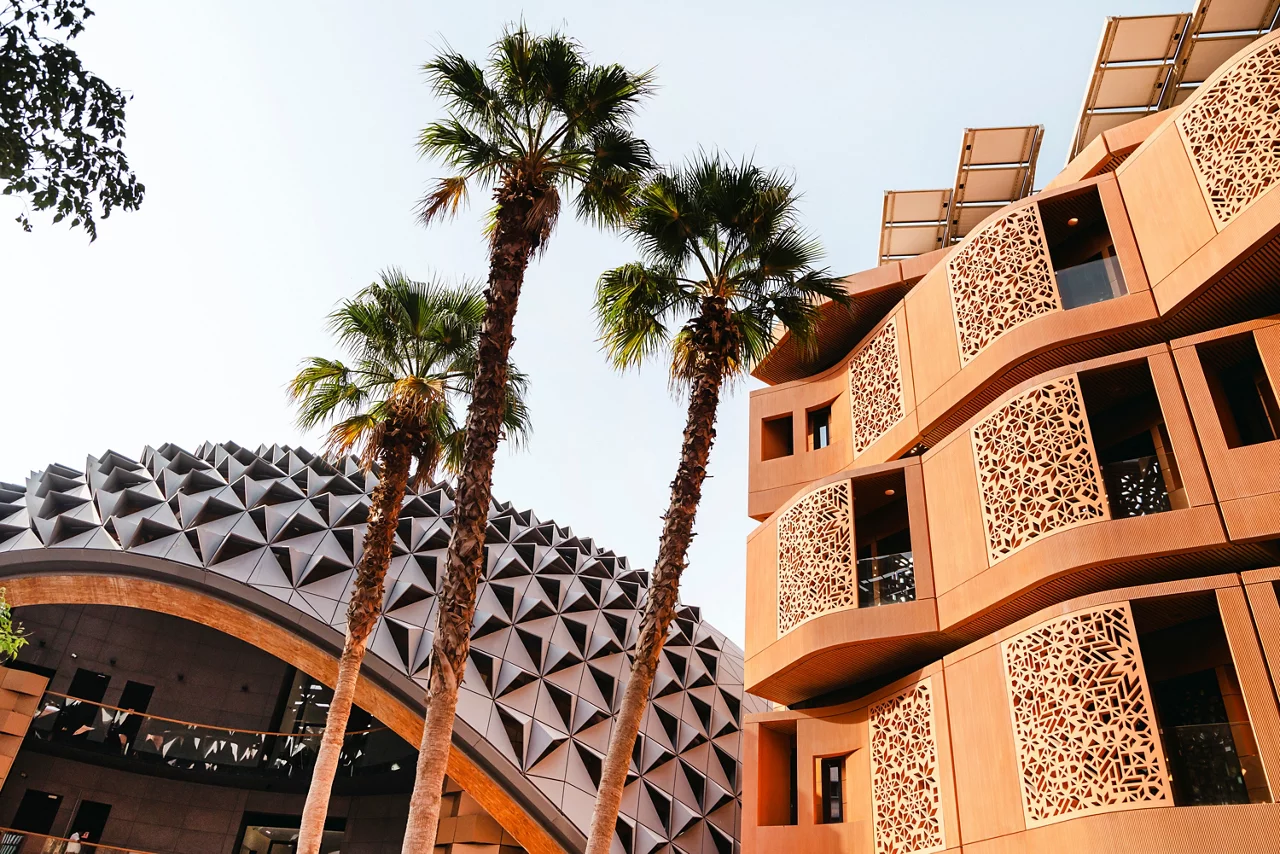
Higher Education Institutions (HEIs) are moving from secluded campuses into the heart of our cities, forging powerful, mutually beneficial partnerships with commercial hubs. This shift is now a widespread reality, with new mixed-use development across cities accommodating higher education institutes as anchors. The evolution is fundamentally changing how and where education is delivered, creating valuable opportunities for property owners, developers, and the institutions themselves.
Urban HEIs are often confined within the surrounding landscape of neighbourhoods, cultural centres and businesses. This physical constraint requires a different approach to growth, one that favours building upwards and integrating densely with the surrounding area. It redefines the university's role, shifting it from an isolated "ivory tower" to an institution that is an integral part of the city's operational machinery.
Regional examples illustrate this trend effectively. In Dubai, institutions like Heriot Watt University, Middlesex University Dubai, University of Wollongong and the Canadian University have established campuses within key mixed-use developments such as Dubai Knowledge Park adjacent to Dubai Internet & Media City and City Walk. Similarly, Abu Dhabi's ambitious Saadiyat Island Cultural District integrates New York University Abu Dhabi alongside museums and residential developments, planned to create an urban ecosystem where education, culture, and commerce intersect. Global examples include Central Sint Martens (CSM), part of the University of the Arts London (UAL), located directly in Kings’ Cross, London, UK.
The urban growth engine
The partnership between HEIs and commercial districts has become a powerful driver of economic progress. Their role has expanded beyond education; these institutions are now vital engines of economic growth and innovation that benefit the entire urban ecosystem.
Powerful economic forces: HEIs are major economic players with an impact comparable to industries such as construction and real estate. They also attract a steady stream of skilled talent and new businesses, creating a multiplier effect that boosts demand for housing, services, and commercial space, which in turn fuels widespread economic vitality and property appreciation.
Hubs for innovation: HEIs serve as innovation hubs where research gives rise to new companies and entrepreneurial ventures. Direct collaboration between HEIs and private industry creates dynamic ecosystems where knowledge flows efficiently, benefiting local and global economies. The Mohammed Bin Rashid Medical Research Institute in Dubai Healthcare City exemplifies this model, combining medical education facilities with research centres, startups and healthcare providers. This creates direct pathways from classroom learning to clinical practice and research commercialisation. The Cambridge Science Park in the United Kingdom provides an excellent global example. Established in 1970 by Trinity College, Cambridge University, it has become one of the world's most successful university-linked innovation ecosystems.
Catalysts for regeneration: HEIs contribute directly to their communities by providing resources beyond education, including healthcare, legal services, and business incubators. This approach is exemplified by "innovation districts," which are planned areas that integrate institutions, startups, and entrepreneurs with mixed-use development, all connected by efficient transit and digital infrastructure. The goal has shifted from simply placing a campus in the city to deliberately designing the urban environment to maximise innovation. Achieving this requires coordinated assets and close collaboration among all partners.
Navigating the urban challenge
Moving into a dynamic urban core presents significant financial, logistical, and ethical challenges that require innovative and responsible solutions from all stakeholders.
Logistical and financial hurdles: Land in city centres is scarce and expensive, making development difficult. Acquisitions involve complex negotiations among property owners, developers, municipal leaders, and community groups, often resulting in scattered campus locations that require strong transit links. This environment creates opportunities for creative property solutions, such as retrofitting existing commercial buildings for educational use, which can be a faster and more cost-effective approach. In the UAE context, these challenges manifest differently due to government-led master planning. Dubai's academic free zones (such as Dubai Knowledge Park and Dubai International Academic City) offer streamlined regulatory environments and purpose-built infrastructure, reducing some traditional barriers. However, institutions still face challenges in differentiating themselves within clustered education zones and securing prime locations outside designated academic areas. Qatar's Education City addressed land scarcity by creating a 14-square-kilometre purpose-built campus hosting branches of Georgetown, Northwestern, Carnegie Mellon, and other institutions, highlighting how centralised planning can overcome urban constraints.
The risk of displacement: This process occurs when an influx of affluent students and staff drives up demand for housing and amenities, increasing living costs and potentially displacing long-term residents, reshaping neighbourhoods and the communities within them. However, proactive masterplanning can substantially mitigate these risks. Education districts conceived holistically from the outset integrate academic facilities with purpose-built student accommodation and staff housing. This reduces pressure on surrounding residential markets.
Protecting academic independence: With declining public funding, many HEIs turn to corporate partnerships for support. This can lead to situations where commercial sponsors influence research priorities or favour profit-driven outcomes over the public interest. To maintain objectivity, institutions must establish robust governance models with independent oversight and transparent conflict-of-interest policies. They may also need to rethink public funding models to reduce commercial dependence.
The city centre advantage
The decision to establish a presence in a commercial hub is driven by interconnected advantages that enhance an institution's mission and relevance. Proximity to major businesses creates a direct talent pipeline, allowing HEIs to align educational outcomes with workforce needs. For students, this offers invaluable real-world experience, with access to crucial internship and co-op opportunities that enhance employability. This proximity also fuels innovation by facilitating research collaborations, joint R&D, and startup incubation, allowing HEIs to harness industry expertise and enable knowledge transfer. Furthermore, a prominent city centre address elevates an institution’s global profile and attracts a diverse student body. For global cities like London and Sydney, this is particularly appealing to international students who seek a quality education, immediate career opportunities, and a vibrant urban experience.
While international students are drawn to global educational hubs, in the Gulf region, urban HEI locations also appeal to students as these locations offer proximity to family, cultural amenities, and emerging job markets. Institutions like the American University in Dubai, situated along Sheikh Zayed Road's business corridor that anchor regional economies. Similarly, East Cairo, particularly New Cairo and its surrounding developments, is rapidly emerging as Egypt's premier education hub.
A blueprint for success
The integration of HEIs into urban centres creates powerful economic catalysts with measurable multiplier effects. However, success requires a strategic approach that addresses the challenges of high land costs, gentrification, and risks to academic independence.
Building innovation districts: Success depends on formal partnerships between HEIs, governments, and private entities. The goal is to create mixed-use, walkable environments with coordinated investments in physical infrastructure and digital connectivity that foster deep collaboration.
Planning for inclusive growth: This can be addressed by proactive master planning that conceives education districts holistically from the outset. By integrating academic facilities with purpose-built student accommodation and staff housing within a unified framework, this approach ensures that existing residents benefit directly from new opportunities created by the institution's presence.
Ensuring ethical governance: To safeguard academic freedom, institutions must establish independent oversight and robust policies that manage conflicts of interest from commercial partnerships. This may also involve re-evaluating public funding models to reduce commercial dependence and protect research integrity.
Optimising talent development: HEIs should be positioned as regional talent hubs. This is done through deep industry collaboration, including incubators, accelerators, and experiential learning programmes that bridge the gap between academic theory and industry practice.
Using data to guide strategy: Long-term success also hinges on continuously evaluating the economic, social, and environmental impacts of integration. Applying data analytics to monitor performance allows planning to remain responsive, ensuring that development is both sustainable and equitable for all stakeholders.
For the UAE and broader GCC region, this model aligns with national diversification strategies. HEIs embedded in commercial districts become essential infrastructure for knowledge economies, supporting government visions. The success of these initiatives will depend on how effectively institutions balance global academic standards with regional workforce needs, cultural context and the unique opportunities presented by rapidly developing urban centres.