How science-driven design helps organizations shape the engaging hybrid workplace of tomorrow
15 September 2026
Insight
15 September 2026
The human-led design strategy that makes hybrid a success
Categories:
Authors
Stephen Jay
Employees spend 29% of office time collaborating, yet many workplaces still prioritize individuals. Social-Spatial Design uses human science and spatial design to strengthen teams and target the workplace changes with greatest value.
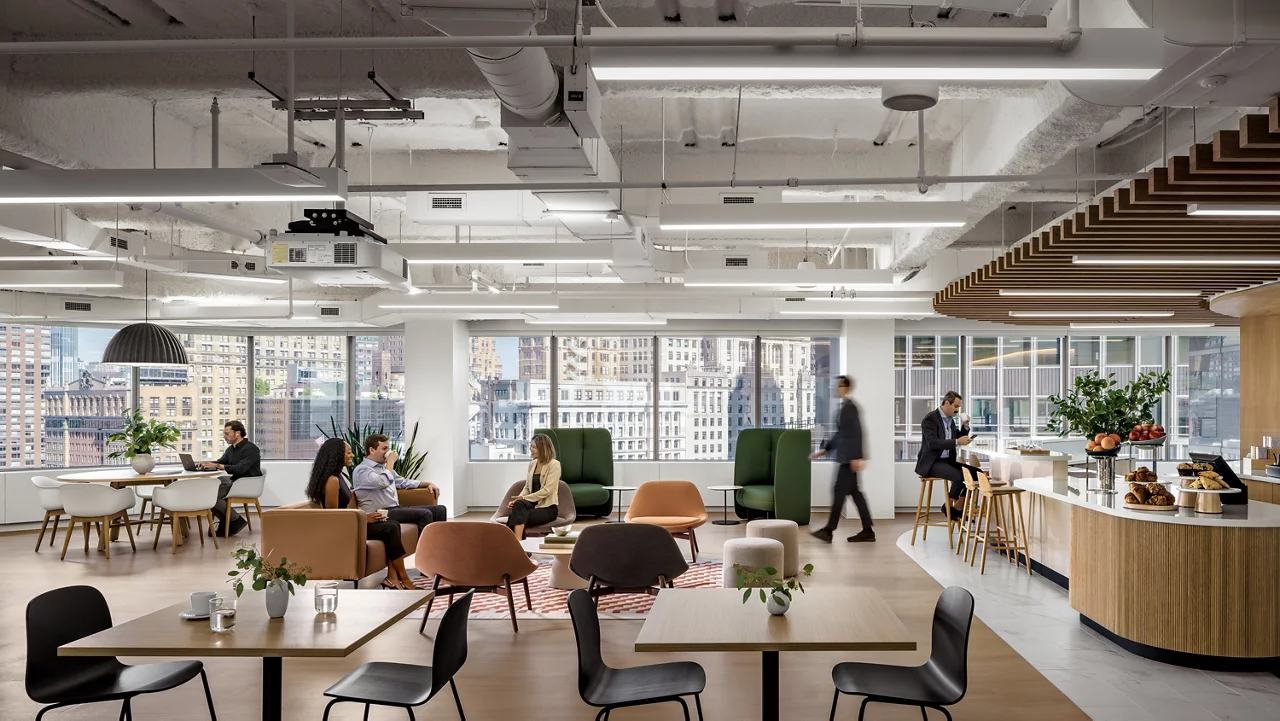
Why high-performing workplaces should be designed around teams
Organizations have invested heavily in offices that offer greater flexibility, better amenities and experiences that support productivity and well-being. Yet many workplaces still underperform because they were designed around individual tasks rather than an understanding of how culture is sustained and how performance emerges within teams.
In a hybrid working model, the office needs to offer something people cannot access as easily when working alone: the relationships, shared experiences and team interactions that support collective performance. This makes designing around how teams work together central to creating a successful hybrid workplace.
The way employees use the office is already changing. JLL Global Human Experience Trends research found that the leading reasons for attending are socializing (63%), face-to-face meetings (55%) and team brainstorming (42%). Employees also spend 29% of their in-office time collaborating with others. People are not simply commuting for a desk. They are coming in to work with each other. The opportunity is to design workplaces around that reality.
Why is now the time to design around teams?
Individual-focused office design made sense when productivity was measured primarily by what each person needed to do their best work. But the way people use workplaces has shifted. Employees who attend four or five days a week report higher satisfaction than those who attend one or two days (JLL Research 2026). This makes it even more important that time in the office supports purposeful individual work as well as meaningful interaction with the team.
Most offices weren’t built for that. The default layout still reflects an older model: focus work at a desk, collaboration in a booked conference room and limited space for anything else. That model is harder to justify when more than half of office workers still find home better for focused work, and nearly as many say it's better for their overall productivity.
The distinctive value of the office is what working from home cannot fully replicate: the team.
Groups become effective teams through repeated, often informal interactions: working within earshot, turning a passing exchange into a useful conversation or finding a quiet space for a ten-minute discussion without scheduling it days in advance. Workplaces that do not support these moments risk having underused space and teams with too few opportunities to connect.
Organizations can make the mistake of framing workplace design as a choice between collaboration and concentration. The goal is not to prioritize communal space over focused work, but to create an environment that supports both. Intentional zoning can protect concentration while making interaction feel natural. The best workplaces shape behavior as well as movement.
This focus on teams reflects the human science behind the approach. “Everyone is struggling to make our workplaces work,” says Tracey Thompson, Co-Founder and Director of Thompson Harrison. “If we’re building spaces, how can we also build better brains? We are social beings. We are at our best in small groups. That’s where we create trust, reciprocity and mutual obligation.”

How do you design workplaces around how teams connect?
Social-Spatial Design brings together two complementary perspectives. The social dimension uses human science to understand how teams interact and the conditions they need to build connection, generate ideas and perform effectively. The spatial dimension translates those insights into decisions about layout, acoustics, light, visibility, movement and work settings. Together, these perspectives reveal where the workplace supports or inhibits team performance and which spatial changes are likely to deliver the greatest value.
Four principles guide the approach
Understand how your team works: Use observation, surveys, interviews and workshops to understand how the team connects, focuses, shares knowledge and makes decisions. Identify where the current workplace supports performance, where it gets in the way and what the team needs from its environment.
Prioritize investment for team performance: Assess how different spatial changes could improve the way the team works, then prioritize those with the greatest potential performance value. This enables informed investment decisions based on expected benefit, rather than standard solutions or change without a clear purpose.
Support the full working day: Create a balanced range of settings for focused work, informal interaction, project activity and team collaboration. The aim is not to favor one mode of work over another, but to help people move easily between individual and collective activities throughout the day.
Make culture tangible through space: Use the workplace to reinforce the behaviors, rituals and shared experiences that shape team culture. This could include adaptable project spaces, settings that encourage informal knowledge-sharing or visible expressions of shared progress and purpose.
The future of workplace strategy is built for teams
A workplace designed around teams can make collaboration more effective and time in the office more purposeful. Social-Spatial Design gives organizations a clearer understanding of where the workplace supports or inhibits performance, helping them prioritize the changes that can make the greatest difference. The organizations moving first are treating the team, not the desk, as the starting point for workplace strategy and design.
The best workplace design has always been a bet on people. Now it must also be a bet on teams.
Create a workplace designed around how your teams perform. Talk to JLL Design about applying Social-Spatial Design to your workplace.