New research further proves it impacts employee performance
08 February 2022
Insight
08 February 2022
How companies are bringing a buzz back to office working
Categories:
Authors
Russell Handy
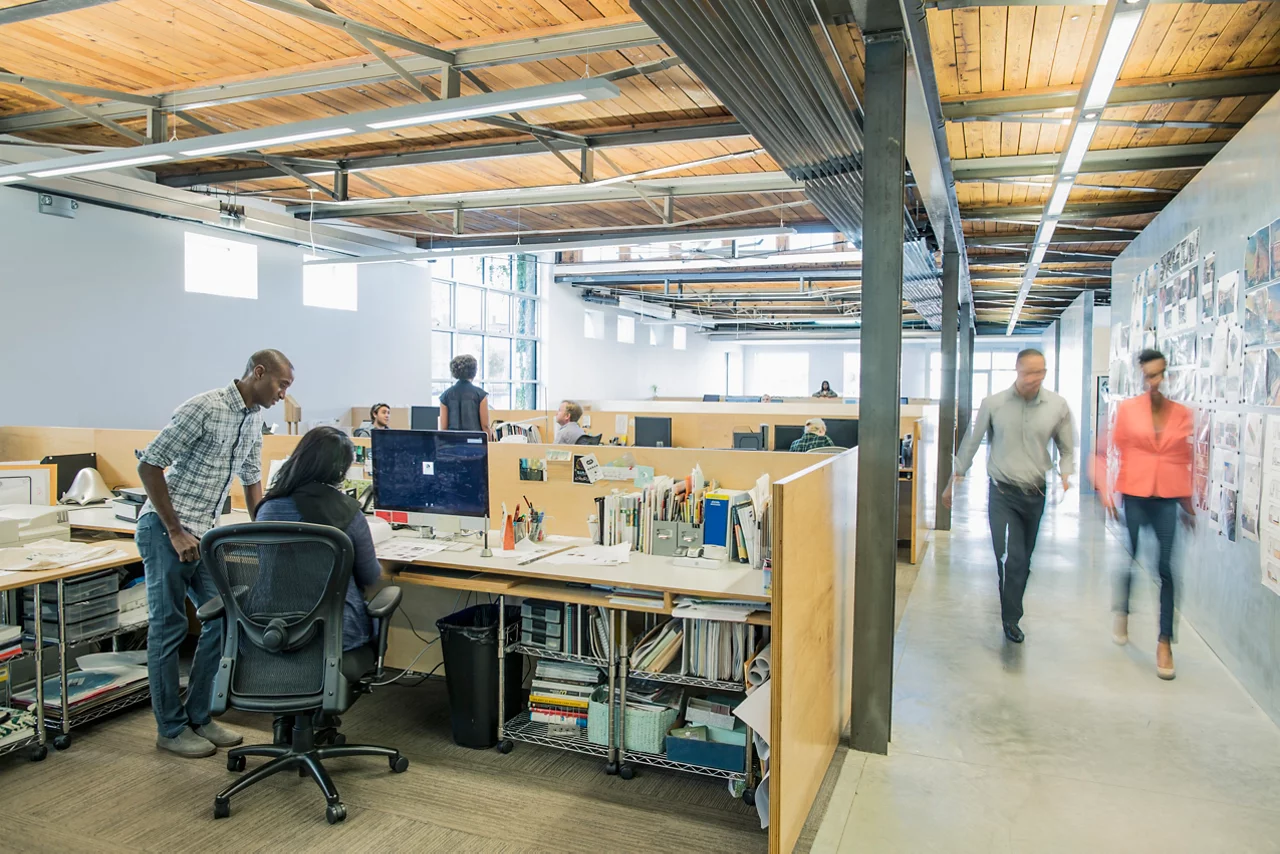
In many companies, the office now feels different to pre-pandemic days.
With more people splitting their work hours between home, the office and other locations, many workplaces are seeing peaks and troughs in employee numbers throughout the week, with different teams crossing paths less frequently than before.
It’s now up to companies to find new ways to re-energise the office to make the commute feel worthwhile and support employees who may be battling feelings of isolation and disconnection.
“The pandemic and remote working have impacted employees’ morale and energy, and how much they feel part of the company vision,” says Flore Pradère, Research Director, Global Work Dynamics at JLL.
JLL’s Regenerative Workplace research found that 36 percent of employees feel they lack energy while working, while a quarter feel too exhausted by work and family life to take care of their health and wellbeing. A third even say their company is no longer a good place to work.
Yet good energy levels are intrinsic to employee engagement and motivation, driving creativity and innovation. “Companies that support employee wellbeing see a definite payback, because people have the energy to go the extra mile,” Pradère adds.
Energy to engage
Although remote work has helped many employees achieve a better work-life balance, video meeting fatigue and longer workdays have also taken their toll.
A McKinsey survey of attitudes to post-pandemic work found that many employees now fear their work-life balance will suffer. Mental health is now a top priority and employee expectations that companies will support their wellbeing are growing.
“People’s priorities and their perceptions of work have changed, and companies now face new challenges in employee engagement,” says Guzman de Yarza Blache, Head of EMEA Workplace Strategy at JLL. “Companies need to manage the workforce differently, and a strong wellness program is critical. Without energy, productivity falls and it can impact talent retention.”
Companies are taking note; common measures include making flexible hours that employees enjoyed with remote work a more permanent feature, along with providing more support for mental health issues such as stress, anxiety and depression, which often are hidden.
For example, consulting firm EY offers free therapy sessions to staff and their family, while meditation app Calm gives employees a wellness stipend to spend on things including gym memberships, therapy and nutrition.
Managerial training to handle mental health issues is also helping to build a culture of trust where employees feel confident in expressing problems and receiving help.
“The role of managers is key in making sure people feel they can take the time they need for self-care and wellbeing, which is crucial for their energy,” says Pradère.
Elsewhere, other HR-driven initiatives are helping people to build new connections with colleagues. A renewed focus on mentorship programs and teambuilding activities can develop valuable workplace relationships that many employees felt were negatively impacted by remote work, while specialised onboarding for people who were hired during the pandemic is helping them feel part of the team.
“These kinds of engineered social connections are essential – it helps recreate those water cooler moments where people spontaneously meet and chat, increasing their engagement with colleagues and the company culture,” says Yarza Blache.
Designed to energise
The workplace itself has an important role in encouraging community and boosting energy levels.
Workplace design that emphasises collaborative space over individual workstations can nurture communal energy when fewer employees are in.
Meeting spaces that are kitted out with high-quality screens and audio technology make it easier and more enjoyable to collaborate with remote colleagues. Open-air work areas such as terraces and rooftops can significantly improve employees’ sense of wellbeing while adding more greenery – such as green walls and desk plants – can boost energy and reduce stress.
“Office design should help people to feel energised and engaged with their work, giving them compelling reasons to come in,” says Yarza Blache.
Space dedicated to health and wellbeing also benefits energy levels, whether that’s quiet rooms, fitness zones or break areas. “Having a transition space where employees can switch off between different tasks and avoid back-to-back meetings helps people to recharge,” says Pradère. ”It also provides an opportunity for social experiences, which helps develop personal connections.”
Dedicated space for showcasing the company story and its vision and accomplishments also reinforces company culture and motivates recent and long-time hires alike, notes Yarza Blache.
It’s this sense of shared purpose and personal connection that today’s companies need to fuel a new type of office buzz in the hybrid work era.
“As work takes place in an increasingly digital environment, the physical office is more relevant than ever as the space which brings people together, whether they’re employees or clients,” Yarza Blache says. “While people may spend less time there, the experience is more sophisticated, carefully designed to support a vibrant community and nurture sustainable, long-term performance.”