Designing workplaces to drive success
04 December 2024
Insight
04 December 2024
The future of office design
Categories:
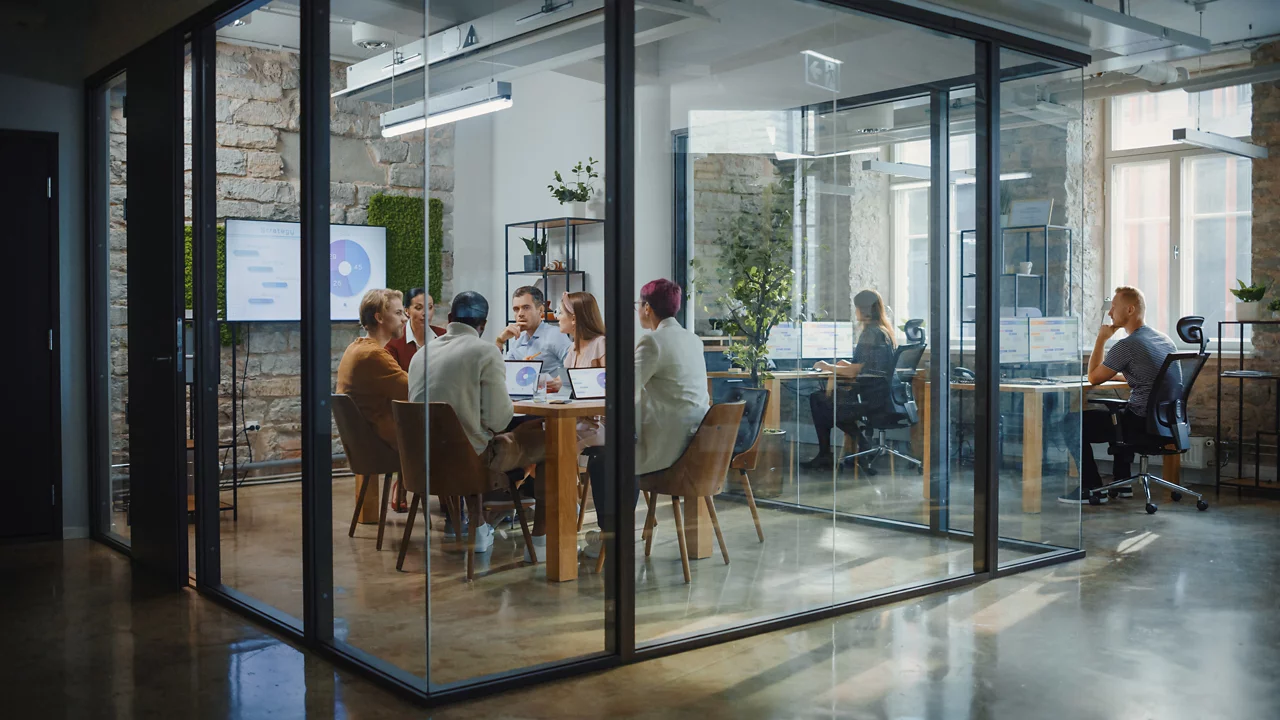
Businesses are focused on recruiting the best staff and getting the most out of them, which means workplace design is a crucial element in corporate strategy. This article draws on insights from JLL’s Future of Work 2024 survey to identify opportunities to invest in designing workplaces that will maximize staff satisfaction, wellbeing and performance.
The JLL Global Future of Work survey is a biennial survey which has been produced since 2011. It explores the evolving world of work and the key priorities, challenges and strategies of more than 2,300 corporate real estate (CRE) and business leaders, as well as the emerging trends within organizations all over the world.
Key Highlights
Workplace design to win the battle for talent: with the rising emphasis on talent and performance, businesses should invest in their workplaces to help attract and retain talent, as well as boost employee performance.
Creating high-performance environments: highly efficient and tech-enhanced workplaces are required to support high-performance environments which can adapt to the changing needs of employers and staff. However, many offices are not meeting employee expectations for satisfaction or productivity.
Building social purpose through design: the social and collaborative aspects of the workplace are now the prime reason for the return to office. Integrating social strategies with design strategies can promote company culture and support wellbeing.
Meeting sustainability requirements: organizations have more robust sustainability requirements than ever. Thoughtful design strategies for building refurbishment, adaptive reuse or retrofit which incorporate circularity can drive decarbonization while also creating positive social impact, boosting wellbeing, and enhancing overall value.
Workplace design to win the battle for talent
The Future of Work Survey 2024 found the prime corporate goals of business leaders were focused on areas of growth relating primarily to ‘people’, ‘efficiency’ and ‘innovation’. Each of these goals will increase the demands placed on the workplace to support talent attraction and retention, higher employee performance requirements and increasingly complex work. Workplaces must also support continued drives for efficiency. As business leaders look to 2030, designing the best workplaces will be crucial to succeeding in these goals. However, many offices are not performing in keys areas which affect staff productivity and wellbeing. Acoustics, thermal comfort, and space for individual working are commonly the worst-rated factors in workplaces (JLL Research, HX survey 2024).
The outlook for investing in workplaces is positive, which will support innovation and investment in design. Nearly two-thirds (64%) of business leaders expect the number of employees in their organizations to increase significantly by 2030, and more than half (54%) expect their total occupied footprint to expand in the next five years. Meanwhile, 60% of organizations surveyed expect to spend more on design, fit-out and refurbishment by 2030, while 65% anticipate greater investment in sustainability performance of their real estate.
‘Destination’ workplaces, which deliver high-performance environments, support organizational culture and identity, and deliver social purpose of the workplace, will strongly support staff recruitment, retention and productivity and therefore garner the most investment.
Creating high-performance environments
Businesses will demand high-performance environments in order to support more complex work requirements, which are driven by AI, top talent attraction and managing high levels of flexibility in hybrid working models.
While hybrid and flexible working models are not new, the adoption of these at scale in the post-pandemic era has changed working patterns and demands on all workplaces, as well as employee expectations. Despite divergences in workplace policies - with 56% of companies ‘Hybrid Adopters’ with hybrid strategies and 44% ‘Office Advocate’ with a full time in-office policy - technology and flexibility remain vital for all workplaces. Staff are looking for increased flexibility regarding office work and for increases in collaborative spaces and alternative working spaces in the office. There is a requirement for higher integration of technology in working life, which will grow as businesses adopt AI solutions.
The Future of Work Survey 2024 found 86% of respondents agreeing that they are moderately to highly effective at supporting a hybrid workforce, while 56% of organizations would consider partially opening their office across a few days each week due to lower employee demand on workspaces. Changes in the workplace will also be driven by the adoption of AI. Nearly 9 in 10 of those responding to the survey said AI would change how their workforce operates in the next five years. Coupled with corporate goals for growth and innovation, the role of the workplace in supporting higher performance, productivity and wellbeing is more important than ever.
JLL research shows investment in office design can improve the environment for focused individual work, boost collaboration and improve air quality, all critical to employee performance. Redesigned offices can also offer a choice of workspaces as well as views and green spaces, all of which are strongly linked to increased employee wellbeing and productivity (JLL Research, Human Experience Survey 2024).
This was demonstrated in the recent relocation of JLL’s Tokyo office, that included many of the elements found to inspire wellbeing and productivity included in the office design. A science-led design assessment was undertaken, using a combination of employee surveys and EEG tests (which measure cognitive experiences), and found a significant increase in office space satisfaction and higher reported productivity levels in the new office. Satisfaction scores (0-100 scale) for the new offices overall from 58 to 83, and productivity scores (0-100 scale) increased from 52 to 71. In addition, employees also reported lower stress in the new working environment, with the stress score (0-100 scale) dropping from 42 to 37.
Building social purpose through design
The social purpose of the workplace has become the most important reason for returning to the office. The collaborative nature of office workplaces is beneficial for productivity, company culture, wellbeing and innovation. Collaboration, social interaction, culture and connectivity are cited as the top reasons for working in the office, for both employees and employers.
A wide variety of activities take place in the office; it is not as simple as meetings in the office and focused work at home. In many offices, the true value of the workplace is often at the blurry edges of activities: a serendipitous meeting or cross-team social bonds. This means workplace design has to look beyond planned collaboration spaces, considering how people interact, form social bonds and share knowledge.
There is a huge spectrum of social spaces within workplaces, varying by scale, design, orientation and placement. Therefore, investment in workplace design and refurbishment should focus not just on formal collaboration spaces but consider a more holistic approach to understanding the social purpose and needs of a workforce, which will be specific to the organizational structure and business model.
Forward-looking organizations can find value in engaging with ‘non-traditional’ design disciplines - such as business or organizational psychology - in the early stages of workplace transformation strategies. This can inform a design approach that enhances social capital, nurtures organizational culture or supports productive teamworking.
An emerging area of opportunity is using a social strategy to inform a design strategy that identifies and curates social and collaboration space within a wider landscape of workstations to create a productive environment for individuals and teams.
Strategic workplace design can deliver on corporate sustainability ambitions
Design strategies for building refurbishment, adaptive reuse or retrofit can deliver more than simply reducing operational carbon emissions. A holistic approach to refurbishment identifies areas where design can enhance value by capitalizing on the unique characteristics of an existing building, improving environmental factors and systems, incorporating circular design principles such as furniture upcycling and reuse, or reallocating underutilized space for social or community use. This can bring additional sustainability benefits, including delivering social and community impact, adopting circular economy principles and boosting occupant wellbeing.
This ties in with a move towards more holistic corporate sustainability and ESG strategies. Between now and 2030, survey respondents expect an increased focus on the following aspects of sustainability: energy efficiency and decarbonization, health and wellbeing, certification, climate resilience and circular economy principles.
Findings from the survey showed 68% of organizations anticipate increased spending on sustainability performance in the next five years, with 72% saying they will pay a premium to only occupy spaces with leading sustainability and green credentials. Corporates are increasingly setting ambitious sustainability targets tied to their real estate footprint through commitments such as the science-based target initiative (SBTi) or the science-led WELL certification for healthy buildings.
Recent research from JLL has identified a near-70% undersupply of low-carbon, grade A office space by 2030, based on current demand and new build pipelines (JLL Research, The green tipping point, 2024).
Additionally, a combination of building performance standards and corporate decarbonization commitments is increasing the risk of obsolescence in existing corporate portfolios. These combined factors are pressuring organizations to consider the redesign or retrofit of existing buildings to align with regulatory requirements, decarbonization pathways and corporate sustainability commitments.
Organizations should embrace the circular economy and reuse or recycle materials, fixings and furniture wherever possible. For example, Dutch packaging company Tetrapak is turning recycled cartons into office furniture. As well as reducing embodied carbon, circular economy principles can provide opportunities for unique design solutions and strong visual identity. Again, in order to maximize their value, circular economy principles should be integrated into the design process at an early stage.
Climate resilience is climbing the corporate agenda – 72% of CRE respondents to the Future of Work 2024 survey stated they would only select buildings which are resilient to climate events. Workplace design strategies increasingly need to include climate risk adaptation measures to future-proof workplaces and ensure business continuity.
Reinvesting in existing workplace locations can strengthen community connections, and opportunities to provide community access or amenities can be built into refurbishment or redesign projects. The survey found 63% of organizations would consider opening their office amenities for use by the local community to ensure they are used 24/7.
Environmentally and socially sustainable workplaces can also appeal to a younger generation of talent, many of whom consider the environmental impact in decisions relating to where they live, work and socialize. A recent JLL consumer survey found 71% of Gen Z and Millennials always choose the most environmentally friendly option (compared with 55% of older generations) and ‘environmental impact’ is one of their top drivers influencing consumer choice. These preferences link sustainability back to the battle for talent attraction in the workplace.
Now is the time to invest in workplace design
The increased complexity of the world of work means a bigger role for workplaces in supporting employee performance and expectations, corporate sustainability ambitions and the evolving technology and AI landscape. All this means now is the time to invest.
The design of workplaces has a significant impact on people’s performance and wellbeing. While approaches to hybrid working policies and return to office strategies continue to shift, the design of the workplace plays a critical role in supporting individual wellbeing and engagement, and enhancing team performance, social cohesion and organizational culture in the office.
Understanding the needs of employees and future talent should be central to design strategies if they are to meet corporate aspirations towards 2030, and organizations can benefit from enhancing workplace design with data-driven approaches. For example, utilizing employee experience data or social strategies in developing design strategies that meet your employee and corporate needs.
To gain the greatest value from workplace investment, design strategies must be connected to corporate goals and ambitions. In a complex environment, approaches such as science-led design can unpick these intricacies and provide clear frameworks for successful design.
More from JLL's Future of Work Survey 2024
Want to learn more?
Get in touch with our research team to find out how we can support your real estate technology strategy with market insights and strategic advice.

Stephen Jay
Global Design Advisory Retail and Branding Lead