Hybrid places, sustainable stores, shopper assistants and more
Insight
21 October 2024
Prepare yourself for the future of retail
Categories:
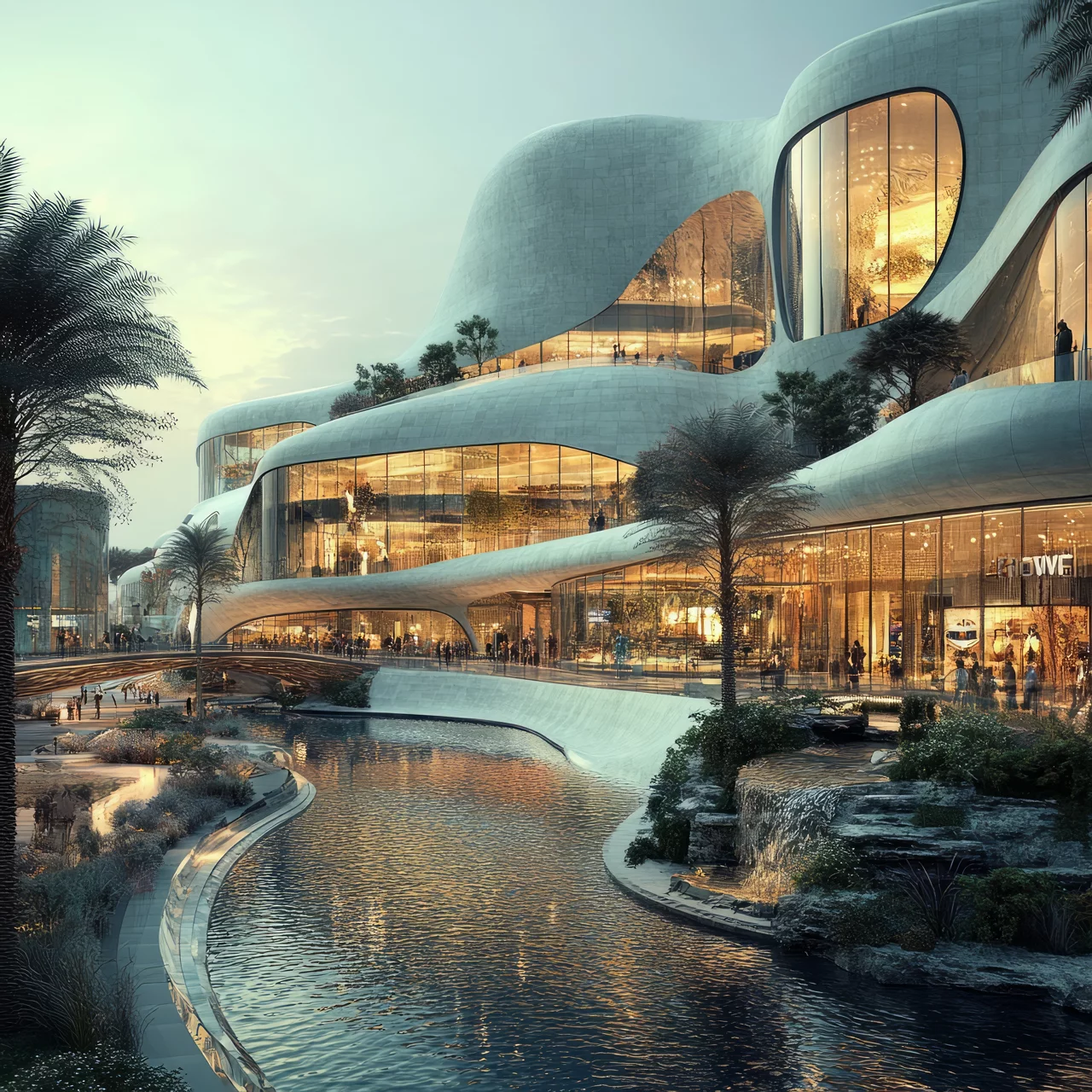
Image by Chawakorn - stock.adobe.com. This work product was created with assistance from generative AI.
Key highlights
- Embrace technology: Innovations will create new opportunities. Artificial intelligence could take on shopping tasks, with unmanned drones and vehicles delivering orders as needed. AI may use consumer data to tailor the design, layout and merchandising of each store to the needs of its specific trade area.
- Keep it human: The more virtual and automated shopping becomes, a greater premium may be placed on human experience: shoppers could be willing to pay more for it.
- Understand mixed-use environments: New integrated mixed-use developments could change how we live and shop. Future retail spaces could more likely be a part of communities that blend residential, commercial, and recreational uses.
- Cultivate spaces where planet and people thrive: Future retail spaces will have to prioritize sustainability and resilience, incorporating features like renewable energy systems. Retail environments will need to be designed to serve diverse populations equally.
A future vision for retail
Since the emergence of e-commerce in the 1990s, some observers had predicted the demise of in-person shopping. They were mistaken. What has emerged is much more complex than a simple, binary online/offline shopping dichotomy. Consumers today enjoy a growing number of ways to shop that cater to their individual needs at any given moment. From delivery to click-and-collect to personalized in-store shopping, the retail ecosystem has exploited new technology to give consumers exactly what they want.
In the JLL Experience Matters 2024 survey, 67% of shoppers in 10 countries told us they prefer shopping in person to shopping online.
So much has changed in recent decades and there is no reason to believe that the pace of change will slow anytime soon. To get a handle on what the future might hold, we conducted a series of interviews, workshops, and brainstorming sessions as a part of our Future Vision program. We imagined possible futures and how they could impact how we live, work and shop. What follows is a selection of some of those possible retail futures. Retailers, developers, and investors may benefit from considering these possible futures and how they might impact their businesses.
Drone delivery while you sleep
Artificial intelligence, robotics and even quantum computing could one day allow for intelligent human-like thought to be inserted into formerly impersonal interactions. Ubiquitous robotics and automated drones could become commonplace in many countries.
- In Dallas, Texas, Walmart is offering autonomous delivery by flying drone within a 10-mile radius of a growing number of Walmart stores. The retailer intends to eventually offer drone delivery to up to 75% of residents in the region.
- Starship Technologies’ six-wheeled autonomous robots have made over six million deliveries in the US, UK, Finland, and Estonia.
Consumers of the future could make fewer regular trips to the store, as intelligent robots take on many of their shopping duties. AI, informed by sensors in home pantries and refrigerators, could be empowered to order refills of milk, eggs, and laundry detergent on our behalf.
- Today’s smart refrigerators already hint at this future. For example, the Samsung Family Hub uses AI and internal cameras to track food inventory and automatically generates shopping lists for low items.
Electric drones both small and large, in the air and on the roadways, would deliver these items when most sensible. Items needed immediately could be delivered right away, while other deliveries could be made in the evening when the cost of electricity is low, and the streets are less crowded.
 This work product was created with assistance from generative AI. Created with Adobe Stock licensed images and Adobe Firefly’s generative fill integration with Photoshop.
In this possible future, retailers may shrink store footprints in neighborhoods where drone delivery has taken hold. They will also have to think about which technology partnerships they’ll need to make to successfully roll out such a complex initiative. Property developers could plan projects with drone delivery in mind, thinking about landing and parking spots in homes and apartment buildings, as well as areas devoted to drone loading, staging, charging and maintenance.
It’s important to note that this and other optimistic tech visions of the future would likely not be distributed evenly. Like many technological advances of the past, retail automation would likely emerge first in wealthy neighborhoods and nations, only spreading to others as costs lower.
Physical, digital, augmented… it’s all just shopping
Some future shoppers may make fewer overall trips to the store. But the trips they do make would more likely be for items they prefer to experience in person. Yet shopping experiences won’t be limited to brick-and-mortar retail. Shopping could encompass a seamless merging of digital, physical and hybrid activities. And with help from AI, those experiences could be highly personalized.
 Image by Nuntapuk - stock.adobe.com. This work product was created with assistance from generative AI
Imagine the scenarios:
- An AI assistant offers a shopper a menu of suggested outfits inspired by the shopper’s past purchases and body type. The shopper arrives at the shoe store having already trialed the store’s inventory via a virtual fitting on their digital twin.
- A parent kicks off back-to-school shopping with a quick virtual fitting via augmented reality. Through smart glasses the parent is presented with realistic images of what their children would look like in their new outfits.
This work product was created with assistance from generative AI.
Several apparel brands and retailers have tested technologies which may pave a path to this future. Shoppers are already enjoying virtual try-ons at home via mobile devices and VR headsets and in stores through AR enabled mirrors. They may not yet be realistic enough to replace a visit to the fitting room but given time these technologies could improve. There are also a number of AI tools which offer style suggestions based on uploaded selfies, photos of wardrobes and information about past purchases.
E-commerce retailers would especially benefit from this technology. That’s because online apparel purchases would be more likely to fit and thus less likely to be returned or thrown away. This would be good for both the planet and the retailer’s bottom line.
Shopping center owners may want to consider the impact this technology could have on their retail media networks. An interactive billboard could show an interested passerby how they might look wearing a piece from a designer’s latest collection. This could greatly increase the value of media engagements, thereby driving up revenue.
While it’s still early days for these applications, retailers may want to engage technology providers today to develop relationships for the future. Those brands that have preexisting connections with vendors will be the fastest out of the gate as these new technologies arise.
One negative impact of this possible future is the fact that even today, AI has a large carbon footprint. The data centers which host and train modern AI models are predicted to claim a growing share of global electricity. If that electricity is produced with fossil fuels, it may accelerate global climate change. Yet, AI could also solve the problem it caused. AI tools could optimize and improve the production of sustainable electricity and improve the power efficiency of commercial buildings.
Store associate superstars
With so many in-store duties having the potential to be automated, the role of store associate could become ambassador, educator and influencer. The most successful sales associates may be as much a performer and thought leader as anything else. A store may be as much a multi-media production studio as it is a place to shop.
Here are scenarios we might imagine:
- A bookstore clerk delivers an impromptu review of a new bestseller, both to those shoppers gathered in-store and to thousands of social media followers, many in other countries that will see and hear the clerk speak in their own native languages.
- A clothing store associate livestreams the unboxing of the new fall line. Social media followers jockey to be the first to have their digital twins purchase the new gear.
- At a cookware store, an associate torches a tray of crèmes brûlées for a small group of in-person onlookers. AI video production quickly transforms the raw footage of the event into a slick professional how-to video.
Shoppable livestreams are already popular in many parts of the world. In a growing number of test cases, robots have begun cleaning store floors and scanning shelves to track prices and stock levels. Retailers around the world are also testing various forms of cashier-less check-out, which are fast and easy, nothing like the clunky self-checkout tills that many have become resigned to interacting with today. These stores use computer vision and weight sensors to track shoppers and goods, charging them automatically for the items they take from the store.
Of course, this possible future may have drawbacks. For example, expecting store associates to be social media gurus could empower some and overwhelm others. Also, with more roles potentially being automated, this could mean gradual job losses overall. What may be more likely is that scenarios like these will become even more commonplace in high-end retailers, while discount retailers that target shoppers on a budget won't have the capital to roll out expensive technology. In that case, the truly new and unique retail experiences will be disproportionately enjoyed by wealthy shoppers.
Retailers and shopping center owners could consider training their associates today as if they were social media ambassadors. These skills of engagement, captivation and presentation aren't just good for racking up online followers. They are also good for making in-store sales.

Retail everywhere
For many suburban residents today, shopping requires a trip to a retail park, mall or shopping center; a place where shopping is segregated apart from the other activities of life. In the future, shopping places may trend to a mix of uses. Retail could become less concentrated in specific zones, and instead sprinkled throughout the built environment. This could partly be driven by more vertical and horizontal mixed use zoning laws along with market demands for shopping convenience. Of course, in many countries around the world, like Japan and Germany, zoning laws have already made this trend a reality.
And unlike today, where many retail chains stamp out repetitive store prototypes across the landscape, retail spaces could adapt to the needs of each local community, thanks to the power of AI design fed by volumes of customer data.
We imagine scenarios in this possible future:
- In former suburban big box retail parks that were once zoned only for commercial use, parking lots are redeveloped into apartment complexes just a short walk from groceries, clothing boutiques and restaurants. What were once retail goliaths are now walkable collections of garden offices, medical specialists and children’s activity spaces.
- A retail chain that once grew by building super stores now focuses its expansion strategy on small walk-up locations stocked with milk, cereal, and diapers in neighborhoods with a high concentration of young families.
In many parts of the world, large retailers have already shown a willingness to shrink standard store sizes in order to meet shoppers where they’re at. IKEA, a furniture brand known for its massive stores, is rolling out small-footprint locations to be closer to more customers in Madrid, Rome, Toronto, and other cities around the world. And many supermarket chains have already caught on. There are small Tesco Express high street locations throughout the UK, Carrefour Group has its Carrefour City concept in five countries and discount grocer Aldi opened the first Aldi Corner Store in Australia in 2021, which is half the size of its traditional footprint.
Mall redevelopments are also a growing trend in many parts of the world. In the U.S., a country with many ageing enclosed malls, JLL analysis of redevelopment projects found that many developers see these centers as new live-work-play hubs. 47.6% of redeveloped malls incorporated three or more different uses. And 52.4% added a multifamily housing component to the project.
This work product was created with assistance from generative AI.
The reality premium
When future shoppers do take the time to go out and buy things in person, the trip could be something of a special event: a fully immersive personalized experience.
We know already that many consumers today find a good experience worth the cost. In our 2024 People Experience Survey, we found that 65% of shoppers said they are “willing to pay a premium for high quality experiences.”
Premium coffee shops, restaurants, bars and ice cream parlors may remain much as they are today, at least in the front of house. In a world of digital ubiquity, paper menus and warm interactions with a human wait staff take on more significance. But for inexpensive quick service and fast casual chains that are looking to attract value conscious diners, there's quite a bit of an opportunity for additional automation.
Here we imagine a few moments:
- A dinner at a casual restaurant is served by an ordinary human wait staff, completely unaware that in the kitchen, much of the cooking is being handled by robots.
- A family visits an amusement center within a mixed-use development that is a blend of low and high technology. One minute they jump together on trampolines. Another they embark on an augmented reality treasure hunt, chasing virtual cartoon pirates in search of hidden gold.
Automated restaurant kitchen
 Image by Bijac - stock.adobe.com. This work product was created with assistance from generative AI
While fully virtual at-home video games have been successful for decades, there is growing appetite for going out to a digital experience in the physical world. Since the 2016 release of Pokémon Go, players of that augmented reality game have found themselves out in the real world catching virtual Pokémon in public spaces all over the globe. Concepts like Sandbox VR offer high-end immersive full-body cinematic experiences.
There are also several companies currently developing technologies to automate restaurants’ back of house functions. Flippy, a kitchen robot from Miso Robotics can handle the often hot and dangerous task of deep-frying items like fries and chicken nuggets. Diners saw Flippy in action at a demonstration pop-up called CaliExpress by Flippy, in Pasadena California in the summer of 2024. In Naperville, Illinois, Nala Robotics operates an automated restaurant with robot chefs and fry cooks preparing Indian cuisine. Haidilao, China’s largest hot pot chain, opened its first automated restaurant in Beijing in 2018, with robot chefs preparing food and robot servers delivering them to tables. Today, there are also automated Haidilao restaurants in Shanghai and Singapore.
Retail science
For retailers, much of the success of a store is based on finding the right location. With more sophisticated forecasting tools, retailers will be able to make more accurate site selection decisions and avoid unnecessary store closures. And with new AI tools, perhaps the design of each store will be tailored to its specific community. By combining data around shopper lifestyles, walking habits, psychographic profiles and more, retailers may become big data scientists, able to adapt offerings to meet consumer needs.
In this possible future of customized retail destinations:
- Shoppers relish visiting each individual location of a retail chain, as no two are alike. With AI design, empowered with reams of local shopper data, stores can be as unique as each community they sit in, while still retaining the brand design elements and products which make the chain distinct.
- Retailers maintain virtual digital twin replicas of each store in their fleets: a virtual mirror of their entire portfolios through which they can plan for new merchandising campaigns as well as perform some property management functions remotely.
- Retailers implement highly personalized loyalty programs. Unlike current loyalty initiatives that typically provide standardized tiers of perks and discounts, future programs could deliver customized deals and incentives tailored to the preferences and perceived value of each individual shopper.
The use of digital twins is already being applied to large complex processes in many industries, including commercial construction. But one limit to the wider adoption of digital twins is their expense and complexity. In a future with inexpensive powerful computing and accurate widespread sensing technology, the use of digital twins could become much more economical.
Loyalty programs today are already quite personalized and personalized marketing can only increase with more widespread adoption of generative AI. In the 2024 McKinsey Global Survey on AI, 15% of respondents reported that they were using generative AI tools to create personalized marketing.
A force for sustainability and resilience
In JLL’s 2024 Global People Experience Survey, 79% of respondents agreed that ‘It is important for businesses to make a positive contribution to the local community in which they operate.’ To make this happen, stores of the future may be more likely to become a part of integrated mixed-use communities, designed with sustainability in mind. As our global climate changes, communities will need to become more resilient against heat, cold, drought and floods, not to mention powered by renewable energy.
60% of carbon emissions within urban areas typically come from buildings, according to a JLL estimate. Today a growing list of city governments are rolling out regulations to reduce emissions from commercial properties. In one possible future, all major global cities will have enacted these practices and sustainable shopping centers and retail stores will be the norm.
Lippulaiva, located in the Helsinki metropolitan area, is an urban development which includes eight residential buildings, a metro station and bus terminal. Its shopping center is a nearly zero-energy building, as it sits on top of Europe’s largest geothermal heating and cooling facility for a commercial building. Energy consumption is optimized by a smart management system and the roof holds both green vegetation and an array of solar panels which power the property’s elevators, escalators, and common area lighting. There are even solar panels on the walls.
A circular economy
According to a 2018 report from the World Bank, global waste is projected to grow at a rate twice that of population growth. Retailers and retail centers each have a role to play in promoting waste reduction and recycling.
Global apparel chain H&M accepts donations of pre-owned clothing and textiles at its many retail locations. Items are sorted for reuse, recycling or incinerated for energy recovery. In 2023, 68% of the textiles H&M collected were resold.
In Sweden, ReTuna Återbruksgalleria bills itself as “the world’s first recycling mall.” This attractive modern building holds 14 independent retail businesses, all of which are supplied by donations received at the recycling center next door. ReTuna inspired a similar project in Norway called Resirkula, which opened in 2020.
Inclusive design for all
Building design could be implemented with health and well-being in mind. Environments may adapt to appeal to neurodiverse clients. While shops could offer quiet shopping hours for those affected by bright lights and noise, audio and visual filters might also be available for shoppers to block out unwanted distractions when they visit during regular shopping hours.
According to data from the United Nations, the number of people in the world over the age of 60 will have more than doubled by 2050. While this growth will be most visible in Europe, North America, and Japan, many other countries will have to contend with fewer people in the labor force and an aging population. Stores can be designed with older shoppers in mind with comfortable seating, more lighting and easier to read fonts. In-store technologies can be made to be accessible as well. Stores can have wide aisles, nonslip flooring, and automatic doors and items can be placed at heights that don’t require stooping or stretching.
Next steps for retailers and developers
We developed our future scenarios to provoke your thoughts. As a next step, you might game out your own scenarios for the future. Don’t be afraid to go out on a limb with some more unique predictions. Indeed, we believe what will actually come to pass will be an unexpected mix of the likely, unlikely and downright unpredictable.
Questions for retailers
- How might we further incorporate AI into our operations to personalize and optimize the shopping experience today?
- What technology partnerships should we explore today to be prepared for tomorrow?
- Is there an opportunity to right-size or improve the design of our store prototypes to meet new shopping habits?
- Are we using modern, robust predictive models to guide our new store site selection?
- What strategies can we explore to be ready for future environmental regulations and to meet our own sustainability goals?
- How can we make our products a part of the circular economy?
Questions for developers and investors
- What infrastructure changes might we have to make to accommodate future drone air and street deliveries?
- What can we learn from new sustainable projects popping up around the world, like Lippulaiva in Helsinki?
- What energy efficiencies might we implement in current and future projects?
- What opportunities exist in retrofitting older retail spaces, like malls, into mixed-use developments?
- How might the possible future scenarios influence the valuation and operational costs of retail properties?
More from JLL’s Future Vision program
Want to learn more?
Get in touch with our research team to find out how we can support your real estate technology strategy with market insights and strategic advice.

James Cook
Senior Director, Americas Retail Research, JLL

Steven Lewis
Global Head of Insight and REMS Research

Flore Pradère
Directrice Recherche & Prospective

Naveen Jaggi
President, Retail Advisory Services