A guide to building and operating an agile facility, from site selection to energy management and sustainability.
09 December 2025
Guide
09 December 2025
The physical footprint of AI: Is your semiconductor fab ready for the revolution?
Categories:
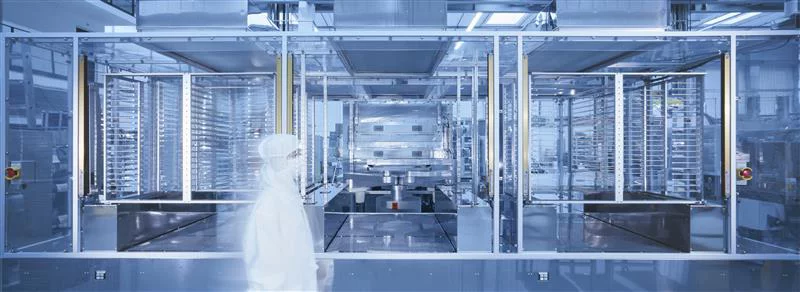
Driven by the AI revolution, the unprecedented surge in demand for semiconductors is fundamentally reshaping the industry. Demand for more powerful chips is creating a cascade of operational complexities that push modern fabs to their engineering limits. Our guide is packed with strategies and insights for building and operating a semiconductor fab that can meet the demands of the AI era, turning facility performance into your most critical competitive advantage.
How is AI transforming the semiconductor industry?
The demand for AI is fueling a surge in data center capacity and the need for advanced computing power, boosting production quotas and straining existing fab capacity. AI is not only propelling demand for semiconductors, it’s also helping design more complex chips at a faster pace. Corporate Real Estate (CRE) leaders must plan for underlying labs and production facilities that are more agile and adaptable, with infrastructure capable of handling rapid changes in tooling, environmental requirements, and process flows.
What are the main challenges for manufacturers?
Chip manufacturers today face growing complexities at every step of building and operating a leading-edge facility:
Site selection: In order to operate, fab sites must meet specific requirements for stable power supply, water resources, supply chain capabilities, and proximity to skilled labor. Government incentives, if available, can help defray capital outlays, playing a key role in your siting decision.
Construction management: Capital investment in modern fabs often exceeds $10 billion, including the physical facility and advanced manufacturing equipment. Realizing a project of this scale requires robust strategizing and execution in the face of strained supply chains, construction labor shortages, and regulatory hurdles.
Facilities management: CRE leaders are under immense pressure to meet the extreme operational requirements of today’s chip factories. The production of leading-edge chips for AI requires unique manufacturing environments, maximum uptime, and compliance with environmental regulations.
Workplace strategy: The semiconductor value chain faces a widening talent availability gap. Investing in a healthy and appealing work environment can improve community building and overall workforce satisfaction, giving you an edge as the competition for skilled workers intensifies.
Energy management and sustainability: Semiconductor manufacturing is highly resource-intensive, consuming large amounts of electricity and water as well as various materials and process gases. Energy efficiency measures and digital solutions such as AI, in concert with smart sensors, can help your facility curb utility consumption and achieve sustainability certifications such as LEED and BREEAM.
How do you start future-proofing your facility?
Overcoming the challenges created by advances in AI – from operational complexity and talent scarcity to environmental compliance – requires smart and scalable real estate strategies. JLL offers an integrated suite of services designed to help you navigate the challenges of the AI era, enabling you to build and operate a lead-edge facility that’s ready for tomorrow’s production demands.
Download our latest whitepaper for valuable insights on how AI is reshaping the semiconductor industry and strategies for turning your real estate and facility challenges into a competitive advantage.