Modern nuclear reactors promise stable, zero-carbon power, but can they be deployed quickly enough to meet demand?
04 September 2024
Guide
04 September 2024
Is nuclear a viable power solution for data centers?
Categories:
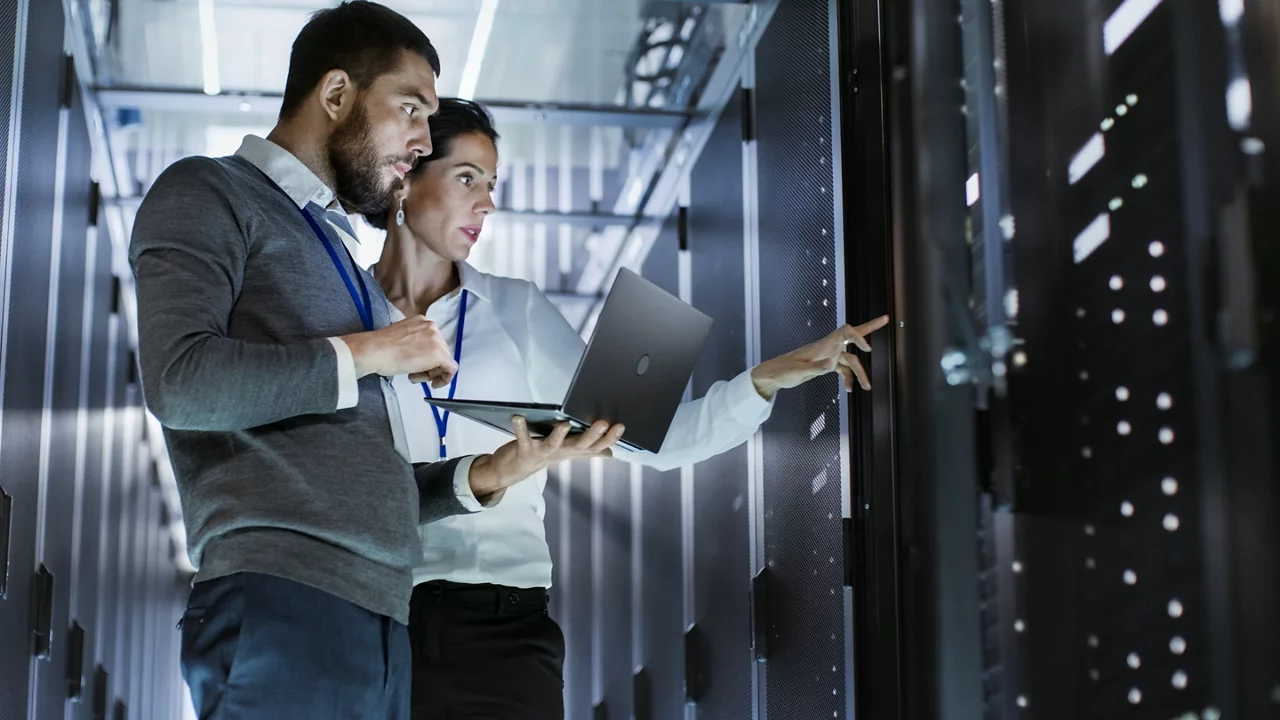
A familiar scene has been playing out across the data center industry: a developer builds a new facility, and the capacity gets leased even before construction is complete. As companies race to keep up with demand for new facilities to store the data that fuels our digital economy and AI models, a major constraint is holding back growth — power availability.
The rapidly expanding data center industry is putting more strain on an electric grid that is already feeling the pressure of electric vehicle adoption, a manufacturing resurgence, aging infrastructure and extreme weather events. Global data center power consumption could reach as high as 1,000 terawatt hours (TWh) in 2026 — more than double what the sector consumed in 2022, according to the International Energy Agency (IEA). In the United States, data center power demand has been growing approximately 20% per year and could exceed grid supply by 2033, according to JLL researchers.
The industry needs to find more power quickly, and many within the data center industry wonder if nuclear energy could hold the answer. Modern nuclear reactors offer safe, sustainable and stable base-load power, all crucial factors for data center operations. However, challenges stand in the way of broader adoption, including regulatory obstacles, cost barriers and public misperceptions about safety.
Can data center operators overcome these hurdles to make nuclear energy a viable energy source? Answering that question starts with understanding how the industry has evolved over the past several decades.
“Newer designs require a lot less operator intervention than the reactors of the past, which reduces the risk of human error and increases reliability and safety."
JLL Research
Advances in nuclear technology
Nuclear reactors have come a long way since 1951, when a power plant in the United States became the first to produce usable electricity using atomic energy. In recent years, power producers have embraced new designs that make nuclear energy safer and more reliable.
Modern nuclear reactors have significantly improved safety and reliability compared to their predecessors. These newer designs require minimal operator intervention, which substantially reduces the risk of human error. Additionally, they incorporate inherent safety mechanisms, such as negative temperature coefficients that automatically reduce reactivity as the reactor temperature increases.
Additionally, building a massive power plant is no longer the only way to harness nuclear energy’s potential. Developers are designing small modular reactors (SMRs) that typically have a generating capacity of up to 300 megawatts (MW), about one-third of traditional nuclear reactors.
These nuclear fission reactors, compact enough to be deployed on or next to a data center site, can be built in factories, reducing construction costs and timelines while enhancing data security and operational resilience by mitigating vulnerability to grid failures and cyberattacks.
Another advantage of nuclear power is its smaller land footprint. Nuclear reactors produce more zero-carbon electricity within the same land area compared to renewable energy sources, and unlike wind and solar power, nuclear energy output remains consistent regardless of weather conditions.
While the sector has come a long way, more changes are on the horizon. Some experts believe recent advances in nuclear fusion could be a game changer. Nuclear fusion reactors use a different process than today’s fission reactors, offering significant advantages. They are inherently safe and produce no radioactive waste. The technology is not yet commercially viable, but several companies are working to change that.
How data centers are taking advantage of existing nuclear power
New nuclear technologies hold much potential, but data centers can also take advantage of existing outputs. According to the World Nuclear Association, nuclear energy supplies about 9% of the world’s electricity today and that number is quickly increasing. The IEA estimates that an additional 29 gigawatts (GW) of nuclear capacity will come online by 2026, increasing global nuclear generation by nearly 10%.
Some data center operators are trying to lock down that capacity by co-locating new facilities next to existing nuclear power plants. In early 2024, a major cloud service provider purchased a 960-megawatt (MW) data center campus adjacent to and directly powered by a nuclear power plant in Pennsylvania. The deal attracted widespread attention, and now several utilities are eyeing similar agreements.
Many view these agreements as a win-win. The data center locks down a stable, long-term power source while avoiding transmission and grid fees, while the utility secures a long-term customer at a price higher than it could charge by selling energy to the grid. However, the arrangements are not without controversy. Opponents of these deals say data centers are removing energy supply from the grid, which could raise prices for other customers and reduce reliability.
"A nuclear reactor is not only carbon-free, but it requires a substantially smaller footprint than wind and solar, and its output isn’t dependent on the weather.”
JLL Research
The long-term potential of new nuclear technologies
While existing nuclear power plants are a stable, reliable source of zero-carbon electricity, there is only so much capacity to go around. Data center companies hope new technologies like SMRs will fill the gap in the coming years. While SMRs are not yet ready to deploy at scale, many players are striving to make them commercially viable as quickly as possible. The IEA estimates by companies in over 20 countries are developing more than 85 SMR designs and concepts.
Investment in advanced fission technologies, including SMRs, shot up to $3.9 billion in the first seven months of 2024 — a massive jump from the $355 million invested in all of 2023 — according to Axios. Government incentives are helping build momentum, too. In June, the U.S. Department of Energy announced up to $900 million in funding to support the deployment of SMR technologies.
The U.S. isn’t alone. India’s government plans to partner with the private sector to develop SMRs and allocated $2.98 billion to the Department of Atomic Energy in its 2024-25 budget. Singapore is also exploring how nuclear power can meet future demand. The country signed an agreement with the U.S. in 2024 to collaboratively study how advanced nuclear technologies can support climate goals and energy needs.
Momentum is building in Europe, too. The French government recently awarded $321.6 million to a power company for the next phase of its development of SMRs, building on earlier state aid. Meanwhile, a Swedish nuclear company plans to build a campus of SMRs on Sweden’s east coast to power data centers.
Data center companies are already inking agreements to help bring advanced nuclear projects online. In early 2024, Data Center Dynamics reported that a colocation company signed a pre-agreement and made a $25 million pre-payment to procure up to 500 MW from SMRs to be developed by a nuclear technology firm. Just a few months prior, a blockchain company announced it plans to build two data centers backed by nearly 2 GW of power from 24 SMRs.
Other new nuclear technologies are also gaining traction. In 2023, a leading technology company signed a power purchase agreement (PPA) to buy electricity from a nuclear fusion startup in 2028, demonstrating a huge vote of confidence in fusion reactors.
Overcoming obstacles
Despite the many benefits of nuclear energy, building new generating capacity requires navigating a minefield of challenges, including the regulatory landscape.
Each country continues to evolve its stance on nuclear energy and adjust regulations to support the implementation of newer, safer technologies. Asia is the primary driver of nuclear power growth, but political stances vary throughout Europe, according to the IEA. Some countries, such as Germany, are phasing out nuclear power, but 11 other European Union member states launched an alliance to cooperate on nuclear energy and add 50 GW of nuclear capacity by 2050. Meanwhile, the U.S. is providing substantial support for the development of SMRs.
Even in countries with pro-nuclear policies, getting new reactors licensed and approved takes time. The substantial upfront investment required to build new generation is another barrier. So far, funding for advanced technologies such as SMRs and fusion reactors around the globe has come primarily from private equity and venture capital firms.
Companies that successfully jump through the regulatory hoops and secure capital still face another huge challenge — convincing communities that new nuclear projects are safe and clean. The tragic accidents of Chernobyl and Fukushima still loom large. However, these were exceptional events that don't represent the lower risk profile of modern nuclear plants. The industry must effectively communicate how today's nuclear plants are inherently safer and highlight the crucial role nuclear energy can play in achieving a low-carbon future.
Partnering to tackle power scarcity
Even with the regulatory, cost and public perception challenges, the potential of nuclear power is an exciting development for the data center industry. The construction of new plants around the world will make it possible for more companies and investors to align their power needs with their resiliency and sustainability goals.
JLL’s data center experts understand the challenge of power scarcity and data centers’ unique operational and sustainability requirements. Our industry-leading team can help advise on power issues to ensure new data center facilities or developments get reliable onsite generation and storage solutions, as well as bridge power to meet peak power needs. Our complete data center offering can also identify opportunities to reduce energy consumption and costs, achieve net-zero targets and make the most of scarce energy resources.
Contact us today for more information about how JLL can help address your data center’s energy needs.