Discover how high-performing project teams create a cycle of improvement for workplace delivery
09 February 2026
Guide
09 February 2026
What matters most in property projects? Lessons from inside JLL’s workplaces
Categories:
Project success in real estate isn’t driven by smart design or agile strategy alone. For corporate real estate leaders managing complex portfolios, effective project and cost management creates a cycle of improvement – each project informs the next, accelerating real estate project delivery, reducing risk and increasing measurable value across the business.
JLL’s UK office fit-outs show how high-performing project teams, grounded in data, transparent governance, flexible thinking and integrated sustainability, enable workplaces to meet today's needs and anticipate tomorrow’s demands.
Data-driven governance, not just communication
Coordinating project teams across multiple offices and suppliers demands more than regular updates. It’s about creating a single source of truth that gives senior sponsors the confidence and control they need. A successful approach focuses on:
- Shared dashboards and real-time data to provide a clear, live view of progress.
- Transparent risk registers that help identify and address challenges before they escalate.
- Robust reporting that equips all stakeholders to make informed, timely decisions.
"High-value project teams don’t just communicate; they drive reliable information across all stakeholders," says Matt Handley, Head of Regional Cost Management, UK, JLL. "Our live dashboards keep decision-makers informed, support timely responses and reduce wasted effort – crucial for fast-moving and cost-sensitive programmes."

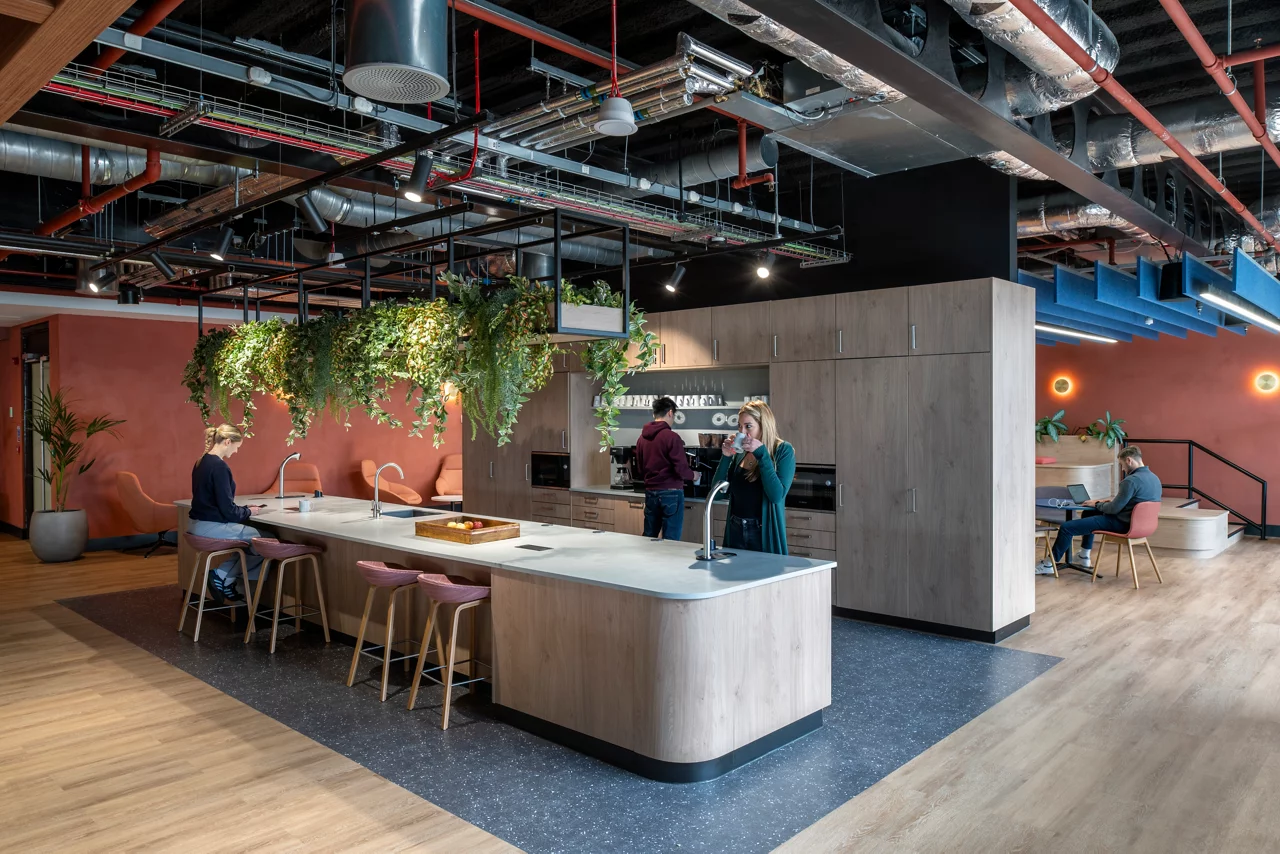
Breakout space at JLL’s Water Street office in Canary Wharf
Building trust by sharing experience
For occupiers, confidence grows when their project team brings a track record of first-hand experience and constructive partnership.
Georgina Pater-Bell, Real Estate and Workplace Director, JLL UK, describes the benefit from the client side: "It makes a real difference knowing the people guiding your project have been through similar challenges themselves. When teams share what they've learned and communicate clearly, you're not starting from scratch – you feel supported at every step, and you can focus on what's next for your people and your space."
Flexibility that delivers long-term financial value
Anticipating how organisational needs will evolve, JLL project teams build adaptability into every layer – from modular layouts to flexible furniture. This means that designing for flexibility goes beyond shifting desks. It means creating spaces that adapt to changing requirements and reduce future capital spend.
When demand for desks rapidly increased at JLL’s Birmingham office, the team was able to reconfigure space efficiently without major disruption or unexpected capital outlay. This approach has been embedded in all projects from the beginning, with a focus on continuous learning and improvement as each subsequent office has been delivered, proving the benefit of planning flexibility from the outset.

Rapidly reconfigurable workspace at JLL Birmingham supports agile growth and operational efficiency
"We're designing offices that work for how businesses change, not just how they work today," says Andrew Williams, Director, Project Management, UK, JLL. "The point is to create spaces that adapt without further investment, supporting business flexibility and financial efficiency."
Real value in sustainability and circularity
With ESG now a central part of boardroom priorities, sustainable delivery can’t be an afterthought. Embedding sustainability from the beginning drives real, reportable change through a few key actions:
- Starting with a clear sustainability brief. At JLL’s 1 Broadgate project, this was developed ahead of other stage 1 briefs and heavily influenced the procurement process.
- Appointing dedicated sustainability leadership. This ensures accountability, as Nick Cumming-Bruce, Director, Project Management, JLL, explains: "Every choice on site was referenced against carbon and resource criteria."
- Focusing on circularity to reduce waste and cost. At JLL’s Birmingham office, a circular approach meant unwanted stock was donated to charities and schools, and the office was completed with second-life furniture.
"We applied a strict methodology for reuse and circular sourcing, which delivered clear savings and meaningful ESG benefits," says Laura Wardrope, Associate Project Manager – Occupier Fit-Out, JLL. "What's important is that it's replicable and creates business value."
The impact of this approach is evidenced by JLL’s ongoing journey of continuous improvement, most notably in the significant reductions in embodied carbon achieved across consecutive projects:
Manchester, 2020 – 38% reduction in embodied carbon
Water Street, 2022 – 42% reduction
Birmingham, 2023 – 53% reduction
Leeds, 2024 – 63% reduction
These results highlight how continuous learning, a consistent design team, and more prescriptive Stage 1 briefs at Birmingham and Leeds drive measurable progress and best practice in sustainable delivery.

Sustainable collaborative zone at JLL’s Leeds office
Upskilling the supply chain to set new standards
Better results come from learning together. When contractors and suppliers are challenged with new carbon targets or circularity standards, they gain practical experience they can use on future projects. Working towards shared outcomes with partners lifts standards across the supply chain, not just on individual projects.
"We encouraged a key contractor to target ambitious embodied carbon reductions," Handley explains. "Now they've built that capability and our client partners benefit on future projects."
This strategy works at different levels: upskilling JLL teams, strengthening supply chain partners’ capabilities to deliver for other clients, and signalling clear requirements to the market to drive broader industry improvement.
By consistently communicating high standards and supporting practical upskilling, JLL is helping to build a supply chain that responds to sustainability demands, improves data quality, and delivers lasting value for clients and the industry as a whole.
Minimising disruption in live environments
When occupiers choose refurbishment over relocation, minimising disruption during office refurbishment is vital. In JLL’s Norwich and Bristol offices, project teams focused on clear plans and direct employee engagement – helping staff see what was coming and raising fewer concerns. Scenario planning and open communication kept disruption low, business activity strong, and teams working together.

Flexible meeting space at JLL’s Norwich office, delivered in a live workplace
"Change management isn’t just a process – it’s about partnership and ongoing engagement with building users," Wardrope notes. "It's the difference between smooth project delivery and workplace disruption."
JLL’s robust change management has delivered proven results and has been applied to client projects. For example, after a recent tech client’s relocation and fit-out project, post-occupancy evaluations showed:
- A 319% increase in employees who are extremely satisfied with the workplace.
- 100% satisfaction among neurodivergent employees regarding the overall workplace experience.
- 88% of employees agreeing the new office supports comfortable noise levels – well above the industry average satisfaction rate of 32%.
These outcomes demonstrate how thoughtful change management and employee engagement can significantly increase staff satisfaction and minimise disruption during live projects.
Continuous learning unlocks measurable value
No project stands alone – each fit-out offers lessons that inform the next, creating a cycle of improvement that builds resilience and operational advantage throughout the portfolio.
By keeping open communication, planning for flexibility, embedding sustainability, and working directly with partners, real estate project management teams can create workplaces that support people, protect resources, and meet changing business needs.
Discover how JLL’s project management experts can deliver flexible, sustainable, and high-performing workplaces tailored to your business needs
Explore the "Making workplaces work" series
This article is part of our guide on delivering sustainable, tech-enabled, people-first workplaces. Read the other articles in the series to learn more about creating a future-ready portfolio:
Creating consistent offices with local character
Circular design choices are cutting carbon and transforming office fit-outs