UWE Bristol’s new, fossil fuel-free, net-zero-ready, student housing, project managed by JLL, is designed to cut emissions and enhance wellbeing – and it’s gaining global attention.
Client story
Passivhaus university development signals next gen student housing in Bristol
Categories:
Location
Bristol
Sustainability
81% energy use reduction79% cut in carbon emissions*per room compared to housing replaced
Ambitious sustainability targets
UK universities face a triple threat – how can they upgrade aging student housing stock, manage ever increasing operational costs and reduce carbon emissions?
The University of the West of England in Bristol (UWE Bristol), like others across the country, found that its existing student accommodation was no longer fit for purpose. Built decades ago, the buildings were expensive to maintain, inefficient to heat and not aligned with modern student expectations. With rising energy costs and the university’s carbon reduction commitments, upgrading these facilities became a priority.
High quality and energy efficient
Already recognised as a ‘first class university for sustainability, UWE Bristol has committed to achieving net zero carbon by 2030. It ranked 25th out of 149 higher education institutions in People & Planet’s University League table for 2024/2025 and was named sustainability institution of the year at the 2023 UK and Ireland Green Gown Awards.
Replacing its outdated accommodation with a modern, energy efficient building was a top priority, so it committed to a 280,000 sq. ft, 900-bed development, split into two phases, and built to the prestigious, Passivhaus standard – a first for a student housing project.
“JLL consistently demonstrated exceptional project management expertise throughout the delivery of Purdown View, our 900-room student accommodation project, the UK’s largest Passivhaus project of its kind. Their proactive approach, meticulous planning, and effective risk mitigation ensured we have full visibility and the project remained within budget.
JLL fostered strong collaborative relationships with all stakeholders, facilitating smooth communication and efficient decision-making. Their commitment to quality and client satisfaction was evident throughout the project lifecycle.
We are confident that JLL's dedication and professionalism contributed significantly to the successful and timely completion of this complex project.”
- William Liew, UWE Bristol Chief Financial Officer, Project Sponsor
Ensuring long-term sustainability
More common in residential and commercial projects, Passivhaus - a voluntary standard for net zero-ready buildings that creates comfortable homes with reduced running costs - dictates rigorous design and construction principles.
With extensive experience in large-scale student accommodation across the UK, the JLL project management team, based in Bristol, was by UWE Bristol’s side throughout the process: from conception and design, procurement and construction, through to occupation. In addition, JLL continues to manage the post-occupancy processes.
Designing through COVID and rising costs
However, from day one, the project faced hurdles. COVID-19 saw in-person meetings become virtual and the team had to adapt quickly to online design sessions as UWE Bristol’s ambition was not pausing. As pandemic-related restrictions eased, material shortages, soaring costs and labour market shifts placed additional strain on timelines. A single-stage tender was agreed — a rare approach at the time, but one that worked due to strong relationships with contractors and a clear procurement strategy. The JLL team worked closely with the contractors to secure materials before further price increases, ensuring steady progress and avoiding unnecessary delays.
Maintaining momentum post-COVID was a further challenge as changing work habits saw the labour force reluctant to work overtime, impacting timelines.
Biggest certified Passivhaus development in the UK
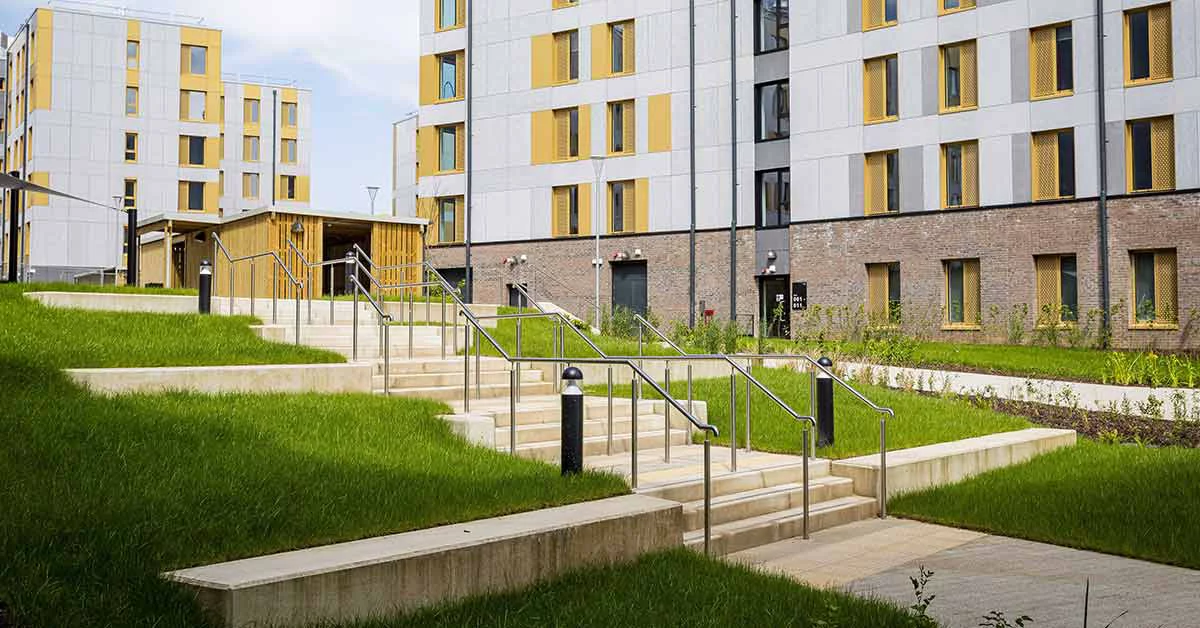
In 2024, Purdown View, as the development is now known, opened its doors to first-year students.
Hot water is supplied by air source heat pumps, with solar panels contributing to in heating and electricity. Heat recirculation from the ventilation system pre-warms fresh air, reducing overall heat demand. The development has seen an 81% reduction in energy use and 79% cut in carbon emissions per room compared to the housing it replaced.
Student wellbeing has also improved. The rooms incorporate natural light and calming colours to create a healthier and more comfortable living environment while outdoor spaces follow Building with Nature guidelines, with green spaces to support student mental health. This is increasingly important for universities and UWE Bristol’s approach is ahead of the curve.
As well as creating a comfortable living environment, the sustainability features significantly contribute toward UWE Bristol’s 2030 net zero carbon target and lower operational costs.
A benchmark for future developments
While full Passivhaus certification may not be feasible for all institutions, its core principles – airtight construction, high-efficiency heating and smart design – can be widely adopted to reduce carbon footprints and operational costs. The process enforces improved quality and evidence of quality checks throughout the build process. Some institutions are already planning their own ‘Passivhaus light’ developments.
Future phases are planned and the project has established the JLL team as leaders in sustainable student accommodation, opening the door to new opportunities in the UK, Europe and globally.
Some institutions will turn to public-private partnerships, or other bespoke funding models, while others may follow UWE Bristol’s lead in self-funded development. Either way, the project is garnering attention from international investors, keen to learn lessons that may shape the next generation of high-quality, low-carbon student housing in the UK and beyond.

Image courtesy of UWE Bristol
Copyright photography UWE Bristol
Industry recognition
2025
Property Week Student Accommodation Awards
- Halls of Residence of the Year
- Health & Wellbeing Initiative of the Year
- Sustainability Initiative of the Year
Sustainable Project of the Year – Insider South West Property Awards
2024
Innovation in Student Housing – CUBO Awards
2030 Climate Action (large organisation) – UK and Ireland Green Gown Awards (Awarded to UWE Bristol)