Discover how Thailand's booming sports culture is transforming retail, driving sales, shaping communities, and influencing market development.
16 May 2025
Insight
16 May 2025
Thailand's sports boom energizes the retail market
Categories:
Authors
Jidapa Kraitong

The recent surge in sports and active communities in Thailand is part of a growing trend that not only benefits health but is also transforming the retail market.
People are increasingly exploring new activities and communities, including sports and an active lifestyle. The Paris Olympic Games 2024 have amplified this trend, influencing more people to try new sports and purchase equipment. This is reflected in the retail sales index of sports equipment, which shows over 136% growth compared to 2019. According to Thailand’s Ministry of Tourism and Sports (2023), people spent THB 7,054 annually on average on sports products, largely on shoes, F&B, clothing, and equipment.
Figure 1: Retail sale index: overall index and sports equipment

Source: Bank of Thailand
Through social media networks, globally trending sports have gained attention and are being introduced in Thailand. New sports such as pickleball and padel are expanding. The fitness sphere is branching out with new training and competitions. For instance, HYROX, the fastest-growing hybrid workout competition from Germany, will host its first event in Bangkok, after several events in other global cities. Tickets were sold out within 18 hours of sale in the first launch, faster than in Singapore, showing its popularity among Thailand’s fitness communities.
Another source of demand that indirectly benefits retail businesses is active communities or clubs. Run clubs, for instance, have become new socialising places, using public space or community malls as meet-up points, such as %Arabica at QSNCC and the Commons Saladaeng. Lately, these clubs have branched out to collaborate with F&B operators to host active social events. With the growth of the community, some sportswear brands are grabbing this demand and offering free trials for their products with training, such as the ASICS Running Club. This welcomes new users, creates a loyal customer base, and spreads brand awareness.
With active lifestyle and fashion combined, sports-related consumerism has been promoted across social media by fitness influencers, inducing people to purchase more fashionable or advanced activewear. Therefore, international big names have captured this opportunity and landed their first moves in Thailand. Canada’s Lululemon opened its first Thailand store in 2023 at centralwOrld, while the U.S.’s Alo was launched in 2024 at EmQuartier. Alo hosted their yoga event in the office at One Bangkok after relocation. Central Retail (CRC Sports) also acquired a 75% share in Rev Runnr in 2024 to strengthen their sports line beyond super sports.
Key takeaways for developers
Firstly, developers should integrate multi-use spaces for gathering and activities to increase footfall in retail spaces and other parts of mixed-use projects.
Secondly, landlords could transform their long-term land banks into low-CAPEX sports facilities with short-term leases. This approach can lower property tax, as the vacant land tax increases progressively over time.
Thirdly, developers should consider attracting more sports-related tenants, including activewear retailers and fitness studios. Unlike traditional gyms, Pilates or yoga studios require less space and fewer facilities (e.g., changing rooms or bathrooms), making them ideal for community malls. As a result, these studios are expanding into retail centres. Moreover, Pilates, being relatively new to the fitness world, commands higher ticket prices than regular gym memberships while requiring less space.
Figure 2: Examples of sport-integrated development projects
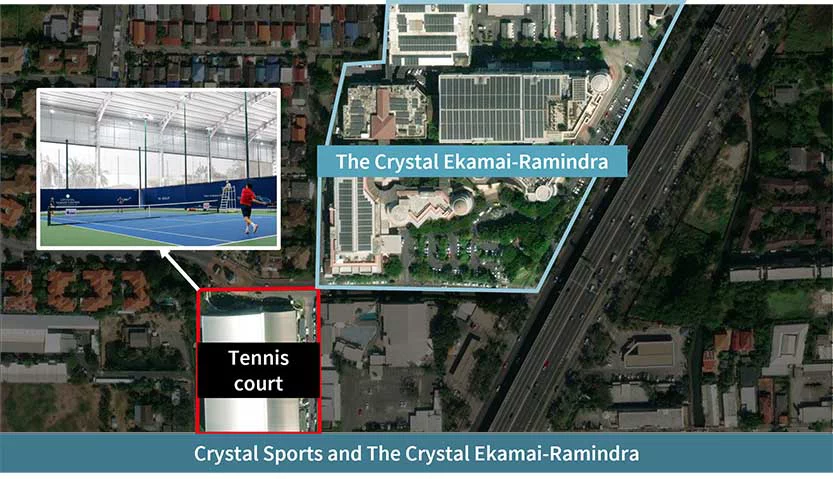
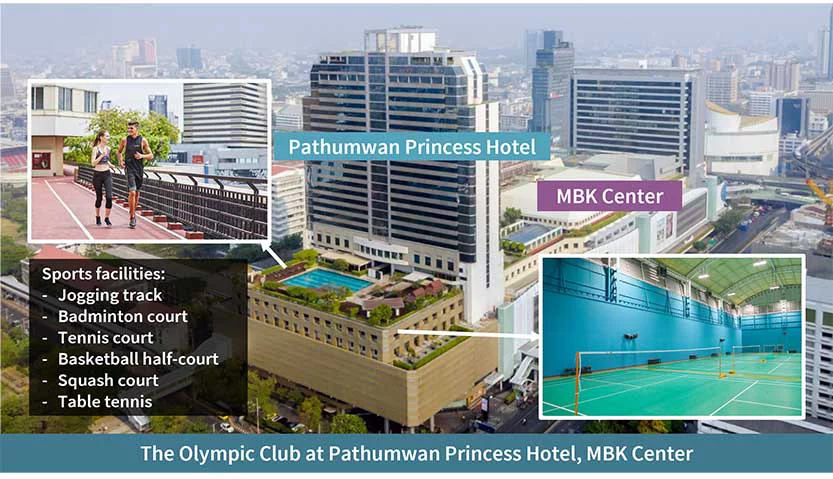
Source: Crystal Sports (KE Group), The Olympic Club, Pathumwan Princess Hotel