Premiumisation drives transformation in India's residential market since 2023, reshaping the housing landscape despite recent volume moderation.
20 March 2026
Insight
20 March 2026
Premium housing grows despite volume correction in India
Categories:
Authors
Srija Banerjee
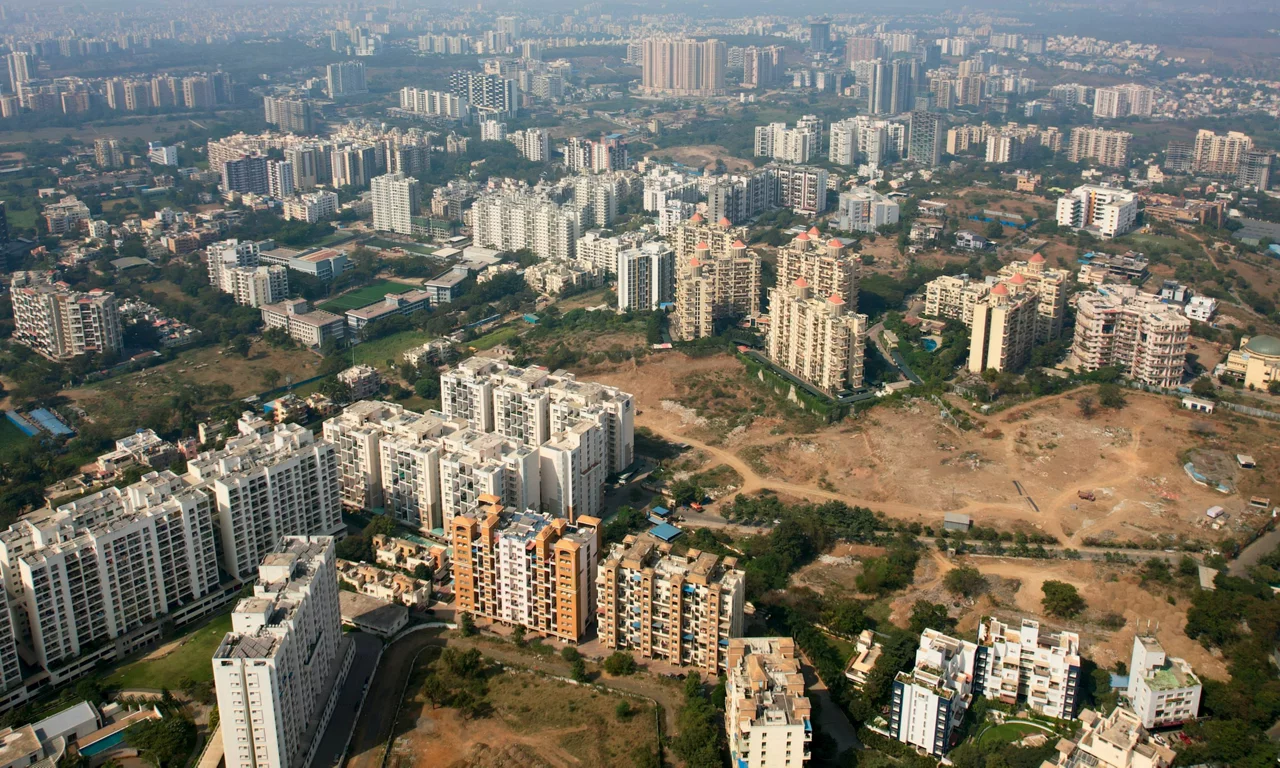
Value premiumisation in India's residential sector despite short-term volume adjustments
India's residential real estate market is undergoing a significant transformation, shifting toward premium housing despite recent volume moderation. Pan-India housing sales, which rose steadily post-pandemic from 2022 onwards, declined 11% year-on-year to 270,323 units in 2025. However, evolution toward higher-value transactions reveals a maturing sector prioritizing quality over quantity.
The premiumisation wave: A three-year journey
The residential market's premiumisation journey, which began gaining momentum in 2023, has fundamentally reshaped India's housing landscape. Market share of apartments priced above INR 10 million surged from 46% in 2023 to 53% in 2024, reaching 63% in 2025—a remarkable 17 percentage point expansion in two years. While total housing sales fell in 2025, premium apartments priced above INR 10 million continued to grow by 6% year-on-year.
The residential sales value trajectory provides further evidence of market premiumisation. Despite declining unit sales, pan-India residential sales value grew 11% to around INR 5.6 million in 2025. Over three years, sales values jumped 19% in 2023, surged 60% in 2024, and grew 11% in 2025, which indicates that developers' focus on premium projects is working as buyers continue to invest in higher quality homes.
City-level dynamics: Diverse paths to premiumisation
Bengaluru leads premiumisation, with premium housing share skyrocketing from 35% in 2023 to 72% in 2025, driving 46% year-on-year sales value growth in 2025. This significant transformation despite temporary volume adjustments reflects the city's robust IT sector, rising incomes, and buyers' strong preference for quality developments. Delhi NCR positioned itself in luxury, with premium share reaching 92% in 2025, resulting in sustained value growth despite 22% volume contraction. Mumbai's premium share grew steadily from 59% in 2023 to 64% in 2025, highlighting resilience despite 14.8% year-on-year (Y-o-Y) sales decline. Mumbai's established real estate market, limited land availability, and consistent demand from high-income professionals sustained premiumisation momentum despite broader market headwinds. Hyderabad's premium segment expanded from 73% to 82% between 2023 and 2025, and its premiumisation trajectory remained intact, fuelled by its technology sector, despite a 6% Y-o-Y sales decline in 2025. Pune maintained balanced growth with premium share reaching 36% amid minimal 2.5% sales volume decline. Pune also posted a double-digit year-on-year launch growth in 2025, reflecting developer confidence in premium quality offerings. Chennai saw rapid transformation with premium share increasing to 41% amid 31% sales growth in 2025. The city's combination of rising sales volumes, growing premium demand, and 13% price growth drove strong sales value expansion. Kolkata showed gradual premiumisation to 28%, posting 19% value growth despite a 21.2% sales decline.
Supply-side transformation
The supply side mirrored demand trends, with premium housing launches (INR 10 million+) expanding from 57% of total launches in 2023 to 70% in 2025, even as total launches declined 3% to 293,079 units. Developers strategically prioritised higher-margin projects.
The road ahead
India's residential sector remains strong despite temporary volume declines. Recent repo rate cuts have improved home loan affordability and credit access, supporting volume recovery and continued value growth. The premiumisation trend reflects buyers' commitment to quality homes, signalling India's shift from volume-driven to value-driven growth where premiumisation and quality now drive market performance.