From cost center to competitive advantage
09 June 2026
Guide
09 June 2026
How WELL Certification transforms your workplace
Categories:
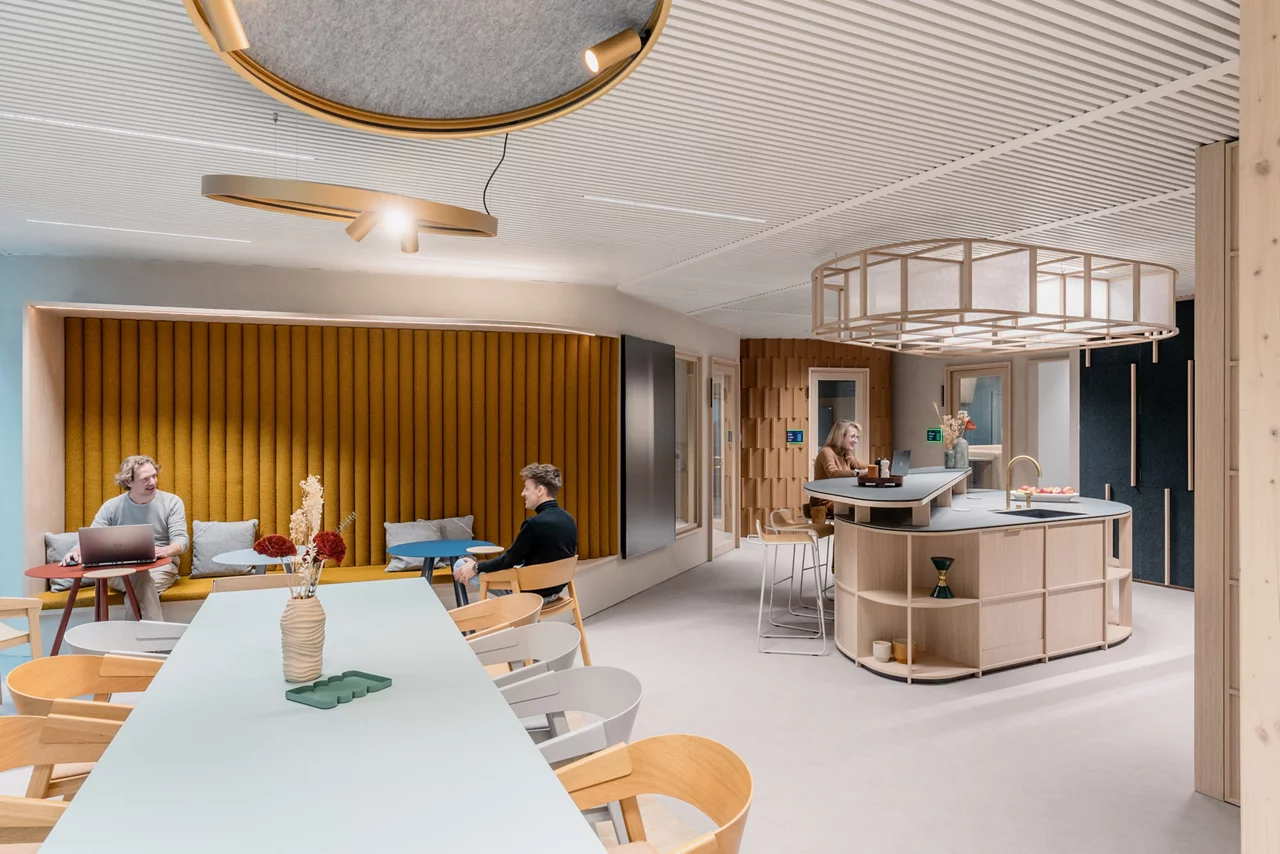
The workplace environment is no longer just about desks and meeting rooms. It has become a strategic tool for attracting talent, boosting productivity, and demonstrating corporate responsibility. Organizations that understand this are rethinking what a workplace should be—and JLL's Belux headquarters is leading by example.
The office recently achieved WELL Platinum certification, the highest level within the WELL Building Standard framework. This milestone represents more than a certificate on the wall. It reflects a fundamental commitment to creating spaces where people can truly thrive.
What is the WELL building standard?
While certifications like BREEAM focus on environmental sustainability, the WELL Building Standard™ focuses exclusively on people. Administered by the International WELL Building Institute (IWBI), WELL measures how buildings impact human health and wellbeing across ten evidence-based concepts: Air, Water, Nourishment, Light, Movement, Thermal Comfort, Sound, Materials, Mind, and Community.
Buildings and workplaces earn certification by meeting mandatory requirements and earning points through additional improvements. There are four levels: Bronze, Silver, Gold, and Platinum. Platinum represents excellence across all criteria.
Why human-centric workspaces matter
The business case for workplace wellbeing is clear. According to JLL research, health and wellbeing programs are now the second most important factor in a job, right after salary. This shift changes everything.
Transform your workplace strategy with employee-centered solutions is no longer optional—it's essential for competing for talent.
The productivity argument is equally compelling. According to JLL research, health and wellbeing programmes have become the second most important job criterion after salary, reflecting how profoundly workplace quality impacts employee satisfaction and performance. Organizations that optimize their work environments for human health create measurable advantages in talent attraction, retention, and daily productivity.
Finally, WELL certification addresses the 'S' in ESG—the social component that many sustainability frameworks overlook. It provides a rigorous, measurable way to demonstrate commitment to people alongside environmental responsibility.
What WELL platinum demands
Reaching Platinum certification requires commitment across the entire organization. It's not about checking boxes. It demands a holistic strategy that integrates design, technology, materials, and workplace culture.
"This people-first objective was integrated from the earliest design stages, influencing both the architectural layout—with its emphasis on natural light and biophilia—and our technical choices, like CO₂ air quality monitoring. Beyond selecting certified materials such as Cradle to Cradle, we prioritized material reuse for carpets, glazing, and furniture from day one. Finally, we designed the space to encourage physical activity, making the central staircase a focal point and providing sit-stand desks for all employees."
— Patrice Delleuze, Head of Design, Tétris Belgium
This approach shows up in several ways. Advanced air filtration systems go beyond basic ventilation to enhance both immediate health and long-term cognitive performance. Lighting design follows circadian principles, supporting natural sleep patterns and alertness throughout the day. Acoustic zones balance collaborative energy with quiet concentration spaces. Mental wellbeing support includes tangible resources and policies that create psychological safety.
The future of workplace real estate
WELL Platinum certification marks an evolution in how we think about office space. The built environment is no longer just a place to work. It's an active tool for enabling human potential and business performance.
Creating spaces where people genuinely thrive is sound business strategy. When organizations invest in environments that support health, comfort, and performance daily, they build foundations for sustainable success—for individuals, businesses, and communities.
The path to WELL Platinum is demanding. But the destination—workplaces designed around human flourishing—defines the future of responsible real estate.
Ready to find a better office space? Scroll our availabilities on our exclusive property website :
Offices to rent and for sale in Belgium
Offices to rent and for sale in Luxembourg