Occupancy data shows how space is used, but not how teams perform, or where organizations should prioritize workplace investment for greater impact.
10 September 2026
Insight
10 September 2026
Why workplace design should start with how teams work
Categories:
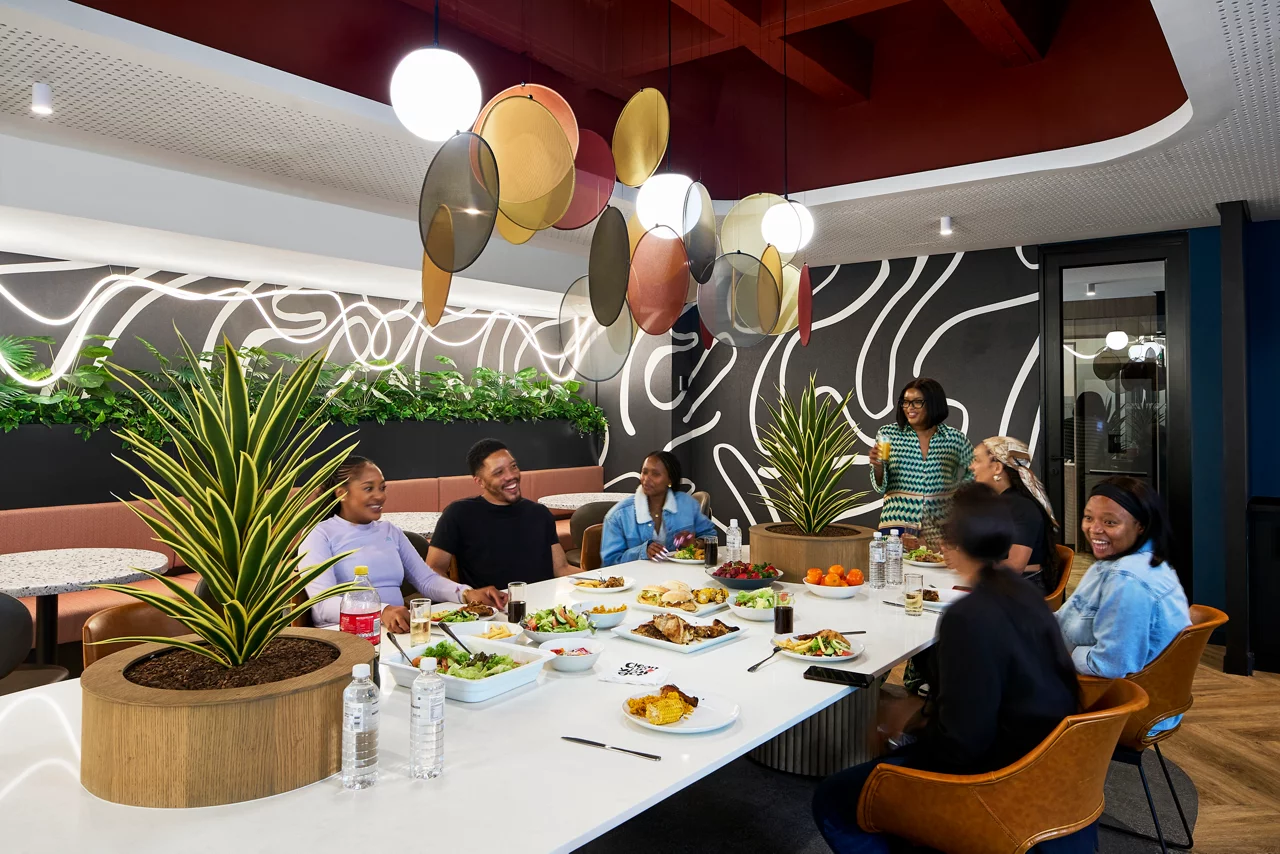
Most organizations measure workplace performance through attendance and utilization, but these metrics don’t reveal whether the office helps teams connect, make decisions and perform effectively. Social-Spatial Design combines human science with spatial analysis to identify the conditions that support team performance. These insights help organizations prioritize workplace investment, targeting the spatial changes with the greatest potential to strengthen connection, improve effectiveness and increase the value of the office.
What does a busy office tell you about performance?
Not as much as many organizations assume. Badge data and utilization rates show when people use the office and which spaces they occupy. They don’t explain why employees choose particular settings, how the environment affects team interaction or whether workplace investment improves performance.
According to JLL’s 2026 Future of Work survey, 46% of C-suite leaders expect corporate real estate to improve workforce productivity. Respondents also identified a shortage of future-ready talent, rather than budget, as the primary barrier to creating value through real estate. Yet conventional workplace measures capture only part of that challenge.
The social dimension is harder to count, yet it’s where much of the office’s value sits: the relationships that help teams share knowledge, resolve problems and make decisions. JLL Global Human Experience Trends research found that socializing is the leading reason employees give for attending the office (63%), followed by internal meetings (55%). Face-to-face collaboration accounts for 29% of the time employees spend there. People aren’t simply showing up for a desk. They’re showing up for one another.
What does human science reveal about high-performing teams?
Human relationships operate at different scales, from close working groups to wider organizational networks. Research associated with Oxford evolutionary psychologist Robin Dunbar suggests that the strongest bonds are concentrated in relatively small groups, while broader networks are harder to sustain with the same depth.
This doesn’t give workplace strategy a fixed numerical formula. Team size, work patterns and cultural expectations vary. A project team making rapid decisions needs different conditions from a specialist group doing concentrated technical work, and both need routes into the wider organization.
The design question is more specific: which relationships and activities matter to this team, and what physical conditions support them? Proximity may help one group exchange knowledge quickly. Another may need stronger acoustic separation, clearer ownership of project space or better access to confidential settings. The answer is rarely “more collaboration space” on its own.
“How spaces connect to each other, their size, how many people use them, what you can see from where you sit and what activities happen there all affect how well people perform.”
Adrian Davidson, Global Design Advisory Lab Lead, JLL
Where is the workplace getting in the way of team performance?
Social-Spatial Design examines the relationship between a team’s work and the environment in which it happens. Observation, employee input and spatial analysis can reveal where knowledge flows easily, where concentration is interrupted and where the workplace adds friction to routine activities.
The findings are often more nuanced than occupancy data suggests. A frequently used area may still perform poorly if noise makes focused work difficult. A quiet space may be valuable precisely because it’s available when privacy is needed, even if it isn’t continuously occupied. In-between spaces can also play a role, creating useful encounters or, if poorly planned, unnecessary distraction.
The analysis brings team activity and spatial conditions together. It considers how people exchange information, make decisions and build trust, then examines how proximity, acoustics, visibility, movement and access to different settings affect those activities. The objective is to identify the performance gaps where a spatial change could make a meaningful difference.
How can you prioritize workplace investment for the greatest impact?
Once the performance gaps are understood, organizations can assess different ways to address them. For one team, the priority may be greater acoustic privacy or easier access to focused settings. For another, it may be better visibility between related teams, clearer ownership of project areas or more opportunities for informal knowledge-sharing.
The most valuable response won’t necessarily be the largest or most visible intervention. Relatively modest changes to adjacencies, circulation or how existing settings are used may have more impact than adding new space. There are trade-offs, too. A layout that encourages interaction for one team may increase interruption for another.
Social-Spatial Design provides a clearer basis for comparing these options and focusing investment on the changes with the strongest expected benefit. Because teams and working patterns evolve, the process shouldn’t end when the design is delivered. Reviewing how the workplace performs over time allows organizations to test assumptions, adjust the environment and keep investment aligned with changing team needs.
Workplace performance needs a broader measure
A workplace doesn’t create stronger teams simply by bringing people into the same building. Its value depends on whether the environment supports the interactions, concentration and shared experiences that the work requires. Social-Spatial Design makes those conditions visible and gives decision-makers a practical way to act on them.
The result isn’t a universal office model. It’s a workplace strategy grounded in how teams actually perform, with investment focused where spatial change can make the most meaningful difference.
Understand where your workplace supports or inhibits team performance. Talk to JLL Design about using Social-Spatial Design to identify and prioritize the changes that could deliver the greatest value.