As Vietnam accelerates its infrastructure development, Transit-Oriented Development (TOD) townships are transitioning from concept to active implementation.
08 June 2026
Insight
08 June 2026
Vietnam's transit-oriented development potential
Categories:
Authors
Dao Phan
The fundamentals are in place
Vietnam's two major urban centres, HCMC and Hanoi, already have the fundamental elements needed for Transit-Oriented Development (TOD) including: higher density in core area, growing public transportation networks and land availability along transit corridors creates commercial and investment opportunities. Furthermore, Vietnamese developers have shown a growing willingness to adopt innovative development approaches, pioneering the adoption of TOD models for mixed-use township projects. Market acceptance of TOD in Vietnam is evident in the impact of metro lines on property values, based on market insights published last year. JLL's recent analysis also highlights in the chart below that TOD projects along HCMC's Metro Line No.1 have commanded premium prices, with properties in the Catchment 1 seeing 34% price growth over five years, outpacing the broader market.
Figure 1: Strong primary price growth in catchment areas 1 and 2

TOD as an economic strategy
The real challenge lies not in recognising TOD's potential, but in its execution. For the government, a fundamental mindset shift is essential as TOD cannot be approached solely as transportation infrastructure that generates property revenue. It must be understood as an integrated economic model in which real estate value creation helps finance and sustain the transit system. The success of Hong Kong's Mass Transit Railway Corporation (MTRC) provides a valuable case study of this approach, as illustrated below.
Figure 2: Hong Kong integrated urban planning and rail development model

For developers, TOD demands a strategic shift from "individual real estate development" to "integrated mobility ecosystem management." This means thinking not only horizontally across the site, but also vertically, optimising the flow of people from transit platforms through mixed-use, high-density developments. Ultimately, how efficiently vertical circulation is planned and managed determines whether a project delivers the true benefits of TOD or is simply located near a station.
Rethinking connectivity
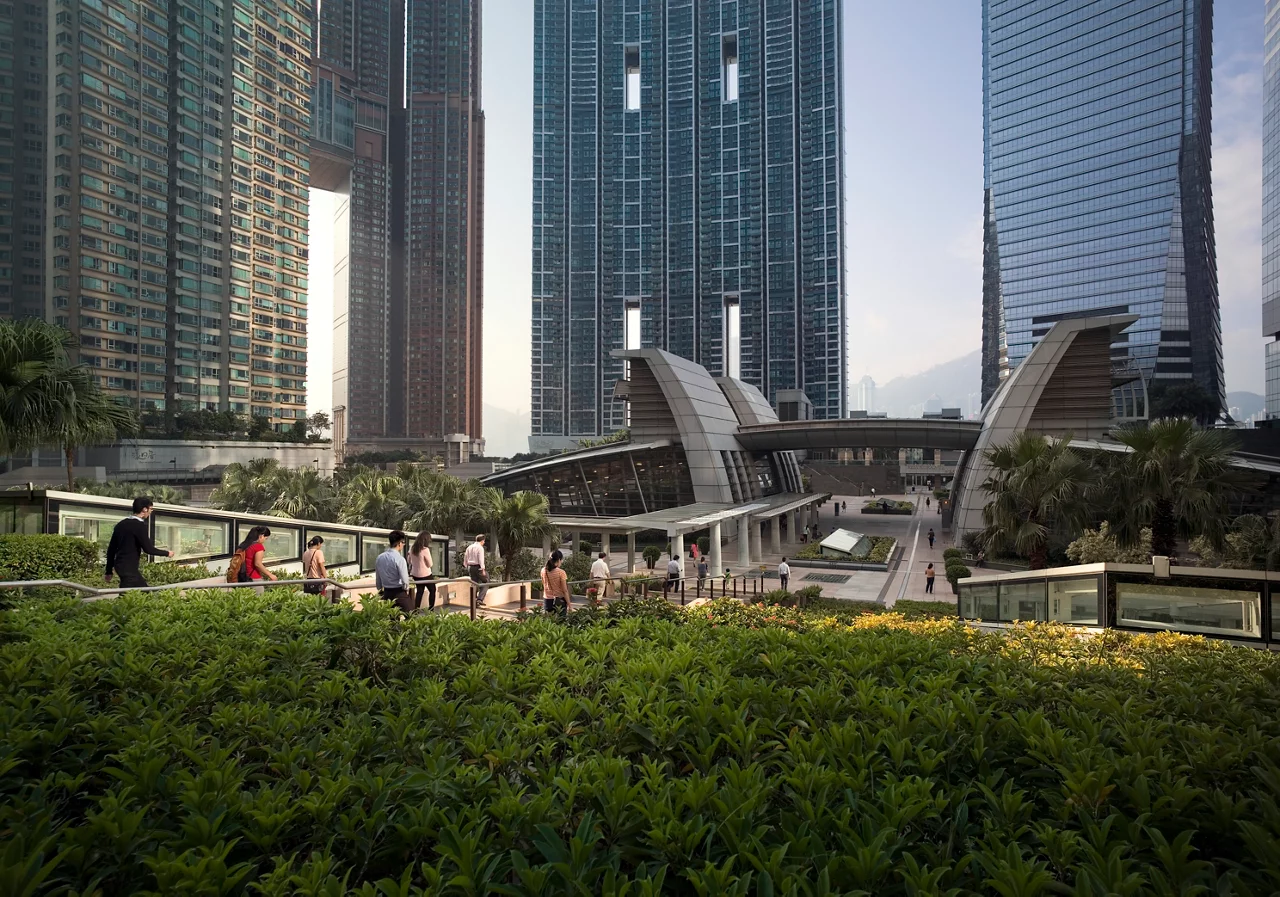
A critical lesson from mature TOD markets is that physical proximity to a station matters less than experiential connectivity. The true measure is the accessibility, safety and enjoyment of the journey from transit to destination. At JLL, we recognise the importance of well-designed public spaces and round-the-clock accessibility, which enhance user experience and drive long-term value. Tung Chung TOD township in Hong Kong illustrates this perfectly. A metro station positioned on one side of a highway successfully serves TOD development on the opposite side via a skybridge connecting two shopping centre towers. This highlights that distance is defined less by physical separation and more by the overall experience of getting to the station.
Key challenges for Vietnam's real estate market stakeholders
TOD represents more than a development typology. It reflects a broader vision for the evolution of Vietnam's real estate sector. Integrated TOD projects promise to reshape not just skylines, but how people live, work and move. The complexity of TOD extends beyond the capabilities of any single organisation. Success depends on integrated coordination between parties who may not be accustomed to collaboration . Government bodies, private developers, operators and communities must agree to new working mechanisms and engage in authentic two-way dialogue.