Video gaming company pioneers a global hybrid-work strategy in its new Silicon Valley headquarters
Client story
Zynga levels up its global workplace strategy
Spotlight
Early adopter of hybrid working relocates from San Francisco to a new, more efficient space in San Mateo
Size
62,392 square feet
Value
$500,000 in build-out cost savings
Making video games that are fun to play can be surprisingly hard work. Just ask Zynga, the company known for Farmville, Words with Friends and other popular video games. When Zynga had an opportunity to rethink its headquarters and workplace strategy, creating the right environment to inspire employees was a top priority.
For years, Zynga’s headquarters was in San Francisco, near technology talent and the buzz of urban living. The company was known not only for its popular products, but for its fun, creative and dog-friendly offices that naturally attracted and retained the best video game talent.
“We didn't know how much square footage we needed or what the mix of workspaces would look like. JLL helped us envision the future. We couldn't have gotten to this point without JLL.”
—Ken Stuart, VP, Real Estate & Workplace, Take-Two*
- *Zynga is a wholly-owned subsidiary of Take-Two Interactive Software, Inc.
As the lease for Zynga’s headquarters and several other global locations came to an end, Zynga saw an opportunity to reshape its workplace to embrace hybrid. After launching several new games during the height of the pandemic with a largely remote workforce, they knew this was a strategy that could succeed.
However, making a permanent shift to flexible workplaces would be complex. To help guide the way, Zynga turned to a JLL team that could bring the entire project to fruition, from workplace strategy, site selection and lease negotiation to construction build-out and change management.
Uncovering Zynga’s space and location needs
To make hybrid work a formal reality, Zynga needed to protect its distinct corporate culture— known for creativity, collaboration and innovation—while embracing the positive aspects of working from home. Determining the optimal square footage and the right mix of productivity spaces for the new age of work was challenging, since Zynga lacked a methodology for predicting overcrowding or under-utilization of space.
A second, riskier, decision was location. Zynga had the option of simply renewing its current headquarters lease, but with less square footage. However, tenant-friendly market conditions meant that attractive and cost- effective space alternatives also were options.
Data-backed strategy
First, the JLL team toured Zynga’s current 200,000-square-foot headquarters office to understand workflows and space needs. Using JLL’s data and predictive analytics tools, the team forecast Zynga’s future office headcounts in the hybrid working model.
With a better understanding of Zynga’s space needs, JLL used location analytics to uncover several potential locations that offered better employee commute times, as well as neighborhood restaurants and coffee shops, all at a lower cost.
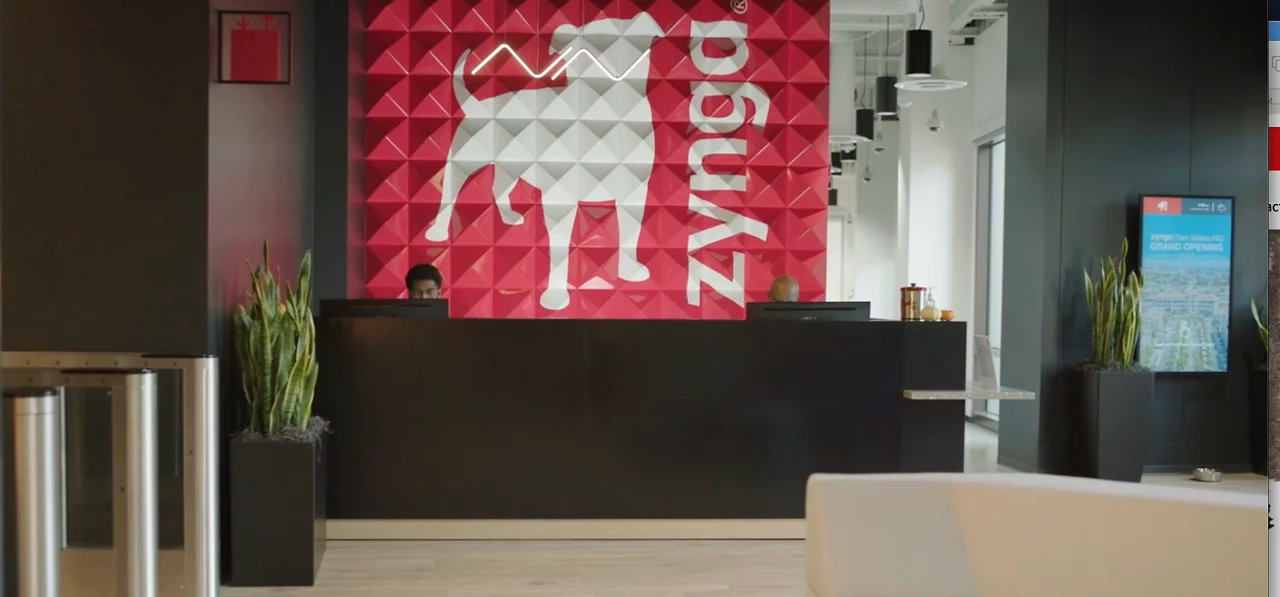
Ultimately, Zynga decided to relocate from San Francisco to San Mateo, where it leased all four floors of a 60,000-square-foot building. Zynga secured not only a year of free rent, but also generous concessions, prominent exterior signage, and a tenant improvement allowance far above pre-pandemic levels.
Smart solutions
Building out the new headquarters in the COVID-19 pandemic environment presented unique safety and supply chain challenges. Despite these issues, the JLL team negotiated a 30% reduction in construction costs while adhering to strict safety protocols.
The space needed to be distinctly Zynga, while allowing for day-to-day flexibility. The solution included a variety of movable workspaces and furnishings in a fun and engaging setting. Key features include a barista bar, the dog-friendly Barking Lot play area, all-hands meeting space and flexible project areas. Interactive elements were integrated throughout—like a massive gaming wall and Words with Friends elevator cabs.
A thoughtfully transparent change management program ensured that employees and leaders seamlessly adapted to new commutes, a new neighborhood, new technologies and a whole new way of working.

From work to Connected Work
Today, Zynga’s headquarters serve as the literal and figurative blueprint for its new global Connected Work model being rolled out in other Zynga locations, including Austin, Toronto, Bangalore and London.
Zynga never stops asking what its players will thank them for. That question serves as the foundation of its culture. Now, Zynga can thank its employees by providing them with a workplace that inspires excellence.
Is your office lease expiring soon? Contact us for expert advice to help you find or create your ideal workspace.