The expanding role of real estate to manage, generate and store power in an energy-constrained world
Insight
26 February 2026
Where energy meets property
Categories:
Key highlights
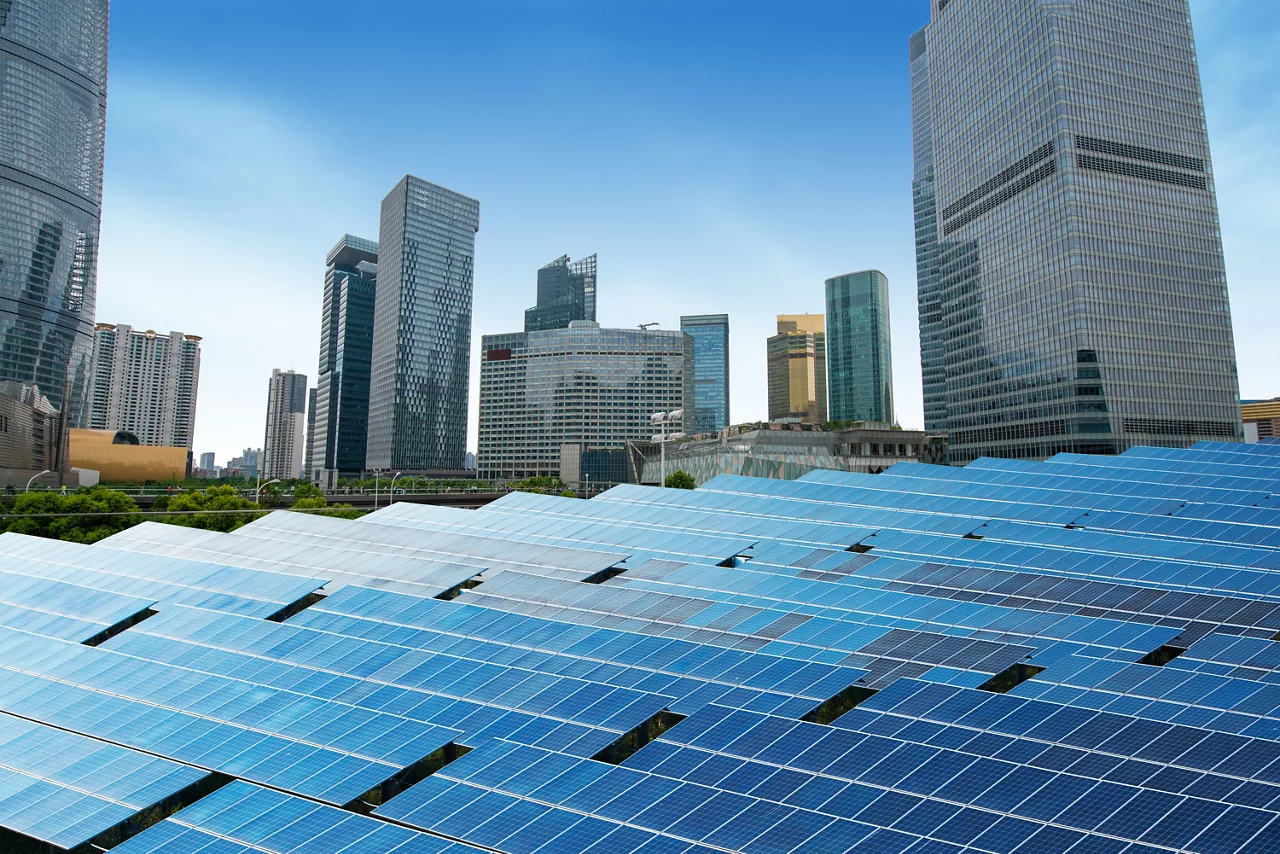
Today’s power crunch is emerging as one of the biggest risks for the CEO community—could real estate be part of the solution? As power availability moves from a background assumption to a primary driver of asset feasibility, value and operational resilience, four structural themes are reshaping how electricity flows from generation to consumption—expanding the role of real estate in the energy value chain.
- Electrification and rapid load growth: Electricity demand is rising after decades of stagnation, driven by electricity-bound uses such as data centers, advanced manufacturing, automation and EV charging. These larger, more concentrated loads are making power the binding constraint on growth and are already translating into ‘power premiums’.
- Legacy grid constraints: Transmission and distribution infrastructure built for slower, predictable growth is struggling to accommodate today’s load profiles. Lengthening interconnection timelines, congestion and uncertainty are turning access to power into a gating factor well before development or leasing decisions are made.
- Clean power deployment: Clean energy now accounts for the majority of new generation, driven by cost declines and faster deployment. However, uneven regional build-out is creating mismatches between where new power is added and where electricity-intensive demand is growing, reinforcing geography as a defining factor in long-term real estate competitiveness.
- Digitalization and decentralization: Software-enabled energy management, battery storage and on-site generation are emerging as practical system responses—allowing buildings to manage peaks, improve resilience and reduce exposure to volatility—shifting energy solutions toward the grid edge, where energy meets property.
The energy system and buildings converge
The energy system is entering a period of accelerated transformation. Electrification is expanding across buildings, transport and industry, while decarbonization and clean power investment continues to advance—though still behind global targets. At the same time, power systems are being asked to support a fundamentally new source of demand: a digital, automated and increasingly electricity-intensive economy. After decades of stable to limited load growth, electricity demand is now swiftly rising, with the IEA estimating growth of around 40% or more by 2035, far outpacing overall energy demand.
Key industries driving that growth include advanced manufacturing, life sciences, electrified transport, automation and artificial intelligence (AI)—all expanding rapidly yet equally constrained by the same underlying resource: accessible, reliable and affordable power.
The power premium
These dynamics are spreading across real estate sectors. In industrial & logistics, for example, nearly 90% of companies experienced energy disruption in the past year, according to Prologis’ 2026 Supply Chain Outlook, and seven in ten executives report fearing power outages more than any other form of disruption. Despite this, fewer than one-third of organizations currently have advanced backup power systems in place. Looking ahead, 90% of respondents indicate they would pay a premium for sites with reliable energy infrastructure, a clear change in how occupiers evaluate locations. The traditional real estate mantra of “location, location, location” is increasingly giving way to “location, resilience, reliability.”
These preferences are already translating into measurable market outcomes in advanced manufacturing. In Silicon Valley–a key market for this industry–JLL Research shows that high-power leases have transacted at rents 49% higher, on average, than other leases signed over the past three years, and 33% higher than rents achieved by the newest of buildings (delivered within the last three years). By comparison, new construction alone has delivered an average rent premium of just 11% over the rest of the market.[1]
Occupiers may have the capital to pay more for reliable energy; however, that does not resolve the underlying constraint. In many markets, the primary limiting factor is no longer capital, land or labor, but available grid capacity. The surge in electricity demand is colliding with the physical realities of existing grid infrastructure. Large-scale generation, transmission and interconnection remain capital-intensive and slow to deploy, with equipment bottlenecks and multi-year queue times more and more common across major markets.
The central question facing energy systems is now changing—from how to deliver the cleanest system at lowest cost over the long term, to how to maintain reliability, resilience and competitiveness in the near term. In response, the electricity system itself is evolving. Power has traditionally flowed through a linear chain—from centralized, utility-scale generation through transmission and distribution networks to end users. That model is giving way to a more decentralized network in which energy is increasingly generated, stored and managed closer to where it is consumed. Digital controls, distributed energy resources and intelligent demand are shifting capability toward the grid edge through distributed energy solutions.
This shift is already visible in capital deployment. Global energy transition investment reached a record $2.3 trillion in 2025, more than doubling total investment levels compared to 2020. While only around one-fifth of this investment targeted distributed energy resources (DERs), commercial DERs expanded fivefold over the same period, far outpacing growth across the broader energy transition market.
The decentralization of power systems is fundamentally reshaping the relationship between energy and the built environment. Commercial real estate, long defined by its role as an energy consumer, is becoming an active participant in the energy value chain—both in how buildings use electricity and in how they can support the wider system through on-site generation and storage. In this context, power and property are converging. Reliable, clean and affordable electricity is joining location, labor, amenities and connectivity as a defining factor of real estate competitiveness, while buildings themselves are emerging as complementary infrastructure within a more decentralized energy system.
Distributed energy solutions are a critical solution to today’s power crunch
Four key themes are redefining the energy landscape: rapid electricity load growth and mounting constraints within legacy grid infrastructure on the one hand, and the accelerating deployment of clean power alongside the digitalization and decentralization of electricity systems on the other—together reshaping how capacity, reliability and value are delivered across the energy value chain.
Electrification and the electricity demand surge
Electrification is concentrating economic activity onto the power system by shifting energy use away from direct fuel consumption toward electricity-based services. The IEA has dubbed this the ‘Age of Electricity’ in their most recent energy outlook, with electricity demand growing significantly faster than overall energy use across their scenarios. As buildings, infrastructure and transportation electrify, electricity is progressively becoming the primary energy carrier across the economy. This shift is being accelerated by digitalization, including the rapid expansion of AI, automation and advanced manufacturing. AI workloads, data centers, advanced manufacturing and EV charging are not simply energy-intensive; they are electricity-bound. Their performance, scalability and location are constrained by access to electrical power, with limited ability to substitute other energy carriers when power is constrained. Together, these forces are driving a step-change in electricity demand that differs fundamentally from historical growth patterns—and which is increasingly materializing at the building and site level.
The scale and pace of electrification vary significantly across regions, reflecting national choices around industrial structure, infrastructure investment and energy system design. China has pursued a markedly more aggressive electrification trajectory than most other major economies. Since 2000, electricity’s share of China’s final energy consumption has nearly tripled. Over the same period, the share in the U.S. and Europe increased by only two and three percentage points, respectively.
Crucially, electrification is not only increasing electricity demand, but also changing when, where and how electricity is used. New electric loads are larger, more concentrated and often less flexible than those they replace, creating sharper peaks at specific assets and times. Electric vehicle (EV) adoption illustrates this clearly. As charging expands beyond single-family homes into workplaces, retail and logistics properties, unmanaged EV infrastructure can more than triple a site’s peak power demand.[2] These dynamics are intensifying pressure on local distribution networks and building electrical systems, revealing a growing mismatch between modern load profiles and infrastructure designed for slower, more predictable demand growth.
Rapid load growth across key CRE industries
Rapid load growth is a defining feature of our current energy system and the very industries (e.g., advanced manufacturing, technology, life sciences, etc.) driving this growth—as well as today’s economic expansion—are those most exposed to power system constraints. Across many markets, electricity is increasingly more limiting to growth than land, capital or labor, not only due to availability constraints but also rising price volatility. Once a relatively passive input to real estate economics, power has become a gating factor for operational continuity, site selection and expansion. At the same time, sectors that require continuous, highly reliable power—including healthcare, defense and other critical infrastructure—are reinforcing the importance of reliability as a non-negotiable requirement.
Today, data centers are the most visible driver of this surge in load growth. JLL Research’s 2026 Global Data Center Outlook projects that global data center capacity will expand at a 14% CAGR through the end of the decade, adding nearly 100 gigawatts of new capacity. This growth is being fueled by cloud adoption and AI, which require large volumes of continuous, reliable power. While data centers are projected to account for less than 10% of global electricity demand growth by 2030—behind industry, electric vehicles and cooling—their concentrated, always-on load profile requires significant localized capacity additions, placing disproportionate demands on transmission and distribution networks. Meeting projected capacity growth will therefore depend not just on new generation, but also on energy innovations that can mitigate grid constraints and accelerate access to power at the site level.
Legacy grid constraints
The rapid concentration of large, power-intensive activities onto the grid is colliding with infrastructure designed for slower, more predictable growth. In many markets, utilities are struggling to keep pace with mounting demand—and the regulatory, planning and development backlog that it entails. In this energy reality, supply limitations and price instability are being transmitted to CRE owners and occupiers, directly impacting development timelines and operating costs.
Across major data center markets, for example, grid connection timelines for large new loads are approaching five years on average, turning access to power into a binding constraint well before construction begins. For developers and occupiers, these delays introduce material uncertainty around project feasibility, delivery schedules and capital deployment—forcing energy considerations into the earliest stages of site selection.
Emerging site-level data highlights how quickly these constraints are reshaping key markets. Analysis from Paces released February 2026, shows that feasible data center sites in Texas, a high-growth market for the sector, are on track to decline by about 20% between July 2025 and July 2026 based on current trajectories. While there is still ample development opportunity in Texas and the state remains one of the most attractive and fastest-expanding data center markets in the U.S., rapid demand growth is facing constraints from grid limitations.
At the same time, grid constraints are contributing to a more volatile cost environment. Electricity prices across major economies have increased sharply in recent years, reversing a long period of relative stability. Across six major markets, industrial power prices rose by approximately 18% between 2019 and 2024, compared with just 4% growth in the preceding five-year period. For occupiers and investors, this volatility introduces new risk into operating cost assumptions and reinforces the strategic value of assets with predictable, resilient access to power.
In some areas near major data center hubs, power prices have experienced acute, localized spikes. In response, regulators and large power users are moving to ensure these costs are borne by the users driving demand. In January 2026, New York announced plans to require large energy consumers, including data centers, to cover more of their power and infrastructure costs. Also in January 2026, Microsoft separately committed to paying cost-reflective utility rates and working with utilities to expand supply.
These dynamics are changing how intensive users approach power procurement. Faced with uncertain grid upgrades and interconnection queues, many are accelerating the adoption of on-site generation and battery storage to secure capacity, improve reliability and reduce exposure to delays. For commercial real estate, this shift is moving energy infrastructure from a background utility consideration into a core component of asset planning and development strategy.
Clean power deployment
Clean energy now accounts for the majority of new power generation capacity globally, driven primarily by economics rather than policy alone. Declining costs, shorter development timelines and modular deployment have made renewables—particularly solar—the fastest way to add new capacity. Since 2020, more than 90% of global net new power capacity additions have come from clean energy sources, with solar alone representing roughly two-thirds of new additions.[3] This shift has accelerated even as political support has fluctuated, underscoring that cost competitiveness is now the primary driver of clean power deployment.
The pace and scale of clean power deployment vary sharply by geography and increasingly reflect how countries are positioning their energy systems for future economic growth. As AI and other electricity-dependent technologies scale, access to reliable power is emerging as a binding constraint on progress. In this context, China’s expansion of electricity supply is particularly notable. Over the past five years, it has added new power capacity at a scale unmatched globally, accounting for roughly 57% of global additions, though only representing about 12% of new data center capacity. By contrast, the United States accounted for nearly half of global new data center capacity over the same period, but just 6% of new power capacity. This divergence is expanding the relative system headroom in China and positioning it to absorb future electricity-intensive growth more readily, while tighter power margins in the U.S. are increasing exposure to capacity constraints as demand accelerates.
Digitalization & decentralization of the energy system
Maximizing clean energy use is not solely about adding new capacity; it also requires managing power availability, reliability and emissions in real time. In many markets, renewable generation is already available, but its value depends on how effectively it can be coordinated with demand: stored when not needed and dispatched when it is. This is driving a move toward more digital, software-enabled energy systems that can respond dynamically to grid conditions rather than relying on static infrastructure alone.
Digitalization is the enabling layer of this transition. Legacy power systems were not designed to manage bidirectional flows, granular price signals or billions of real-time data points. Now, modern energy management platforms integrate on-site generation, battery storage, building systems and EV charging into a single control layer. This allows operators to manage peaks, shift load and prioritize lower-cost or lower-carbon power by hour and location—optimizing the system as a whole rather than individual components. Flexibility is emerging as a system value alongside capacity, particularly for electricity-intensive uses where uptime is critical.
Battery storage—with the flexibility it offers—has become a critical application of digital controls and a scalable system resource. Until relatively recently, batteries were not considered commercially viable. That changed throughout the 2010s as rapid cost declines and manufacturing efficiencies accelerated deployment. Since 2015, battery costs have fallen by 75%, from $448/kWh in 2015 to $108/kWh in 2025.[4]
Batteries address a fundamental inefficiency in the power system: peak demand occurs only a small fraction of the year, yet transmission and distribution networks are permanently built to serve those peaks. Strategically deployed storage can cover these hours faster and at lower cost than traditional grid upgrades, while also firming intermittent renewable supply to support continuous, 24/7 operations.
Batteries have already demonstrated their role as resilience assets, particularly following major system disruptions:
- South Australia (2016): A statewide blackout triggered the deployment of the Hornsdale Power Reserve, the world’s first large-scale grid battery. Commissioned in 2017 at 100 MW / 129 MWh and expanded to 150 MW in 2020, the system provides fast frequency response, grid stability and inertia services. In its first two years of operation, Hornsdale reduced grid balancing costs and saved South Australian consumers more than US$100 million, demonstrating that battery storage can deliver reliability services faster and at lower cost than traditional infrastructure upgrades.
- United States (Texas, 2021): Following the severe outages of Winter Storm Uri in 2021, Texas has rapidly expanded battery storage as part of its grid resilience strategy. Installed battery capacity has grown from less than 0.5 GW in 2021 to nearly 17 GW today according to ERCOT, enabling batteries to play a meaningful role during January 2026’s winter storm. The event demonstrated how large-scale storage, combined with improved grid software and demand flexibility, can materially improve reliability during extreme conditions.
- Spain (2025): Following a major blackout in April 2025 that disrupted power across Spain and Portugal for up to 24 hours and affected more than 60 million people, both countries moved quickly to strengthen system resilience. The incident—subsequently attributed to insufficient voltage control, planning failures and premature disconnections—prompted the Spanish government to formally recognize the electricity system as a ‘service of general economic interest’. Announced in January 2026, Spain approved €818 million (US$956 million) in funding to support 126 energy storage projects and introduced regulatory measures to accelerate the deployment of storage and demand-side flexibility.
Across regions, the pattern is consistent: outages have accelerated the adoption of digitalized, decentralized solutions. Taken together, digitalization and battery storage represent a practical response to the constraints shaping today’s power system. Importantly, these solutions can be deployed incrementally and locally—bypassing long grid upgrade timelines and addressing reliability and volatility at the point of greatest stress. As power constraints progressively surface at specific sites rather than across entire systems, digital and decentralized energy solutions are shifting problem-solving to the grid edge—where power availability, resilience and property performance intersect.
Where energy meets property
Buildings sit at the center of today’s power crunch. They account for 30% of final energy consumption, yet they also represent one of the most adaptable and underutilized levers in the energy value chain. How buildings consume, manage and increasingly supply power is becoming a critical determinant of both grid and asset-level resilience.
Energy demand varies sharply across commercial real estate asset types. Laboratories, data centers and food-related uses operate at several multiples of the energy intensity of offices, multifamily and logistics facilities, translating directly into higher peak loads, stricter reliability requirements and earlier exposure to grid constraints.
At a very basic level, there are two distinct ways that buildings can actively address these constraints: through the way they use energy and through the way they can supply energy.
Intelligent demand: The ability of buildings to actively manage electricity consumption through efficiency, electrification and digital controls—reducing peak demand, shifting load to lower-stress periods and improving overall system efficiency. For occupiers, this lowers operating costs and improves resilience; for utilities, it eases localized grid stress and defers the need for new infrastructure.
Optimized supply: On-site solar, battery storage and flexible capacity can be deployed to maintain operations during outages, smooth intermittent renewable power and, in some cases, provide grid services during periods of stress. Through innovative pilots, these resources are being coordinated across multiple buildings, enabling portfolios to respond to grid conditions as a unified system rather than a collection of isolated assets.
Economics drive the energy transition, and buildings have an important role to play
Despite political volatility, the energy transition continues to advance, driven primarily by economics, deployment speed and reliability. Rapid load growth, grid constraints and electricity price fluctuations are reshaping power markets, while clean generation, digital controls and storage are scaling as practical system responses. For commercial real estate, energy is no longer a background operating cost—power availability, reliability and costs are increasingly shaping site selection, development feasibility and asset performance.
As digital and decentralized capabilities expand, real estate is beginning to interact more directly with power system operations rather than simply consuming electricity. Buildings that can actively manage demand and deploy on-site generation and storage are better positioned to operate through system constraints and volatility, while those that cannot face growing exposure to delay, cost and reliability risk. In this context, energy is increasingly embedded in the asset itself—not just reflected in the utility bill—creating a widening divide between properties that can secure power as a competitive advantage and those for which power becomes a binding constraint. The convergence of power and property is structural, durable and central to value creation across key commercial real estate sectors.
1. JLL Research’s analysis of recent lease transactions in the Silicon Valley industrial market, comparing rents for high-power leases to those across the broader market. High-power leases typically feature electrical capacity of 4,000 amps or more..
2. Analysis by JLL Research comparing baseline site peak demand to EV charging scenarios for representative retail and warehouse buildings, assuming high charger utilization during coincident peak periods.
3. Estimates derived from BloombergNEF’s Global Power Capacity data.
4. Estimated, pulled from BloombergNEF
Want to learn more?
Get in touch with our research team to find out how we can support your real estate sustainability strategy with market insights and strategic advice.

Paulina Torres
Global Research Director, Sustainability

Guy Grainger
Head of Sustainability Services

Josephine Tucker
Americas Head of Energy Advisory and Sustainability

Paul Stepan
Head of Sustainability Consulting, UK and EMEA