Hotel investment in Belgium surged 44% in 2025
16 June 2026
Insight
16 June 2026
Hotel investment BeLux: strong growth signals maturity
Categories:
Authors
Pierre-Paul Verelst
Alexandre De Wagheneire

Key highlights
- Investment surge: Belgium hotel transactions totaled €305.5 million in 2025, up 44% year-on-year, capturing 7.35% of total investment in Q1 2026—the highest share on record.
- Occupancy resilience: Brussels and Antwerp maintained approximately 70% occupancy in 2025, demonstrating market health despite nearly 2,000 new rooms entering the Brussels pipeline by 2031.
- Diverse capital: Institutional investors (45%) and landlord-operators (43%) dominate acquisitions from 2020-Q1 2026, signaling both yield-seeking and operational strategies
- Segment winners: Economy, lifestyle, and ultra-luxury positioning are driving RevPAR growth, fueled by wellness tourism and tech-driven wealth creation.
Market analysis: from niche to mainstream
Demand evolution beyond traditional business travel
Belgium's hotel sector has evolved beyond cyclical vulnerability. Brussels retains its structural advantage as home to EU institutions and NATO headquarters, providing demand stability absent in most European capitals. However, the market has broadened considerably.
Wellness and medical tourism now represent meaningful demand drivers, particularly for properties combining traditional hospitality with spa and health-focused amenities. Simultaneously, consumer spending patterns have shifted: even during economic downturns, households prioritize leisure and "experiential" spending, seeking value perception rather than absolute cost minimization.
The ultra-luxury segment warrants particular attention. Joe Stather, Head of Hotels and Hospitality Research EMEA at JLL, notes: "The ultra-luxury niche, boosted by the explosive growth of major fortunes linked notably to tech or originating from Asia, is experiencing surging demand while supply lags. This structural imbalance has literally exploded RevPAR since 2019".
Occupancy rates demonstrate market resilience
Brussels (70.7%) and Antwerp (70.4%) occupancy rates remain slightly below pre-pandemic levels but demonstrate consistent improvement through 2024, subsequently stabilizing despite new openings. This stabilization at healthy levels—even as 2,000 rooms enter the Brussels pipeline through 2030 - indicates fundamental demand strength rather than supply constraint.
Development pipeline reveals strategic positioning
After years of digitalization and competition from Dubai, professional associations are rediscovering in-person congresses. The Brussels Expo Neo II project - renovating the Palais du Centenaire to create a 5,000-seat convention center - represents a potential catalyst. Pierre-Paul Verelst, Head of Research BeLux at JLL, affirms: "This project, if realized, is likely to create growth opportunities in the Brussels hotel sector". To meet this demand, Brussels needs a suitable offer. Looking at the development pipeline, midscale and upper-midscale properties account for 1,751 of nearly 2,000 rooms in development. The City Center pipeline includes 267 luxury rooms, addressing the ultra-luxury supply deficit. Airport-adjacent development (691 rooms total) capitalizes on Brussels's aviation connectivity. Antwerp presents a stark contrast. Following recent openings including MotelOne, local authorities expressed overcapacity concerns, leading to a largely depleted development pipeline. This creates distinct opportunities: Brussels offers growth potential with moderate supply risk, while Antwerp presents cash flow stability with supply-side protection.
Investment momentum accelerates
The investment trajectory reveals three phases. The 2021-2023 period (averaging €100M annually at 2.2% of transactions) represented opportunistic activity. The 2024 breakout (€211M, 6.6%) signaled capital recognition of structural improvements. The 2025 acceleration (€305.5M, 6.7%) confirmed sustainable momentum. Most significantly, Q1 2026's 7.35% market share suggests accelerating rather than plateauing interest. Belgium's 44% annual growth outpaced EMEA's 33% expansion to approximately €25 billion. In addition, Luxembourg recorded transactions as well after years of muted hotels investment activity.
Near-parity between institutional investors (45%) and landlord-operators (43%) demonstrates balanced buyer composition. Institutional capital's share validates hotel assets as yielding investments appropriate for long-term investors. Landlord-operator participation reflects Belgium's attractiveness for vertically integrated groups seeking operational control.
Alexandre De Wagheneire, Senior Director Capital Markets BeLux at JLL, emphasizes: "The investor profile differs significantly between management contracts and traditional leases. The operator's financial strength is determinant. Ultimately, the 'product' must match the investor profile".
Management contracts transfer operating risk to investors while providing expertise and brand access. Traditional leases shift risk to operators but cap upside. In Belgium's stable occupancy environment, lease structures may appeal to risk-averse capital, while management contracts suit investors confident in demand growth.
JLL holds a 50% market share in Belgium-Luxembourg hotel investment advisory from 2020-present, with recent mandates including B&B Hotel Gasperich (Luxembourg), MotelOne Antwerp, and Aloft Schuman Brussels.
Conclusion
Belgium's hotel investment market has demonstrated measurable maturation over the past four years. The sector's progression from 2% to 6.7% of total transaction volume reflects structural improvements rather than cyclical momentum.
The market benefits from several reinforcing factors: Brussels's institutional anchors provide demand stability, occupancy rates have stabilized at healthy levels despite incoming supply, and investor composition has diversified to include both institutional capital and operational expertise. The potential realization of the Brussels Expo Neo II project would further strengthen the city's MICE positioning, addressing a competitive gap that has persisted for several years.
Challenges remain. Economic headwinds may pressure leisure demand, while development execution risks could alter supply-demand dynamics. However, Belgium's hotel sector now possesses the fundamental characteristics of an investable asset class: demand diversity, demonstrated resilience, and capital market recognition.
For investors seeking European hotel exposure with lower volatility than gateway markets, Belgium warrants serious consideration. The combination of geopolitical stability, measured supply growth, and improving infrastructure positions the market favorably for sustained institutional participation. The transition from niche to mainstream appears well-founded rather than speculative.
Want to learn more?
Get in touch with our research team to find out how we can support your real estate strategy with market insights and strategic advice.
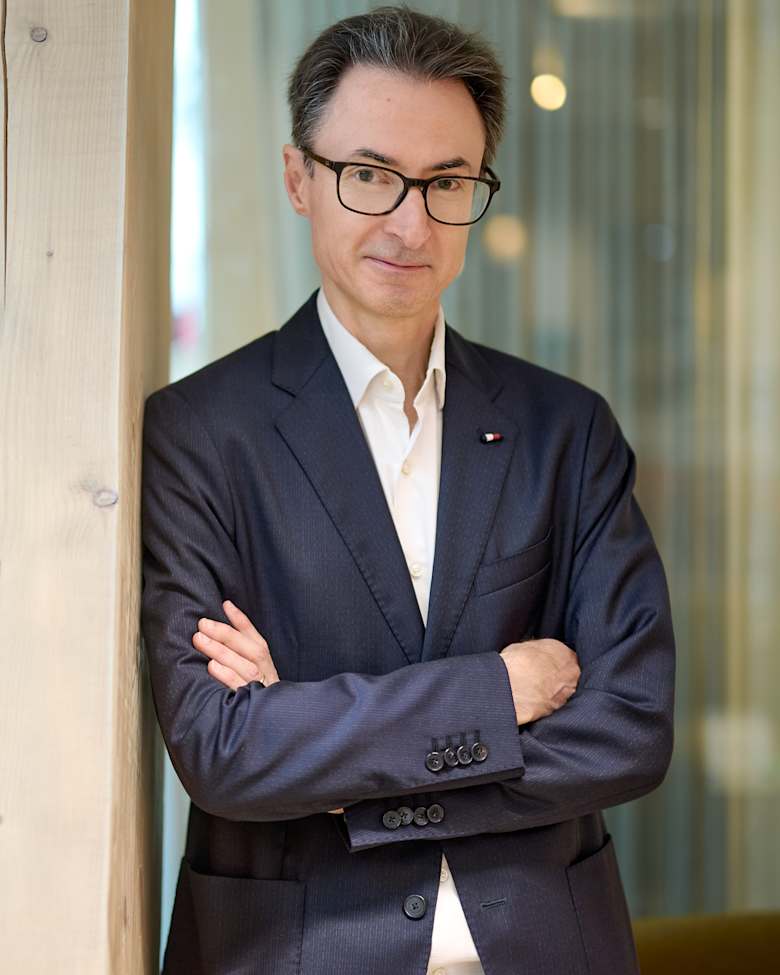
Pierre-Paul Verelst
Head of Research Belux

Alexandre De Wagheneire*Realex Invest srl/bv
Senior Director Capital Markets