A diagnostic guide for Belux occupiers to identify the root causes of common workplace friction
11 February 2026
Guide
11 February 2026
Is your office working against you?
Categories:
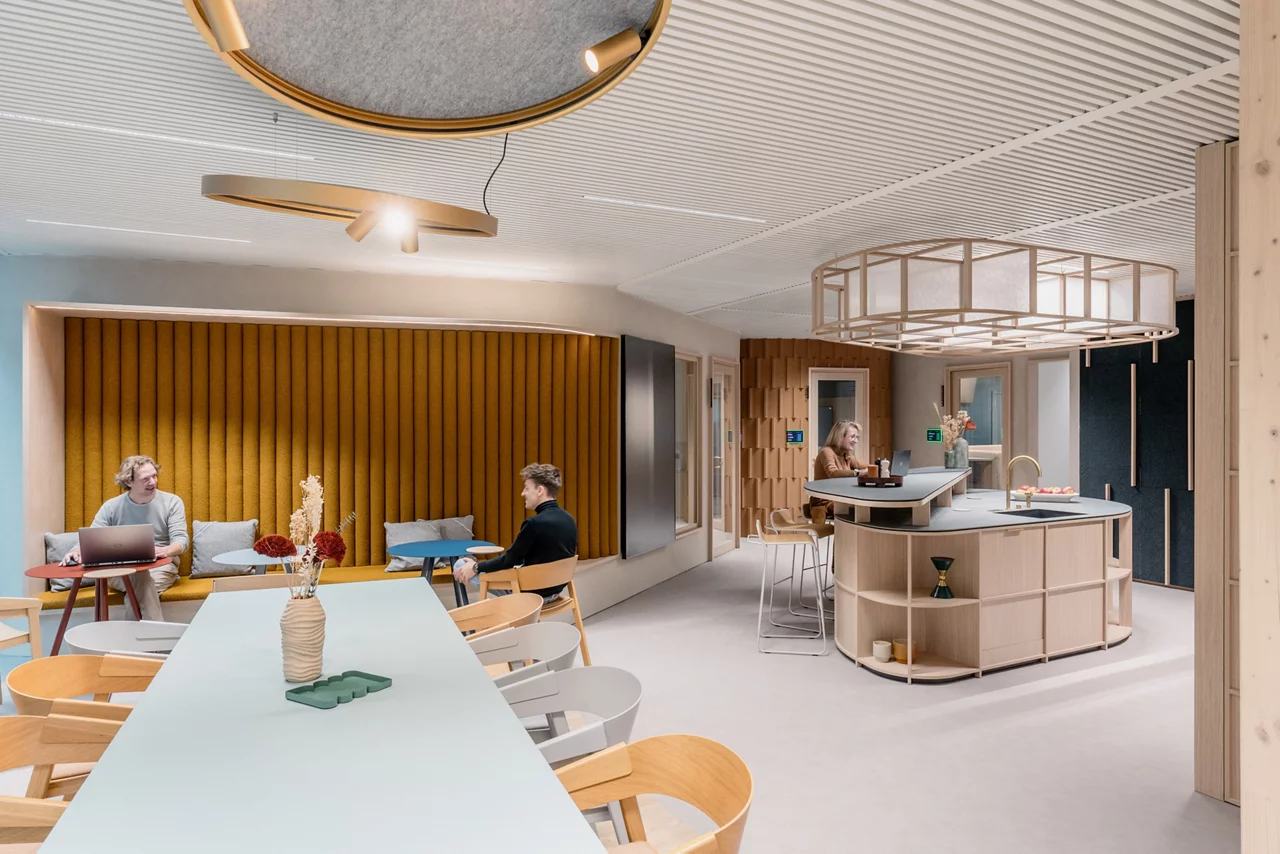
Many workplace problems keep coming back because companies fix individual issues instead of addressing the real causes. Use this guide to find out what's really causing your workplace challenges and why simple fixes don't work.
Feeling some of the headaches from our list? You're not alone. These workplace symptoms affect a majority of Belgian and Luxembourg offices, often pointing to deeper disconnects between your real estate, your people, and your business goals.
Use this guide to diagnose the potential root causes of your challenges and understand why traditional, siloed solutions fail to solve them.
Sign 1: Focus and privacy breakdown
Your open office was designed to encourage collaboration, but instead it's become a productivity nightmare:
- Employees complain they can't concentrate due to constant noise
- Phone calls bleed into team focus time, disrupting everyone nearby
- Productivity visibly drops during high-traffic periods when everyone's trying to work
Open-plan designs implemented without acoustic strategy and behavioral design create productivity chaos. This isn't just about noise levels—it's about the psychology of focus and the physics of sound in modern office materials.
Most open offices fail because they treat all work as the same. But your employees need:
- Deep focus zones for complex analytical work
- Collaboration spaces for creative brainstorming
- Phone areas for confidential conversations
Why this matters in Belux: Belgian work culture values efficiency and work-life balance—productivity disruptions extend work hours and increase stress. Luxembourg's knowledge workers expect premium environments that support complex analytical work.
Sign 2: Meeting room chaos
Your teams are frustrated. Every day brings the same predictable chaos:
- 9 AM: Room booked, nobody there
- 10 AM: Still empty while your team waits in the corridor
- 11 AM: Finally find space, but the projector won't connect
- 12 PM: Client call starts late due to technical difficulties
You've invested in booking systems, upgraded AV equipment, and created booking policies. Yet the problems persist.
This isn't just about technology or booking conflicts. It points to a fundamental mismatch between your space allocation strategy and actual employee work patterns.
Your original space plan likely assumed traditional meeting behaviors—scheduled conferences with clear start and stop times. But today's work reality is different.
- Spontaneous collaboration that doesn't fit booking windows
- Hybrid meetings requiring complex AV setup most staff can't manage
- Need for diverse space types (phone booths, presentation rooms, casual collaboration areas)
The silo problem:
Your facilities team manages bookings based on availability. IT handles technology based on technical specs. Workplace strategy sits separately, focused on space efficiency. Without integration, you get rooms that technically "work" but practically fail during the moments that matter most.
Why this matters in Belux: In Luxembourg's international business environment, meeting room failures during client presentations damage professional credibility. In Belgium's collaborative work culture, booking chaos disrupts team dynamics and productivity.
Sign 3: Wellness and environmental neglect
Your workplace feels sterile and uninspiring, and it's affecting your team:
- Employees skip lunch due to limited healthy food options nearby
- No spaces exist for mental restoration or stress relief during intense workdays
- The office environment is a sterile environment
You've added some wellness programs and upgraded the coffee machine, but the fundamental environment still feels draining.
Research shows that natural elements—plants, natural light, green spaces—significantly impact cognitive function, stress reduction, and creativity.
The silo problem:
HR manages wellness programs focused on policies and benefits. Facilities manages amenities focused on cost and maintenance. Real estate focuses on space efficiency.
Without integrated wellness strategy that includes biophilic design, natural environment integration, and environmental psychology, you get scattered initiatives that don't create cohesive, restorative employee experience.
Why this matters in Belux:: Luxembourg's international workforce has high expectations for premium workplace experiences including wellness amenities. Belgium's strong work-life balance culture means environmental wellness gaps are less tolerated and impact retention more significantly.
Sign 4: Hybrid work integration failures
Your hybrid work policy exists, but the daily reality is frustrating for everyone:
- Office feels empty on Mondays and Fridays, overcrowded on Tuesdays through Thursdays
- Teams struggle to maintain culture and collaboration across work modes
- Remote employees feel excluded from spontaneous office interactions
- In-office employees feel like they're working in a half-empty building
Successful hybrid work requires integrated strategy across technology infrastructure, HR policies, and physical space design. Most organizations approach these separately, creating friction instead of flexibility.
Why this matters in Belux: Luxembourg's cross-border workforce requires seamless hybrid coordination across multiple countries and time zones. Belgium's multi-city business operations need consistent hybrid experiences across Brussels, Antwerp, and regional offices.
Sign 5: Culture and connection disconnect
Your office has all the right elements on paper, but something feels off:
- Beautiful collaboration spaces sitting empty while teams meet virtually
- Company values don't translate into daily workplace experience
- Difficulty attracting talent
- New employees struggle to understand company culture
This is the ultimate symptom proving your physical space no longer supports your desired culture. Your workplace has become just a building, not a destination that fosters connection and purpose.
Culture isn't created by furniture or floor plans—it's activated by environments that support authentic human interaction, reflect company values, and make people want to be present.
The silo problem:
Leadership defines culture through values and communications. HR implements programs and policies. Real estate provides space based on efficiency metrics. But no one integrates culture strategy with spatial design, employee experience, and behavioral psychology.
Why this matters in Belux: Luxembourg's international talent expects workplace culture that matches global standards. Belgian work culture emphasizes team relationships and collaborative decision-making—disconnected environments undermine these cultural foundations.
Why traditional solutions fail
Most workplace problems persist because they're addressed in organizational silos:
Each department solves their piece of the puzzle, but workplace success requires integration across all these disciplines.
The result: Partial solutions that don't address root causes, temporary fixes that don't prevent recurring problems, and investments that don't deliver expected returns.
The integrated "one team" approach
How JLL solves workplace problems differently
Instead of addressing symptoms individually, JLL's integrated workplace strategy brings together:
Space optimization and location planning that supports actual work patterns and business objectives
Interior architecture and acoustic engineering that balances aesthetics with functionality
Wellness strategy and culture activation that creates destinations, not just office space
Seamless implementation coordination across all disciplines to ensure integrated solutions actually work
Result: Workplace solutions that function as integrated systems because all elements are designed to support each other from strategy through implementation.
Discover proven solutions
See how leading Belux organizations solve these challenges
Ready to move beyond diagnosing problems to implementing solutions? Explore how companies across Belgium and Luxembourg have transformed their workplaces using integrated strategies.
Discover real case studies, practical implementation approaches, and measurable results from organizations that faced similar challenges and achieved workplace transformation.
Ready to find a better office space? Scroll our availabilities on our exclusive property website :
Offices to rent and for sale in Belgium
Offices to rent and for sale in Luxembourg